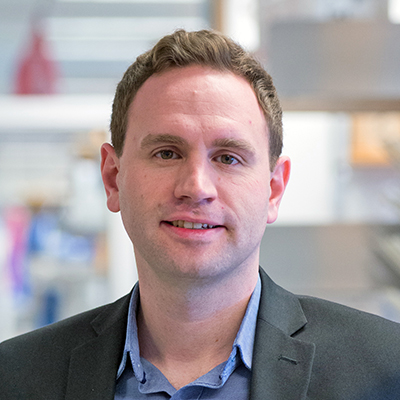
About
The Good Lab focuses on the cell biology of genome activation and membraneless organelles, as well as engineered living systems. The lab's research involves studying the mechanisms by which the genome is activated and the roles of membraneless organelles in cellular processes.
Research topics
- Computer Science
- Biochemistry
- Chemistry
- Cell biology
- Biology
- Materials science
- Machine Learning
- Nanotechnology
- Quantum mechanics
- Physics
- Chemical physics
- Biophysics
- Computational biology
- Statistical physics
Selected publications
Designer membraneless organelles sequester native factors for control of cell behavior
Nature Chemical Biology · 2021 · 149 citations
Senior authorCorresponding- Computer Science
- Cell biology
- Chemistry
Proceedings of the National Academy of Sciences · 2020 · 363 citations
- Computer Science
- Machine Learning
- Materials science
Phase separation of intrinsically disordered proteins (IDPs) commonly underlies the formation of membraneless organelles, which compartmentalize molecules intracellularly in the absence of a lipid membrane. Identifying the protein sequence features responsible for IDP phase separation is critical for understanding physiological roles and pathological consequences of biomolecular condensation, as well as for harnessing phase separation for applications in bioinspired materials design. To expand our knowledge of sequence determinants of IDP phase separation, we characterized variants of the intrinsically disordered RGG domain from LAF-1, a model protein involved in phase separation and a key component of P granules. Based on a predictive coarse-grained IDP model, we identified a region of the RGG domain that has high contact probability and is highly conserved between species; deletion of this region significantly disrupts phase separation in vitro and in vivo. We determined the effects of charge patterning on phase behavior through sequence shuffling. We designed sequences with significantly increased phase separation propensity by shuffling the wild-type sequence, which contains well-mixed charged residues, to increase charge segregation. This result indicates the natural sequence is under negative selection to moderate this mode of interaction. We measured the contributions of tyrosine and arginine residues to phase separation experimentally through mutagenesis studies and computationally through direct interrogation of different modes of interaction using all-atom simulations. Finally, we show that despite these sequence perturbations, the RGG-derived condensates remain liquid-like. Together, these studies advance our fundamental understanding of key biophysical principles and sequence features important to phase separation.
SPLIT: Stable Protein Coacervation Using a Light Induced Transition
ACS Synthetic Biology · 2020 · 58 citations
- Biophysics
- Chemistry
- Biochemistry
. The methods described here provide novel strategies for inducing protein phase separation using light.
Recent grants
Frequent coauthors
- 17 shared
Wendell A. Lim
University of California, San Francisco
- 16 shared
Federico Moure
University of California, Irvine Medical Center
- 16 shared
E. Thomas Chappell
- 15 shared
Attila Reményi
Institute of Organic Chemistry
- 14 shared
Daniel A. Hammer
- 11 shared
Benjamin S. Schuster
Rutgers, The State University of New Jersey
- 11 shared
Arnold M. Falick
University of California, Berkeley
- 10 shared
Roby P. Bhattacharyya
Harvard University
Labs
Education
- 2010
Ph.D. Biochemistry, Cellular and Molecular Pharmacology
University of California San Francisco
- 2003
B.A. Biochemistry, Molecular and Cellular Biology
University of California Berkeley
Similar researchers at University of Pennsylvania
- Resume-aware match score
- Save to shortlist
- AI-drafted outreach
See your match with Matt Good
PhdFit ranks faculty by your research interests, methods, and publications — grounded in their actual work, not templates.
- Free to start
- No credit card
- 30-second signup