
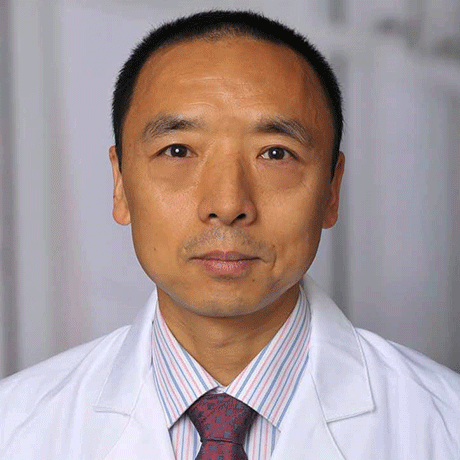
Jidong Fu
· Associate ProfessorOhio State University · Molecular, Cellular, and Integrative Physiology
Active 2002–2025
Academic metrics are sourced from OpenAlex and public funding records; values may differ from Google Scholar.
About
Jidong Fu, PhD, is an Associate Professor in the Department of Physiology and Cell Biology at Ohio State College of Medicine. His laboratory focuses on understanding the fundamental mechanisms of cardiac cell fate control and cardiac electrophysiology during heart development, with the aim of developing new therapeutic approaches for cardiac regenerative medicine and anti-arrhythmic therapies. Dr. Fu has over 18 years of experience utilizing mouse and human embryonic stem cells (ESCs) and induced pluripotent stem cells (iPSCs) to study the development of cardiac electrophysiology and automaticity during the differentiation of ESC/iPSC-cardiomyocytes. His research investigates the role of IK1 in cardiac automaticity and anti-arrhythmic therapies, as well as strategies to facilitate the electrophysiological and functional maturation of ESC/iPSC-derived cardiomyocytes to improve their clinical application for cardiac regeneration. Additionally, Dr. Fu's work includes developing epigenetic approaches to directly convert cardiac fibroblasts into induced cardiomyocyte-like cells and exploring the biophysical modulation of microRNAs, revealing novel functions beyond their classical roles that could impact multiple cardiac proteins and diseases.
Research topics
- Biochemistry
- Biophysics
- Chemistry
- Cell biology
- Biology
Selected publications
Assessment of mitophagy in human iPSC-derived cardiomyocytes
Autophagy · 2022-02-27 · 27 citations
articleOpen accessDefective mitophagy contributes to normal aging and various neurodegenerative and cardiovascular diseases. The newly developed methodologies to visualize and quantify mitophagy allow for additional progress in defining the pathophysiological significance of mitophagy in various model organisms. However, current knowledge regarding mitophagy relevant to human physiology is still limited. Model organisms such as mice might not be optimal models to recapitulate all the key aspects of human disease…
Frontiers in Physiology · 2021-03-22 · 12 citations
articleOpen accessNa v 1.5, encoded by the gene SCN5A , is the predominant voltage-gated sodium channel expressed in the heart. It initiates the cardiac action potential and thus is crucial for normal heart rhythm and function. Dysfunctions in Na v 1.5 have been involved in multiple congenital or acquired cardiac pathological conditions such as Brugada syndrome (BrS), Long QT Syndrome Type 3, and heart failure (HF), all of which can lead to sudden cardiac death (SCD) – one of the leading causes of death worldwide…
Multilayer control of cardiac electrophysiology by microRNAs
Journal of Molecular and Cellular Cardiology · 2022-03-02 · 11 citations
reviewOpen accessSenior authorCorrespondingInhibition of CREB-CBP Signaling Improves Fibroblast Plasticity for Direct Cardiac Reprogramming
Cells · 2021-06-22 · 11 citations
articleOpen accessSenior authorCorrespondingDirect cardiac reprogramming of fibroblasts into induced cardiomyocytes (iCMs) is a promising approach but remains a challenge in heart regeneration. Efforts have focused on improving the efficiency by understanding fundamental mechanisms. One major challenge is that the plasticity of cultured fibroblast varies batch to batch with unknown mechanisms. Here, we noticed a portion of in vitro cultured fibroblasts have been activated to differentiate into myofibroblasts, marked by the expression of α…
Adipogenic Signaling Promotes Arrhythmia Substrates before Structural Abnormalities in TMEM43 ARVC
Journal of Personalized Medicine · 2022-10-09 · 10 citations
articleOpen accessArrhythmogenic right ventricular cardiomyopathy (ARVC) is a genetic disorder of desmosomal and structural proteins that is characterized by fibro-fatty infiltrate in the ventricles and fatal arrhythmia that can occur early before significant structural abnormalities. Most ARVC mutations interfere with β-catenin-dependent transcription that enhances adipogenesis; however, the mechanistic pathway to arrhythmogenesis is not clear. We hypothesized that adipogenic conditions play an important role in…
Recent grants
Biophysical Modulation of Cardiac Ion Channels by MicroRNA
NIH · $4.5M · 2017–2027
Frequent coauthors
- 56 shared
Emre Bektik
Brigham and Women's Hospital
- 47 shared
Ronald A. Li
- 43 shared
Adrienne T. Dennis
- 35 shared
Isabelle Deschênes
The Ohio State University
- 34 shared
Kenneth R. Laurita
MetroHealth
- 31 shared
Deepak Srivastava
Harcourt Butler Technical University
- 29 shared
Deborah K. Lieu
- 29 shared
Chi‐Wing Kong
University of Hong Kong
Education
- 2006
PhD
Shanghai Institutes for Biological Sciences
Similar researchers at Ohio State University
- Resume-aware match score
- Save to shortlist
- AI-drafted outreach
See your match with Jidong Fu
PhdFit ranks faculty by your research interests, methods, and publications — grounded in their actual work, not templates.
- Free to start
- No credit card
- 30-second signup