
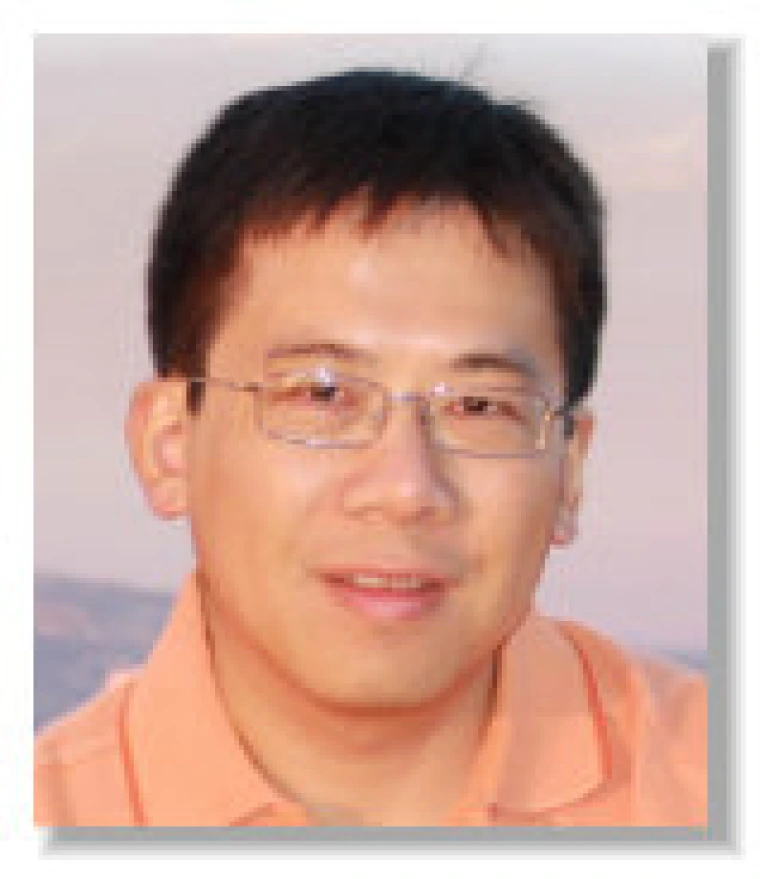
Guang Yao
· Associate Professor, MCBUniversity of Arizona · Biochemistry and Molecular Biology
Active 1993–2026
Academic metrics are sourced from OpenAlex and public funding records; values may differ from Google Scholar.
About
Professor Guang Yao leads the Yao Systems Biology Lab at the University of Arizona, Tucson, within the Molecular & Cellular Biology department. His research focuses on gene network "switches" that regulate the dormancy and growth of both normal and cancer cells. A central theme of his work is the distinction and connection between two dormant cellular states: quiescence, which is reversible, and senescence, which is irreversible. These states are controlled by an Rb-E2F-Cdk gene network switch and its interacting pathways, including cell metabolism and circadian rhythm. Professor Yao's recent findings challenge the traditional view that quiescence protects cells from senescence linked to stress responses during aging. Instead, his work demonstrates that quiescent cells can gradually transition into senescence without undergoing proliferation, akin to a dimmer switch mechanism. The overarching goal of his research is to develop an integrated understanding of different cell dormancy states and their relationships to cancer and aging. His current focus is on elucidating the "dimmer" control mechanisms that underlie the deepening of quiescence toward senescence and exploring their potential applications in anti-cancer, anti-aging, and regenerative medicine. To achieve these aims, Professor Yao employs an integrated computational and experimental approach, combining single-cell and omics measurements with mathematical and machine-learning models to dissect complex and…
Research topics
- Biology
- Internal medicine
- Medicine
- Cancer research
- Gastroenterology
- Materials science
- Chemistry
- Biochemistry
- Physics
- Oncology
Selected publications
Journal of Clinical Investigation · 2021 · 99 citations
There is an urgent need to identify the cellular and molecular mechanisms responsible for severe COVID-19 that results in death. We initially performed both untargeted and targeted lipidomics as well as focused biochemical analyses of 127 plasma samples and found elevated metabolites associated with secreted phospholipase A2 (sPLA2) activity and mitochondrial dysfunction in patients with severe COVID-19. Deceased COVID-19 patients had higher levels of circulating, catalytically active sPLA2 grou…
Scientific Reports · 2024-12-02 · 4 citations
articleOpen accessThe involvement of the androgen receptor (AR) pathway in developing epithelial ovarian cancer is increasingly acknowledged. However, the specific mechanisms by which anti-androgen agents, such as flutamide, may prevent ovarian cancer and their efficacy remain unknown. This study was initiated by investigating the impact of flutamide on miRNA expression in women at high risk (HR) for ovarian cancer. Ovarian and tubal tissues, free from ovarian, tubal, peritoneal cancers, and serous tubal intraepi…
Poultry Science · 2025-01-08 · 2 citations
articleOpen accessDHAV-3 is one of the main causative agents of duck viral hepatitis (DVH), an acute and highly lethal infectious disease in duck industry. However, the understanding of the pathogenesis of this virus in ducklings is limited. To dissect the molecular characteristics associated with pathobiology of ducklings to DHAV-3, we applied single-cell RNA-sequencing approach to profile the transcriptome of 1.4 million cells from 14 livers of DHAV-3 susceptible (S) and resistant (R) ducklings during viral inf…
Modeling the Depth of Cellular Dormancy from RNA-Sequencing Data
Methods in molecular biology · 2024-01-01 · 2 citations
articleSenior authormedRxiv · 2022-11-22 · 2 citations
preprintOpen accessAbstract Previous research suggests that group IIA secreted phospholipase A 2 (sPLA 2 -IIA) plays a role in and predicts severe COVID-19 disease. The current study reanalyzed a longitudinal proteomic data set to determine the temporal (days 0, 3 and 7) relationship between the levels of several members of a family of sPLA 2 isoforms and the severity of COVID-19 in 214 ICU patients. The levels of six secreted PLA 2 isoforms, sPLA 2 -IIA, sPLA 2 -V, sPLA 2 -X, sPLA 2 -IB, sPLA 2 -IIC, and sPLA 2 -…
Recent grants
Collaborative Research: Semiparametric ODE Models for Complex Gene Regulatory Networks
NSF · $164k · 2014–2018
Collaborative Research: Modeling the Coupling of Epigenetic and Transcriptional Regulation
NSF · $566k · 2015–2020
Frequent coauthors
- 204 shared
Guoqiang Yu
Zhejiang Sci-Tech University
- 149 shared
Xiufeng Han
University of Chinese Academy of Sciences
- 119 shared
Yizhou Liu
Washington University in St. Louis
- 95 shared
Jiafeng Feng
- 77 shared
Jinwu Wei
Lanzhou University
- 77 shared
Hongjun Xu
Lanzhou University
- 54 shared
Caihua Wan
University of Chinese Academy of Sciences
- 54 shared
Xiao Wang
Nanjing University of Aeronautics and Astronautics
Education
- 2021
Doctor of philosophy in condensed matter physics, Chinese Academy of Sciences
Institute of Physics
- 2016
Bachelor, College of physical science and technology
Sichuan University
Similar researchers at University of Arizona
- Resume-aware match score
- Save to shortlist
- AI-drafted outreach
See your match with Guang Yao
PhdFit ranks faculty by your research interests, methods, and publications — grounded in their actual work, not templates.
- Free to start
- No credit card
- 30-second signup