
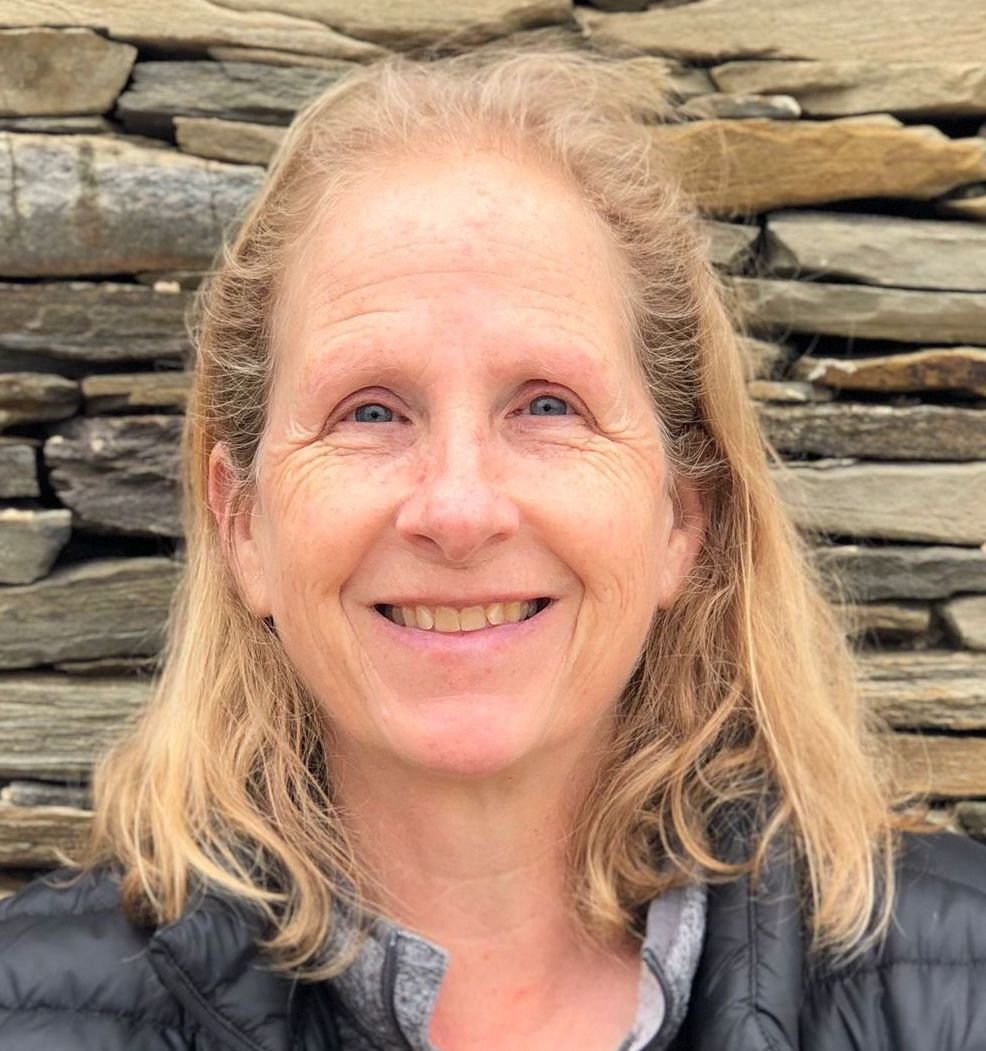
Donna L. Whitney
University of Minnesota · Earth Sciences
Active 1989–2026
Academic metrics are sourced from OpenAlex and public funding records; values may differ from Google Scholar.
About
Donna L. Whitney is a Distinguished McKnight University Professor in the Department of Earth & Environmental Sciences at the University of Minnesota Twin Cities. Her research focuses on metamorphic geology, utilizing metamorphic rocks to reconstruct the chemical and physical processes that drive metamorphism in continental and oceanic crust, and understanding how these rocks are returned to the Earth’s surface. She is actively involved in collaborative projects, including studies on the dynamics of partially molten crust and the mantle-to-surface processes during tectonic development, such as her large multidisciplinary research project in Turkey investigating tectonic escape systems. Whitney's interests extend to metamorphic textures, microstructures in garnet, and the interaction of deformation and metamorphism across various tectonic settings, with field sites in North America, Turkey, France, and Norway. She is engaged in mentoring undergraduate and graduate students in projects related to metamorphic petrology, mineralogy, structural geology, and tectonics. Her contributions to the field have been recognized through numerous awards and honors, including her election as a Fellow of the Mineralogical Society of America and the Geological Society of America, and her appointment as a Distinguished McKnight University Professor.
Research topics
- Geology
- Paleontology
- Geochemistry
- Petrology
- Materials science
- Metallurgy
- Mineralogy
- Seismology
Selected publications
Deformation-enhanced recrystallization of titanite drives decoupling between U-Pb and trace elements
Earth and Planetary Science Letters · 2021 · 50 citations
Lawsonite composition and zoning as tracers of subduction processes: A global review
Lithos · 2020 · 43 citations
1st authorCorrespondingLawsonite is an abundant hydrous mineral in oceanic crust, sediments, and metasomatic rocks at depths of ~45 to 300 km in most subduction zones, but it is rarely preserved in the geologic record because it commonly transforms to epidote and other minerals during prograde or retrograde metamorphism. Owing to the significance of lawsonite for water and element cycling in subduction zones, occurrences of fresh lawsonite in blueschist and, more rarely, eclogite provide important opportunities to det…
Geology · 2023 · 40 citations
1st authorCorrespondingAbstract Lateral movement of lithospheric fragments along strike-slip faults in response to collision (escape tectonics) has characterized convergent settings since the onset of plate tectonics and is a mechanism for the formation of new plates. The Anatolian plate was created by the sequential connection of strike-slip faults following ≥10 m.y. of distributed deformation that ultimately localized into plate-bounding faults. Thermochronology data and seismic images of lithosphere structure near…
Journal of Metamorphic Geology · 2020 · 35 citations
1st authorCorrespondingAbstract In orogens worldwide and throughout geologic time, large volumes of deep continental crust have been exhumed in domal structures. Extension‐driven ascent of bodies of deep, hot crust is a very efficient mechanism for rapid heat and mass transfer from deep to shallow crustal levels and is therefore an important mechanism in the evolution of continents. The dominant rock type in exhumed domes is quartzofeldspathic gneiss (typically migmatitic) that does not record its former high‐pressure…
GSA Today · 2024-06-01 · 7 citations
articleOpen accessThe East Anatolian Fault Zone (EAFZ) is a plate-bounding strike-slip fault capable of hosting large earthquakes, as demonstrated by the extremely damaging February 2023 Mw 7.8 and Mw 7.7 mainshocks of the Kahramanmaraş earthquake sequence. Deformation related to this boundary, part of the Anatolia-Arabia-Africa (A3) Triple Junction, is diffuse, as was shown by part of this earthquake sequence occurring on a northern splay of the EAFZ (the Sürgü-Çardak Fault Zone; SCFZ). Controls on surface defor…
Recent grants
Field-Based Analysis of Subduction Petrofabrics
NSF · $220k · 2007–2011
Textures and Tectonics of Metamorphic Crystallization
NSF · $201k · 2005–2009
NSF · $129k · 2005–2009
Frequent coauthors
- 170 shared
Christian Teyssier
- 69 shared
Patrice Rey
- 46 shared
C. Teyssier
- 35 shared
Michael A. Cosca
United States Geological Survey
- 34 shared
Clémentine Hamelin
- 31 shared
Françoise Roger
- 29 shared
Stacia M. Gordon
University of Nevada, Reno
- 29 shared
Katherine Fornash
Labs
Structure Tectonics and Metamorphic Petrology Research GroupPI
Education
- 1985
AB, Geology
Smith College
Awards & honors
- President, Mineralogical Society of America, 2024
- Award for Outstanding Contributions to Graduate and Professi…
- Member, Academy of Distinguished Teachers, University of Min…
- Distinguished McKnight University Professor, awarded 2010
- Fellow, Mineralogical Society of America, elected 2005
Similar researchers at University of Minnesota
- Resume-aware match score
- Save to shortlist
- AI-drafted outreach
See your match with Donna L. Whitney
PhdFit ranks faculty by your research interests, methods, and publications — grounded in their actual work, not templates.
- Free to start
- No credit card
- 30-second signup