
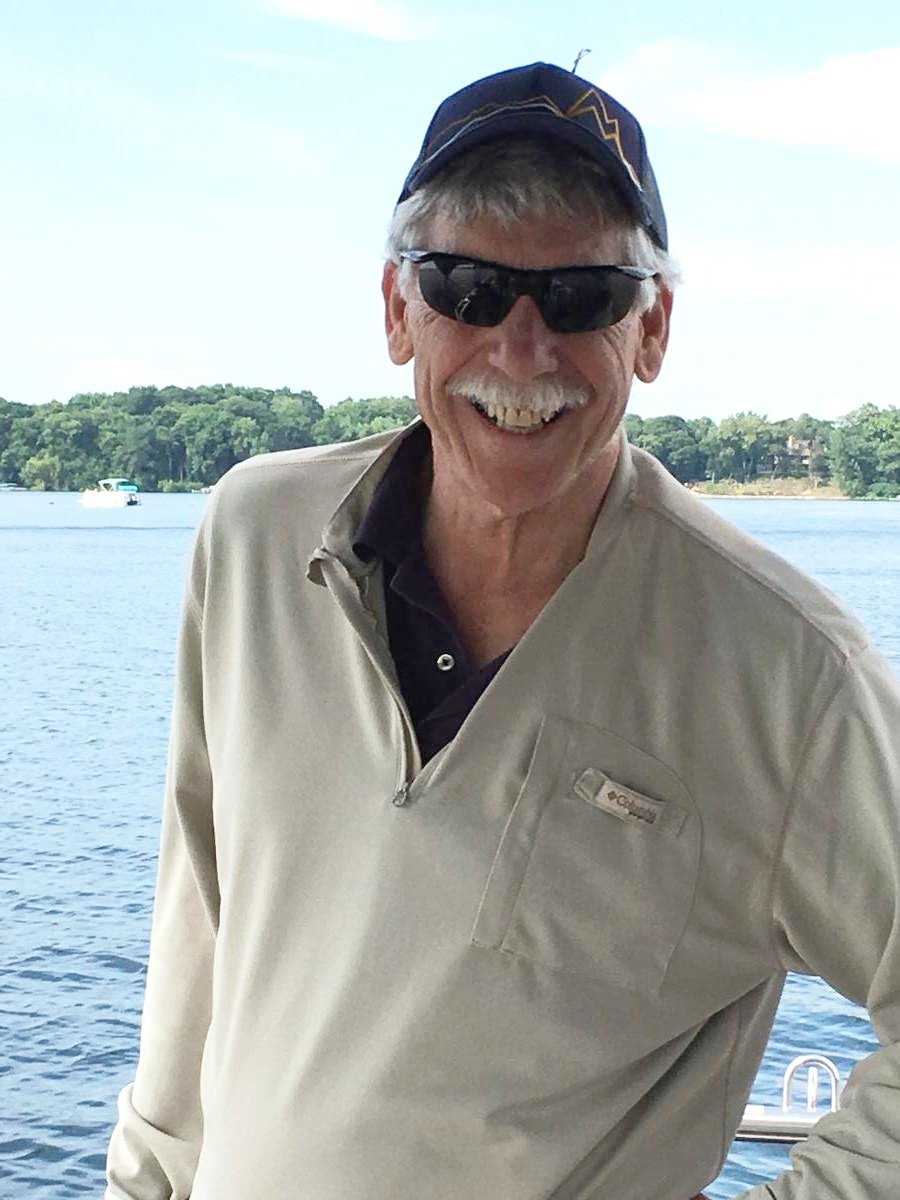
William Seyfried
· Professor, Department of Earth and Environmental SciencesUniversity of Minnesota · Earth Sciences
Active 1975–2026
Academic metrics are sourced from OpenAlex and public funding records; values may differ from Google Scholar.
About
William Seyfried is a professor in the Department of Earth and Environmental Sciences at the University of Minnesota. His research primarily involves studies designed to better understand geochemical processes that control the chemical evolution of natural fluids within and on the Earth. His group employs experimental, theoretical, and field-based approaches to develop process-oriented information related to mineral-fluid systems across a wide range of temperatures and pressures. Recent projects include modeling the response of hydrothermal systems to various perturbations, studying seafloor hydrothermal systems with a focus on iron, sulfur, and hydrogen transport, and conducting fluid-mineral reaction experiments to inform reactive transport modeling at the pore scale. Seyfried's work emphasizes the development and application of new technologies for measuring, monitoring, and controlling key components in aqueous fluids, expanding into organic components to explore broader heat and mass transport reactions. His research has provided new insights into reactive transport processes, including implications for carbon dioxide sequestration in subsurface geological formations. He is recognized for his contributions to geochemistry and hydrothermal systems, and he is a fellow of several scientific societies, including the American Geophysical Union, the Geochemical Society, and the European Association of Geochemistry.
Research topics
- Geochemistry
- Geology
- Oceanography
- Paleontology
- Chemistry
- Mineralogy
- Petrology
- Physics
- Astrobiology
- Environmental science
Selected publications
Nature Communications · 2020 · 147 citations
Coupled magmatic and tectonic activity plays an important role in high-temperature hydrothermal circulation at mid-ocean ridges. The circulation patterns for such systems have been elucidated by microearthquakes and geochemical data over a broad spectrum of spreading rates, but such data have not been generally available for ultra-slow spreading ridges. Here we report new geophysical and fluid geochemical data for high-temperature active hydrothermal venting at Dragon Horn area (49.7°E) on the S…
A seawater throttle on H <sub>2</sub> production in Precambrian serpentinizing systems
Proceedings of the National Academy of Sciences · 2020 · 56 citations
Significance Our current understanding of the redox state of Earth’s ancient atmosphere is heavily dependent on the assumption that ancient low-temperature serpentinizing systems produced abundant H 2 , as they do today. Here, we examine this assumption using data that constrain Fe partitioning in serpentine minerals. We find that H 2 production is linked to a Si deficiency in the serpentine structure, which itself is caused by low SiO 2 (aq) concentrations in fluids derived from modern seawater…
Geochimica et Cosmochimica Acta · 2020 · 45 citations
Geochimica et Cosmochimica Acta · 2023-06-01 · 26 citations
articleOpen accessSenior authorCrystal-chemical origins of the ultrahigh conductivity of metallic delafossites
Nature Communications · 2024-02-15 · 23 citations
articleOpen accessAbstract Despite their highly anisotropic complex-oxidic nature, certain delafossite compounds ( e.g ., PdCoO 2 , PtCoO 2 ) are the most conductive oxides known, for reasons that remain poorly understood. Their room-temperature conductivity can exceed that of Au, while their low-temperature electronic mean-free-paths reach an astonishing 20 μm. It is widely accepted that these materials must be ultrapure to achieve this, although the methods for their growth (which produce only small crystals) a…
Recent grants
NSF · $431k · 2017–2023
NSF · $594k · 2015–2021
NSF · $473k · 2002–2007
Frequent coauthors
- 49 shared
Benjamin M. Tutolo
University of Calgary
- 39 shared
A. J. Luhmann
- 36 shared
Drew D. Syverson
University of North Carolina at Charlotte
- 35 shared
Martin O. Saar
ETH Zurich
- 34 shared
Dionysis I. Foustoukos
- 34 shared
Wayne C. Shanks
United States Geological Survey
- 33 shared
Chunyang Tan
University of Minnesota
- 30 shared
Nicholas J. Pester
Labs
Aqueous Geochemistry LabPI
Awards & honors
- Fellow, American Geophysical Union, 2011
- Fellow, Geochemical Society, 2010
- Fellow, European Association of Geochemistry, 2010
Similar researchers at University of Minnesota
- Resume-aware match score
- Save to shortlist
- AI-drafted outreach
See your match with William Seyfried
PhdFit ranks faculty by your research interests, methods, and publications — grounded in their actual work, not templates.
- Free to start
- No credit card
- 30-second signup