
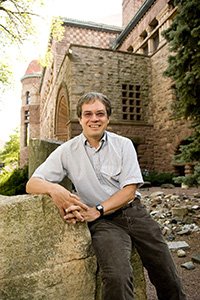
R. Lawrence Edwards
· Regents and Distinguished McKnight University Professor, Department of Earth and Environmental SciencesUniversity of Minnesota · Earth Sciences
Active 1895–2025
Academic metrics are sourced from OpenAlex and public funding records; values may differ from Google Scholar.
About
R. Lawrence Edwards is a Regents and Distinguished McKnight University Professor in the Department of Earth and Environmental Sciences at the University of Minnesota. He is an isotope geochemist renowned for his development of modern uranium-thorium (Th-230) dating methods and their application to studying climate history and ocean chemistry. His work has significantly improved the accuracy of radiocarbon dating, contributing to the calibration of the radiocarbon timescale. Edwards champions cave deposits as recorders of historic and prehistoric climate, relating these records to ocean sediments and ice cores to establish patterns of climate change over time and space. His research helps to understand the causes of abrupt climate change and rapid ice sheet melting at the end of glacial cycles. Additionally, he investigates the relationship between climate change and cultural history, linking global shifts in rainfall patterns to major cultural changes, such as the decline of Chinese dynasties and the expansion of rice cultivation. His cave records of recent centuries provide some of the strongest evidence for human-induced climate change. Edwards is one of the most cited earth scientists worldwide, with numerous awards and honors recognizing his contributions to geoscience.
Research topics
- Geology
- Oceanography
- Geography
- Ecology
- Climatology
- Environmental science
- Biology
- Archaeology
- Paleontology
- Chemistry
Selected publications
The IntCal20 Northern Hemisphere Radiocarbon Age Calibration Curve (0–55 cal kBP)
Radiocarbon · 2020 · 7374 citations
ABSTRACT Radiocarbon ( 14 C) ages cannot provide absolutely dated chronologies for archaeological or paleoenvironmental studies directly but must be converted to calendar age equivalents using a calibration curve compensating for fluctuations in atmospheric 14 C concentration. Although calibration curves are constructed from independently dated archives, they invariably require revision as new data become available and our understanding of the Earth system improves. In this volume the internatio…
Coupling of Indo-Pacific climate variability over the last millennium
Nature · 2020 · 205 citations
Journal of Geophysical Research Oceans · 2020 · 164 citations
Abstract A major surface circulation feature of the Arctic Ocean is the Transpolar Drift (TPD), a current that transports river‐influenced shelf water from the Laptev and East Siberian Seas toward the center of the basin and Fram Strait. In 2015, the international GEOTRACES program included a high‐resolution pan‐Arctic survey of carbon, nutrients, and a suite of trace elements and isotopes (TEIs). The cruises bisected the TPD at two locations in the central basin, which were defined by maxima in…
No consistent ENSO response to volcanic forcing over the last millennium
Science · 2020 · 139 citations
Not a big deal after all Do volcanic eruptions affect El Niño–Southern Oscillation (ENSO) variability? Models indicate that sulfate aerosols resulting from large eruptions can initiate an El Niño–like response in the tropical Pacific, but observations have not shown evidence of such behavior. Dee et al . present an oxygen-isotope time series of fossil corals from the central tropical Pacific to investigate ENSO's response to large volcanic eruptions during the past millennium. They found a weak…
Science · 2022 · 61 citations
In Arabia, the first half of the sixth century CE was marked by the demise of Himyar, the dominant power in Arabia until 525 CE. Important social and political changes followed, which promoted the disintegration of the major Arabian polities. Here, we present hydroclimate records from around Southern Arabia, including a new high-resolution stalagmite record from northern Oman. These records clearly indicate unprecedented droughts during the sixth century CE, with the most severe aridity persisti…
Recent grants
NSF · $895k · 2013–2018
Collaborative Research: U.S. GEOTRACES Pacific Section: Analysis of 230Th, 232Th and 231Pa
NSF · $410k · 2013–2015
NSF · $403k · 2017–2023
Frequent coauthors
- 935 shared
Hai Cheng
Xi'an Jiaotong University
- 176 shared
Yongjin Wang
Nanjing Normal University
- 137 shared
Yanjun Cai
Xi'an Jiaotong University
- 116 shared
Zhisheng An
Chinese Academy of Sciences
- 114 shared
Xianfeng Wang
Earth Observatory of Singapore
- 97 shared
Liangcheng Tan
Institute of Earth Environment
- 81 shared
Chuan–Chou Shen
National Taiwan University
- 73 shared
Christoph Spötl
Education
- 1988
Ph.D., Division of Geological and Planetary Sciences
California Institute of Technology
- 1986
M.S., Geosciences
University of Michigan
- 1976
S.B., Earth, Atmosphere, and Planetary Sciences
Massachusetts Institute of Technology
Awards & honors
- 2015 Appointed Regents Professor
- 2014 Highly Cited Researcher
- 2014 Geochemical Fellow (Geochemical Society & European Asso…
- 2013-present Gunn Professor (inaugural professor)
- 2012 Fellow of the American Association for the Advancement…
Similar researchers at University of Minnesota
- Resume-aware match score
- Save to shortlist
- AI-drafted outreach
See your match with R. Lawrence Edwards
PhdFit ranks faculty by your research interests, methods, and publications — grounded in their actual work, not templates.
- Free to start
- No credit card
- 30-second signup