
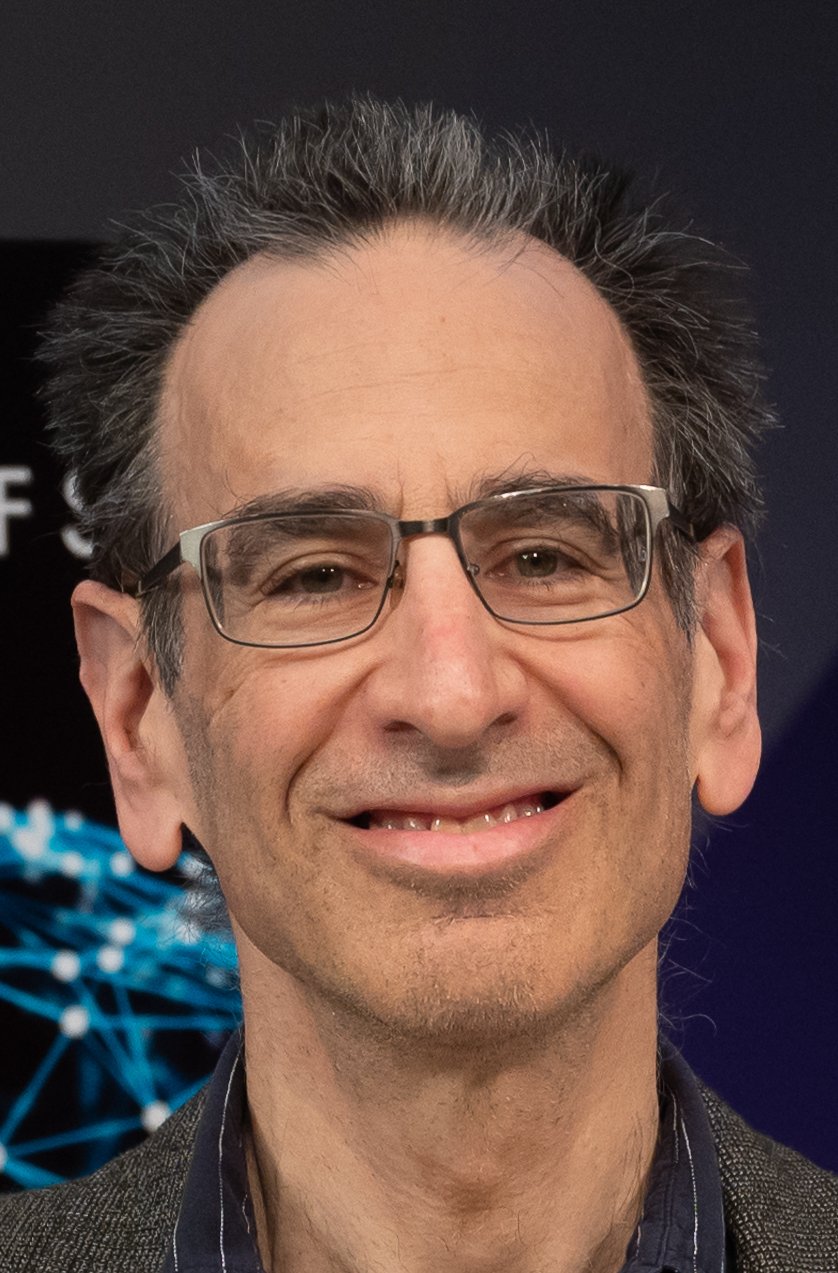
Marc Hirschmann
· Professor, Department of Earth and Environmental SciencesUniversity of Minnesota · Earth Sciences
Active 1988–2026
Academic metrics are sourced from OpenAlex and public funding records; values may differ from Google Scholar.
About
Marc Hirschmann is a professor in the Department of Earth and Environmental Sciences at the University of Minnesota. His research employs high pressure and high temperature experiments, along with analytical and theoretical tools, to understand melting, mass transfer, and differentiation in planetary interiors. His areas of focus include the role of lithologic heterogeneity in basalt source regions, cycling and storage of volatiles such as hydrogen, carbon, nitrogen, and sulfur in planetary interiors, and the delivery and loss processes of these volatiles during the early accretion and differentiation of terrestrial planets. He also investigates redox processes in both modern and early planetary environments. His recent and current research projects include studies of the acquisition and loss of volatiles during planetary formation, interactions between volatiles and redox processes in magma oceans, Fe3+ partitioning during basalt formation, redox processes in Martian magmatism, and the incorporation of hydrogen in lunar materials. His work employs experimental devices and analytical tools such as electron microprobe, FTIR, SIMS, XANES, Mossbauer spectroscopy, EBSD, and LA-ICP-MS. Hirschmann is also involved in undergraduate research opportunities in planetary science.
Research topics
- Astrobiology
- Geology
- Physics
- Computer Security
- Chemistry
- Astronomy
- Computer Science
- Sociology
- Social Science
- Psychoanalysis
Selected publications
Earth’s carbon deficit caused by early loss through irreversible sublimation
Science Advances · 2021 · 70 citations
Senior authorCorrespondingCarbon is an essential element for life, but its behavior during Earth's accretion is not well understood. Carbonaceous grains in meteoritic and cometary materials suggest that irreversible sublimation, and not condensation, governs carbon acquisition by terrestrial worlds. Through astronomical observations and modeling, we show that the sublimation front of carbon carriers in the solar nebula, or the soot line, moved inward quickly so that carbon-rich ingredients would be available for accretio…
Proceedings of the National Academy of Sciences · 2021 · 70 citations
1st authorCorrespondingDuring the formation of terrestrial planets, volatile loss may occur through nebular processing, planetesimal differentiation, and planetary accretion. We investigate iron meteorites as an archive of volatile loss during planetesimal processing. The carbon contents of the parent bodies of magmatic iron meteorites are reconstructed by thermodynamic modeling. Calculated solid/molten alloy partitioning of C increases greatly with liquid S concentration, and inferred parent body C concentrations ran…
Magma oceans, iron and chromium redox, and the origin of comparatively oxidized planetary mantles
Geochimica et Cosmochimica Acta · 2022 · 57 citations
1st authorCorrespondingGeochimica et Cosmochimica Acta · 2021-09-01 · 38 citations
article1st authorCorrespondingEarth and Planetary Science Letters · 2023-07-31 · 28 citations
articleOpen access1st authorCorrespondingThe deep Earth oxygen cycle addresses the origin and long-term exchange of oxidized species between the mantle and exosphere and creates the geochemical context in which the interior and surface environment have evolved. The redox power of the bulk silicate Earth (BSE) can be measured in terms of its redox budget, RB, relative to a reference state of the predominant valences of redox-sensitive elements in the mantle. 82±4% (1.9±0.5 × 10²³ moles) of the redox power resides in the mantle and 18±4%…
Recent grants
CSEDI: Integrated Study of H2O in the mantle
NSF · $760k · 2012–2017
NSF · $211k · 2005–2007
REU Site: Fluids in the Earth from Surface to Core
NSF · $296k · 2003–2007
Frequent coauthors
- 58 shared
A. C. Withers
University of Bayreuth
- 31 shared
Rajdeep Dasgupta
Rice University
- 18 shared
Tetsu Kogiso
Kyoto University
- 17 shared
Cyril Aubaud
Université Paris Cité
- 16 shared
Edward M. Stolper
- 16 shared
M. S. Ghiorso
OFM Research (United States)
- 13 shared
J. L. Mosenfelder
Planetary Science Institute
- 13 shared
Avishek Rudra
University of Minnesota
Similar researchers at University of Minnesota
- Resume-aware match score
- Save to shortlist
- AI-drafted outreach
See your match with Marc Hirschmann
PhdFit ranks faculty by your research interests, methods, and publications — grounded in their actual work, not templates.
- Free to start
- No credit card
- 30-second signup