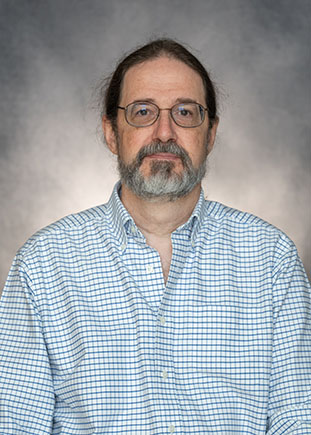
Roy Briere
· ProfessorCarnegie Mellon University · Physics
Active 1989–2024
About
Roy Briere is a Professor of Physics at Carnegie Mellon University, holding a position since 2011 with indefinite tenure since 2006. His research field is high-energy particle physics, with a particular interest in flavor physics, which involves studying the decays and properties of different types of quarks. His work focuses on understanding the weak interaction responsible for these decays, including phenomena such as CP violation and symmetry violations. Briere has been actively involved in major experiments such as the BelleII experiment at KEK Lab in Japan, which studies CP violation and rare B decays, and the BESIII experiment at the BEPCII collider in Beijing, which investigates weak decays of charm mesons and other related phenomena. His contributions include calibration of drift chambers, software infrastructure development, and analysis of experimental data to measure decay constants, form factors, and branching fractions. Briere's research is rooted in his Ph.D. work on CP violation and CPT symmetry tests in the neutral K meson system, and he has participated in collaborations such as CLEO, where he served as co-spokesperson. His work has significantly contributed to the understanding of flavor physics and the fundamental interactions governing particle decays.
Research topics
- Physics
- Nuclear physics
- Particle physics
- Computer Science
- Optics
- Astronomy
Selected publications
Physical review. D/Physical review. D. · 2024 · 2768 citations
- Particle physics
- Physics
- Nuclear physics
The summarizes much of particle physics and cosmology. Using data from previous editions, plus 2,717 new measurements from 869 papers, we list, evaluate, and average measured properties of gauge bosons and the recently discovered Higgs boson, leptons, quarks, mesons, and baryons. We summarize searches for hypothetical particles such as supersymmetric particles, heavy bosons, axions, dark photons, etc. Particle properties and search limits are listed in Summary Tables. We give numerous tables, figures, formulae, and reviews of topics such as Higgs Boson Physics, Supersymmetry, Grand Unified Theories, Neutrino Mixing, Dark Energy, Dark Matter, Cosmology, Particle Detectors, Colliders, Probability and Statistics. Most of the 120 reviews are updated, including many that are heavily revised. The is divided into two volumes. Volume 1 includes the Summary Tables and 97 review articles. Volume 2 consists of the Particle Listings and contains also 23 reviews that address specific aspects of the data presented in the Listings. The complete (both volumes) is published online on the website of the Particle Data Group () and in a journal. Volume 1 is available in print as the . A with the Summary Tables and essential tables, figures, and equations from selected review articles is available in print, as a web version optimized for use on phones, and as an Android app. The 2024 edition of the Review of Particle Physics should be cited as: S. Navas et al. (Particle Data Group), Phys. Rev. D 110, 030001 (2024) © 2024 2024
Number of J/ψ events at BESIII *
Chinese Physics C · 2022 · 100 citations
- Physics
- Particle physics
- Nuclear physics
Abstract Using inclusive decays of , a precise determination of the number of events collected with the BESIII detector was performed. For the two data sets taken in 2009 and 2012, the numbers of events were recalculated to be and , respectively; these numbers are in good agreement with the previous measurements. For the sample taken in 2017–2019, the number of events was determined to be . The total number of events collected with the BESIII detector was determined to be , where the uncertainty is dominated by systematic effects, and the statistical uncertainty is negligible.
Oscillating features in the electromagnetic structure of the neutron
Nature Physics · 2021 · 87 citations
- Physics
- Nuclear physics
Physical Review Letters · 2021 · 185 citations
- Computer Science
- Physics
- Computer Science
We report a study of the processes of e^{+}e^{-}→K^{+}D_{s}^{-}D^{*0} and K^{+}D_{s}^{*-}D^{0} based on e^{+}e^{-} annihilation samples collected with the BESIII detector operating at BEPCII at five center-of-mass energies ranging from 4.628 to 4.698 GeV with a total integrated luminosity of 3.7 fb^{-1}. An excess of events over the known contributions of the conventional charmed mesons is observed near the D_{s}^{-}D^{*0} and D_{s}^{*-}D^{0} mass thresholds in the K^{+} recoil-mass spectrum for events collected at sqrt[s]=4.681 GeV. The structure matches a mass-dependent-width Breit-Wigner line shape, whose pole mass and width are determined as (3982.5_{-2.6}^{+1.8}±2.1) MeV/c^{2} and (12.8_{-4.4}^{+5.3}±3.0) MeV, respectively. The first uncertainties are statistical and the second are systematic. The significance of the resonance hypothesis is estimated to be 5.3 σ over the contributions only from the conventional charmed mesons. This is the first candidate for a charged hidden-charm tetraquark with strangeness, decaying into D_{s}^{-}D^{*0} and D_{s}^{*-}D^{0}. However, the properties of the excess need further exploration with more statistics.
Progress of Theoretical and Experimental Physics · 2020 · 276 citations
- Physics
- Particle physics
- Nuclear physics
In the original version of this manuscript, an error was introduced on pp352. '2.7nb:1.6nb' has been corrected to '2.4nb:1.3nb' in the current online and printed version. doi:10.1093/ptep/ptz106.
Frequent coauthors
- 2191 shared
H. R. Qi
Tsinghua University
- 1771 shared
F. De Mori
University of Turin
- 1602 shared
C. Z. Yuan
- 1563 shared
Q. P. Ji
Carnegie Mellon University
- 1535 shared
F. E. Maas
- 1521 shared
J. F. Hu
- 1500 shared
Meng Wang
Shandong University
- 1455 shared
N. Yu. Muchnoi
Central China Normal University
Labs
Department of Physics - Carnegie Mellon UniversityPI
Education
- 1995
Ph.D., Physics
University of Chicago
Awards & honors
- APS Outstanding Referee, 2009
- Sugarman Award, Enrico Fermi Institute, Univ. of Chicago 199…
Similar researchers at Carnegie Mellon University
- Resume-aware match score
- Save to shortlist
- AI-drafted outreach
See your match with Roy Briere
PhdFit ranks faculty by your research interests, methods, and publications — grounded in their actual work, not templates.
- Free to start
- No credit card
- 30-second signup