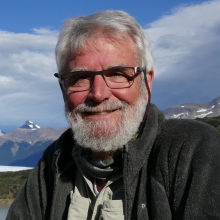
Raymond B. Huey
· Professor EmeritusVerifiedUniversity of Washington · Biology
Active 1969–2023
Research topics
- Environmental health
- Geography
- Psychology
- Demography
- Physical geography
- Medicine
- Internal medicine
- History
- Gerontology
Selected publications
PLoS ONE · 2020 · 44 citations
1st authorCorresponding- Demography
- Medicine
- Gerontology
Mount Everest is an extreme environment for humans. Nevertheless, hundreds of mountaineers attempt to summit Everest each year. In a previous study we analyzed interview data for all climbers (2,211) making their first attempt on Everest during 1990-2005. Probabilities of summiting were similar for men and women, declined progressively for climbers about 40 and older, but were elevated for climbers with experience climbing in Nepal. Probabilities of dying were also similar for men and women, increased for climbers about 60 and older (especially for the few that had summited), and were independent of experience. Since 2005, many more climbers (3,620) have attempted Everest. Here our primary goal is to quantify recent patterns of success and death and to evaluate changes over time. Also, we investigate whether patterns relate to key socio-demographic covariates (age, sex, host country, prior experience). Recent climbers were more diverse both in gender (women = 14.6% vs. 9.1% for 1990-2005) and in age (climbers ≥ 40 = 54.1% vs. 38.7%). Strikingly, recent climbers of both sexes were almost twice as likely to summit-and slightly less likely to die-than were comparable climbers in the previous survey. Temporal shifts may reflect improved weather forecasting, installation of fixed ropes on much of the route, and accumulative logistic equipment and experience. We add two new analyses. The probability of dying from illness or non-traumas (e.g., high-altitude illness, hypothermia), relative to dying from falling or from 'objective hazards' (avalanche, rock or ice fall), increased marginally with age. Recent crowding during summit bids was four-fold greater than in the prior sample, but surprisingly crowding has no evident effect on success or death during summit bids. Our results inform prospective climbers as to their current odds of success and of death, as well as inform governments of Nepal and China of the safety consequences and economic impacts of periodically debated restrictions based on climber age and experience.
Recent grants
REU: Physiological Ecology of Locomotion in Ectotherms
NSF · $178k · 1985–1988
DISSERTATION RESEARCH: The Paradox of Flying Insects at High Altitude
NSF · $12k · 2004–2007
Collaborative Research: LiT: Vulnerability of Tropical Ectotherms to Climate Warming
NSF · $300k · 2010–2016
Physiological Correlates of Fitness
NSF · $25k · 1993–1994
Collaborative Research: Senescence in Natural Populations
NSF · $138k · 1988–1992
Frequent coauthors
- 59 shared
George W. Gilchrist
- 26 shared
Paul Hertz
Barnard College
- 25 shared
Joan Balanyà
Universitat de Barcelona
- 24 shared
Luís Serra
Association for the Development of Douro Viticulture
- 20 shared
Eric R. Pianka
The University of Texas at Austin
- 19 shared
Albert F. Bennett
- 16 shared
Josep M. Oller
Universitat de Barcelona
- 14 shared
Patricia Gibert
Université Claude Bernard Lyon 1
Similar researchers at University of Washington
- Resume-aware match score
- Save to shortlist
- AI-drafted outreach
See your match with Raymond B. Huey
PhdFit ranks faculty by your research interests, methods, and publications — grounded in their actual work, not templates.
- Free to start
- No credit card
- 30-second signup