
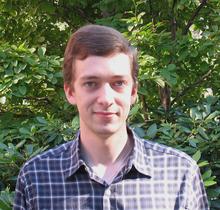
Kirill Korolev
· Associate ProfessorBoston University · Physics
Active 2005–2026
Academic metrics are sourced from OpenAlex and public funding records; values may differ from Google Scholar.
About
Kirill Korolev is an Associate Professor in the Department of Physics at Boston University, having joined the faculty in July 2013. He previously spent three years at MIT as a Pappalardo Postdoctoral Fellow in the Department of Physics, collaborating with labs led by Jeff Gore and Leonid Mirny. Korolev earned his Ph.D. in theoretical condensed matter physics from Harvard University and holds a B.S. with highest honors in applied physics and applied mathematics from the Moscow Institute of Physics and Technology. His research focuses on mathematical models for population dynamics, utilizing simple yet effective mathematical frameworks to study complex phenomena in biology and physics. His work addresses questions related to ecology and evolution of interacting species, including microbial communities such as the human microbiome, as well as the evolutionary dynamics of cancer progression and adaptation during geographic expansion. Korolev's research also explores ecosystem state switching, horizontal gene transfer, epigenetics, and genetic architecture, often drawing on statistical physics and stochastic processes, employing both analytical and computational methods. He has been recognized as a Simons Investigator in the Mathematical Modeling of Living Systems and is a Scialog Fellow.
Research topics
- Computer Science
- Biology
- Ecology
- Computational biology
- Engineering
- Microbiology
- Biochemical engineering
- Evolutionary biology
- Algorithm
- Biological system
Selected publications
A metabolic modeling platform for the computation of microbial ecosystems in time and space (COMETS)
Nature Protocols · 2021 · 196 citations
Slow expanders invade by forming dented fronts in microbial colonies
Proceedings of the National Academy of Sciences · 2021 · 41 citations
Senior authorCorrespondingMost organisms grow in space, whether they are viruses spreading within a host tissue or invasive species colonizing a new continent. Evolution typically selects for higher expansion rates during spatial growth, but it has been suggested that slower expanders can take over under certain conditions. Here, we report an experimental observation of such population dynamics. We demonstrate that mutants that grow slower in isolation nevertheless win in competition, not only when the two types are inte…
Genealogical structure changes as range expansions transition from pushed to pulled
Proceedings of the National Academy of Sciences · 2021-08-19 · 22 citations
articleOpen accessSenior authorCorrespondingRange expansions accelerate evolution through multiple mechanisms, including gene surfing and genetic drift. The inference and control of these evolutionary processes ultimately rely on the information contained in genealogical trees. Currently, there are two opposing views on how range expansions shape genealogies. In invasion biology, expansions are typically approximated by a series of population bottlenecks producing genealogies with only pairwise mergers between lineages-a process known as…
Inferring microbial co-occurrence networks from amplicon data: a systematic evaluation
mSystems · 2023-06-20 · 21 citations
articleOpen accessMicrobes commonly organize into communities consisting of hundreds of species involved in complex interactions with each other. 16S ribosomal RNA (16S rRNA) amplicon profiling provides snapshots that reveal the phylogenies and abundance profiles of these microbial communities. These snapshots, when collected from multiple samples, can reveal the co-occurrence of microbes, providing a glimpse into the network of associations in these communities. However, the inference of networks from 16S data i…
Ecological landscapes guide the assembly of optimal microbial communities
PLoS Computational Biology · 2023-01-10 · 19 citations
articleOpen accessSenior authorCorrespondingAssembling optimal microbial communities is key for various applications in biofuel production, agriculture, and human health. Finding the optimal community is challenging because the number of possible communities grows exponentially with the number of species, and so an exhaustive search cannot be performed even for a dozen species. A heuristic search that improves community function by adding or removing one species at a time is more practical, but it is unknown whether this strategy can disc…
Frequent coauthors
- 24 shared
José I. Jiménez
- 24 shared
David R. Nelson
- 24 shared
Irene A. Chen
University of California, Los Angeles
- 23 shared
Oskar Hallatschek
University of California, Berkeley
- 20 shared
Gabriel Bîrzu
Stanford University
- 16 shared
Peter Freese
Grail (United States)
- 16 shared
Ashish B. George
University of Illinois Urbana-Champaign
- 14 shared
Jeff Gore
Massachusetts Institute of Technology
Education
- 2008
Ph.D., Physics
Boston University
- 2004
M.S., Physics
Boston University
- 2001
B.S., Physics
Moscow Institute of Physics and Technology
Awards & honors
- Simons Investigator in the Mathematical Modeling of Living S…
- Scialog Fellow
Similar researchers at Boston University
- Resume-aware match score
- Save to shortlist
- AI-drafted outreach
See your match with Kirill Korolev
PhdFit ranks faculty by your research interests, methods, and publications — grounded in their actual work, not templates.
- Free to start
- No credit card
- 30-second signup