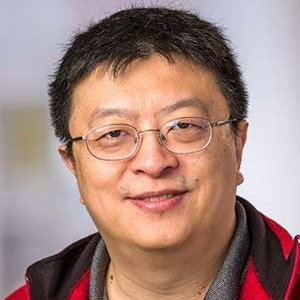
Jihong Bai
· ProfessorUniversity of Washington · Bioengineering
Active 1998–2024
About
Jihong Bai is a professor affiliated with the Fred Hutch Cancer Center and the University of Washington, specializing in biological physics, structure, and design. His research focuses on understanding how neurons are integrated into functional circuits, with particular emphasis on synaptic activity that supports information delivery and storage in the brain. He employs a combination of genetic, biochemical, and electrophysiological techniques to explore synaptic modulation, with a specific interest in the protein machinery that controls exocytosis and endocytosis of synaptic vesicles. His work involves using time-resolved assays to study molecular actions in vitro and electrophysiological methods to monitor neuronal activity in vivo, aiming to uncover structural principles that enable proteins to shape intracellular membranes at synapses. His goal is to develop a molecular understanding of synaptic machinery that can lead to novel strategies for tuning neuronal communication and brain activity.
Research topics
- Biology
- Chemistry
- Cell biology
- Biochemistry
- Computer Science
- Neuroscience
- Biophysics
Selected publications
Presynaptic autophagy is coupled to the synaptic vesicle cycle via ATG-9
Neuron · 2022 · 104 citations
- Neuroscience
- Chemistry
- Biology
A novel dual Ca2+ sensor system regulates Ca2+-dependent neurotransmitter release
The Journal of Cell Biology · 2021 · 23 citations
- Biophysics
- Cell biology
- Biology
Ca2+-dependent neurotransmitter release requires synaptotagmins as Ca2+ sensors to trigger synaptic vesicle (SV) exocytosis via binding of their tandem C2 domains-C2A and C2B-to Ca2+. We have previously demonstrated that SNT-1, a mouse synaptotagmin-1 (Syt1) homologue, functions as the fast Ca2+ sensor in Caenorhabditis elegans. Here, we report a new Ca2+ sensor, SNT-3, which triggers delayed Ca2+-dependent neurotransmitter release. snt-1;snt-3 double mutants abolish evoked synaptic transmission, demonstrating that C. elegans NMJs use a dual Ca2+ sensor system. SNT-3 possesses canonical aspartate residues in both C2 domains, but lacks an N-terminal transmembrane (TM) domain. Biochemical evidence demonstrates that SNT-3 binds both Ca2+ and the plasma membrane. Functional analysis shows that SNT-3 is activated when SNT-1 function is impaired, triggering SV release that is loosely coupled to Ca2+ entry. Compared with SNT-1, which is tethered to SVs, SNT-3 is not associated with SV. Eliminating the SV tethering of SNT-1 by removing the TM domain or the whole N terminus rescues fast release kinetics, demonstrating that cytoplasmic SNT-1 is still functional and triggers fast neurotransmitter release, but also exhibits decreased evoked amplitude and release probability. These results suggest that the fast and slow properties of SV release are determined by the intrinsically different C2 domains in SNT-1 and SNT-3, rather than their N-termini-mediated membrane tethering. Our findings therefore reveal a novel dual Ca2+ sensor system in C. elegans and provide significant insights into Ca2+-regulated exocytosis.
Dopamine receptor DOP-1 engages a sleep pathway to modulate swimming in C. elegans
iScience · 2021 · 14 citations
Senior authorCorresponding- Computer Science
- Neuroscience
- Cell biology
. The temporal transition between DOP-3 and DOP-1 pathways highlights the dynamic nature of neuromodulation for rhythmic movements that persist over time.
Recent grants
Molecular Mechanisms That Control the Quality of Synaptic Vesicle Recycling
NIH · $2.0M · 2018–2023
Molecular Interplay of Endocytic Proteins
NIH · $4.2M · 2020–2030
NIH · $1.9M · 2019
NIH · $727k · 2014
Genetic dissection of circuit modulation for cross-modal plasticity
NIH · $484k · 2017–2020
Frequent coauthors
- 35 shared
Edwin R. Chapman
Howard Hughes Medical Institute
- 24 shared
Yongming Dong
Fred Hutch Cancer Center
- 21 shared
Ithai Rabinowitch
Hebrew University of Jerusalem
- 17 shared
Yan Liu
Shandong Agricultural University
- 16 shared
Vadim A. Klenchin
University of Wisconsin–Madison
- 16 shared
Ivan Rayment
University of Wisconsin–Madison
- 16 shared
Kumud R. Poudel
Fred Hutch Cancer Center
- 16 shared
Gerard Marriott
University of California, Berkeley
Education
- 1995
Ph.D., Biophysics
University of Washington
- 1990
M.S., Physics
University of Science and Technology of China
- 1987
B.S., Physics
University of Science and Technology of China
Similar researchers at University of Washington
- Resume-aware match score
- Save to shortlist
- AI-drafted outreach
See your match with Jihong Bai
PhdFit ranks faculty by your research interests, methods, and publications — grounded in their actual work, not templates.
- Free to start
- No credit card
- 30-second signup