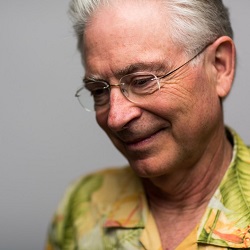
J. Michael Brown
· Professor, Earth & Space SciencesUniversity of Washington · Earth and Space Sciences
Active 1986–2022
About
J. Michael Brown is a Professor in the Department of Earth & Space Sciences with a research focus on understanding Earth's interior through remote sensing techniques such as seismology, complemented by laboratory measurements. His interdisciplinary program involves experimental and theoretical approaches aimed at achieving an atomic-level understanding of constituent minerals, with the goal of elucidating the thermal and compositional state of Earth's interior and its contribution to observed dynamical behavior. His current high-pressure and high-temperature work includes measuring elastic constants and thermal diffusivities of minerals under mantle conditions, studying equations of state and viscosities of fluids, and examining elastic constants of metals approaching Earth's core conditions. Brown's research provides a comprehensive framework for understanding planetary processes, contributing significantly to the field of mineral physics and planetary science.
Research topics
- Computer Science
- Engineering
- Meteorology
- Environmental science
- Aerospace engineering
- Computer Security
- Automotive engineering
- Simulation
- Process engineering
- Mechanical engineering
- Embedded system
- Computer network
- Environmental engineering
- Real-time computing
- Geography
Selected publications
Journal of Electronic Packaging · 2022 · 2 citations
- Computer Science
- Computer Science
- Environmental science
Abstract Outdoor digital displays have become increasingly popular and common for smart city applications, and more recently provides a concealment solution and integration point for outdoor communications devices meant to be attached to buildings, street lamps, or traffic poles. Given the larger energy requirements for powering next generation 5G cellular networks, these devices create unique difficulties in developing and evaluating thermal management solutions. The present study develops and validates the extreme condition transient (ECT) climate model using a computational fluid dynamics/heat transfer numerical model, to evaluate diurnal thermal responses from a representative 5G small cell devices. The model is validated for local conditions present in Atlanta, GA for two unique days. The thermal response from the ECT climate model is presented alongside three real case study locations, Miami, FL, New York, NY, and Phoenix, AZ.
Packaging Environmental Sensors for Monitoring Urban-Microclimates
ASME Journal of Engineering for Sustainable Buildings and Cities · 2020 · 3 citations
- Computer Science
- Computer Science
- Computer Security
Abstract An internet-of-things (IoT)-based low-cost sensor network can be used to collect the data necessary to study both Urban Heat Island (UHI) and air pollution. There are several key challenges associated with an IoT-based solution to environmental data monitoring, including packaging and deployment. This study explores these challenges by looking at effects the packaging has on the deployed environmental sensors. Several packaging designs are numerically studied using a computation fluid dynamics (CFD) model. Two sensor designs are chosen using results obtained from CFD modeling and then experimentally deployed. The findings conclude that the IoT sensors chosen for this study are not significantly affected by flow velocities or require advanced packaging designs when paired with street-side outdoor digital displays.
Thermal Modeling of Outdoor Digital Displays Under Different Brightness Outputs
IEEE Transactions on Components Packaging and Manufacturing Technology · 2020 · 6 citations
- Computer Science
- Computer Science
- Simulation
The thermal design process for electronic products often minimizes the use of computational fluid dynamics and heat transfer (CFD/HT) software in favor of quick prototyping and testing to determine the thermal characteristics of the product. For large-scale products with many thermal challenges, such a strategy can be impractical due to the high cost of prototyping cycles, time constraints, and inevitable iterations involved. In such cases, thorough CFD/HT models developed early in the design process are valuable for driving the product design. Based on this idea, the study examines thermal performance of 55” outdoor digital displays using CFD/HT tools and a prediction under hazardous outdoor condition is made for two different brightness outputs. The prediction is extrapolated and validated through the outdoor testing and simulation comparisons. It is shown that CFD/HT software can be used as a means of making conservative design choices.
Frequent coauthors
- 9 shared
Yogendra Joshi
Georgia Institute of Technology
- 4 shared
A. E. Vardy
University of Dundee
- 4 shared
Kevin O’Connor
University of Alberta
- 4 shared
Marcos Fernández Díaz
- 4 shared
S. Vance
Jet Propulsion Laboratory
- 4 shared
Je-Ho Kim
- 3 shared
Baptiste Journaux
University of Washington
- 3 shared
Anna Pakhomova
Deutsches Elektronen-Synchrotron DESY
Labs
uwastrobiologyPI
Similar researchers at University of Washington
- Resume-aware match score
- Save to shortlist
- AI-drafted outreach
See your match with J. Michael Brown
PhdFit ranks faculty by your research interests, methods, and publications — grounded in their actual work, not templates.
- Free to start
- No credit card
- 30-second signup