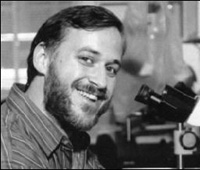
David Blair
· Assistant ProfessorUniversity of Utah · Biology
Active 1982–2024
About
David Blair is a Professor of Biological Sciences at the University of Utah. His research focuses on bacterial motility, specifically the structure and molecular mechanism of the bacterial flagellar motor. He studies how bacteria swim using flagella, which are helical propellers driven by rotary motors in the cell membrane that can turn at speeds of 100,000 rpm or faster by obtaining energy from the membrane ion gradient. His work investigates how the flagellar motor controls direction and switching, and how the assembly and operation of the flagellum are energized and regulated. Blair's research also encompasses the process of flagellar assembly, including the active transport of protein subunits via a specific secretion apparatus, and the energy sources that drive this export process. His team has contributed to understanding the structure of the flagellar basal body, the organization of key proteins involved in rotation and switching, and the molecular mechanisms underlying protein export during flagellum assembly. His work extends to related systems such as the injectisome used by pathogenic bacteria to deliver virulence factors into host cells. Blair's contributions include solving structures of proteins involved in rotation, developing models for the rotor, and elucidating the energy mechanisms of flagellar export, advancing the understanding of biological energy conversions at membranes.
Research topics
- Biology
- Biochemistry
- Chemistry
- Cell biology
- Biophysics
- Engineering
- Microbiology
- Stereochemistry
Selected publications
Control of membrane barrier during bacterial type-III protein secretion
Nature Communications · 2021 · 21 citations
- Cell biology
- Chemistry
- Microbiology
Type-III secretion systems (T3SSs) of the bacterial flagellum and the evolutionarily related injectisome are capable of translocating proteins with a remarkable speed of several thousand amino acids per second. Here, we investigate how T3SSs are able to transport proteins at such a high rate while preventing the leakage of small molecules. Our mutational and evolutionary analyses demonstrate that an ensemble of conserved methionine residues at the cytoplasmic side of the T3SS channel create a deformable gasket (M-gasket) around fast-moving substrates undergoing export. The unique physicochemical features of the M-gasket are crucial to preserve the membrane barrier, to accommodate local conformational changes during active secretion, and to maintain stability of the secretion pore in cooperation with a plug domain (R-plug) and a network of salt-bridges. The conservation of the M-gasket, R-plug, and salt-bridge network suggests a universal mechanism by which the membrane integrity is maintained during high-speed protein translocation in all T3SSs.
Controlling membrane barrier during bacterial type-III protein secretion
bioRxiv (Cold Spring Harbor Laboratory) · 2020 · 3 citations
- Biology
- Cell biology
- Biophysics
Type-III secretion systems (T3SSs) of the bacterial flagellum and the evolutionarily related injectisome are capable of translocating proteins with a remarkable speed of several thousand amino acids per second. Here, we investigated how T3SSs are able to transport proteins at such a high rate while preventing the leakage of small molecules. Our mutational and evolutionary analyses demonstrate that an ensemble of conserved methionine residues at the cytoplasmic side of the T3SS channel create a deformable gasket (M-gasket) around fast-moving substrates undergoing export. The unique physicochemical features of the M-gasket are crucial to preserve the membrane barrier, to accommodate local conformational changes during active secretion, and to maintain stability of the secretion pore in cooperation with a plug domain (R-plug) and a network of salt-bridges. The conservation of the M-gasket, R-plug, and salt-bridge network suggests a universal mechanism by which the membrane integrity is maintained during high-speed protein translocation in all T3SSs.
Allosteric Priming of E. coli CheY by the Flagellar Motor Protein FliM
Biophysical Journal · 2020 · 17 citations
- Chemistry
- Biophysics
- Stereochemistry
Recent grants
Structure and Mechanism of the Flagellar Switch
NIH · $4.1M · 2003–2019
NIH · $685k · 2004
NIH · $798k · 1999
NIH · $248k · 2004
NIH · $485k · 2011
Frequent coauthors
- 16 shared
Sunney I. Chan
Institute of Chemistry, Academia Sinica
- 11 shared
Koushik Paul
- 11 shared
Thibaud T. Renault
Inserm
- 8 shared
Eun A Kim
Sahmyook University
- 7 shared
Harry B. Gray
California Institute of Technology
- 7 shared
Marc Erhardt
Charité - Universitätsmedizin Berlin
- 7 shared
Howard C. Berg
- 6 shared
Craig T. Martin
University of Massachusetts Amherst
Education
B.A.
Princeton University
Ph.D.
California Institute of Technology
Similar researchers at University of Utah
- Resume-aware match score
- Save to shortlist
- AI-drafted outreach
See your match with David Blair
PhdFit ranks faculty by your research interests, methods, and publications — grounded in their actual work, not templates.
- Free to start
- No credit card
- 30-second signup