Resume-aware faculty matching

Find professors who actually fit you

Upload your resume. Four AI agents analyze your background, rank the faculty who fit, inspect their recent research, and help you draft outreach — grounded in their actual work, not templates.

Free to startNo credit cardCancel anytime
Top matches Balanced preset
Dr. Sarah Chen
Stanford · Interpretability · NLP
91
Dr. Marcus Holloway
MIT · Robotics · RL
84
Dr. Aisha Okonkwo
CMU · Fairness · HCI
82
Nova · Professor Researcher · re-ranking top 20…
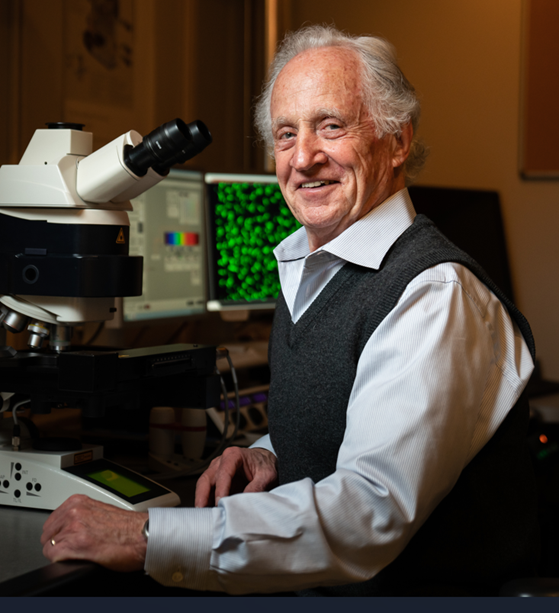
Mario Capecchi

Mario Capecchi

· ProfessorVerified

University of Utah · Biology

Active 1965–2026

h-index134
Citations59.9k
Papers46044 last 5y
Funding$51.7M1 active
See your match with Mario Capecchi — sign in to PhdFit.Sign in

About

Mario R. Capecchi, Ph.D., is a distinguished professor of human genetics and biology at the University of Utah's Eccles Institute of Human Genetics and a Howard Hughes Medical Institute investigator. He is renowned for his pioneering work on "knockout mice" technology, a gene-targeting technique that has revolutionized mammalian biology. This technology has enabled the creation of animal models for hundreds of human diseases, including cancer, by allowing precise genetic modifications in mice. In 2007, Capecchi was awarded the Nobel Prize in Physiology or Medicine in recognition of these groundbreaking contributions. Upon receiving the Nobel Prize, Capecchi expressed that the honor was significant not only for himself but also for the University, the Department of Human Genetics, and all members of his laboratory, past and present. His work has had a profound impact on biomedical research, providing essential tools for understanding gene function and disease mechanisms.

Research topics

  • Genetics
  • Medicine
  • Cancer research
  • Pathology
  • Biology
  • Computational biology

Selected publications

  • Microglia respond to and induce anxiety and grooming in mice using calcium signaling

    Molecular Psychiatry · 2026-04-13

    articleOpen accessSenior author

    Disruption of the mouse Hoxb8 gene causes chronic anxiety and pathological over-grooming resulting from defective Hoxb8 microglia. Furthermore, optogenetic stimulation of Hoxb8 microglia in specific regions of the brain induces elevated anxiety and/or grooming. Herein we show that the molecular signals for inducing anxiety and/or grooming in response to optogenetic activation are calcium ions. Conversely, induction of grooming and anxiety in mice produces calcium transients within microglia. Unexpectedly, calcium transients are not produced in Hoxb8 mutant mice in response to the induction of these behaviors. The likely cause for this lack of response by Hoxb8 mutant mice to induced grooming is the presence of high constitutive levels of free calcium within Hoxb8 mutant microglia resulting from the gene disruption. These calcium ions, in turn, serve as relentless signals to increase anxiety and grooming leading to chronic anxiety and pathological overgrooming in Hoxb8 mutant mice. Thus, we have shown that calcium signaling is used by microglia: 1) to induce anxiety and/or grooming by optogenetic stimulation of Hoxb8 microglia in WT mice, 2) to respond by microglia to the induction of both behaviors in WT mice and 3) as the causative agent for producing chronic anxiety and pathological overgrooming in Hoxb8 mutant mice.

  • Basic enables selection-free efficient knockin of large DNA in primary human T cells

    Molecular Therapy · 2026-01-02

    articleOpen access
  • Tic-related behaviors in Celsr3 mutant mice are contributed by alterations of striatal D3 dopamine receptors

    Molecular Psychiatry · 2025-03-28 · 7 citations

    article
  • Defective Hoxb8 microglia are causative for both chronic anxiety and pathological overgrooming in mice

    Molecular Psychiatry · 2025-09-02 · 4 citations

    articleOpen accessSenior author

    Disruption of the Hoxb8 gene results in chronic anxiety and pathological overgrooming in mice. Using bilateral intracerebral cell transplantation, we demonstrate that mutant Hoxb8 microglia are causative for both behaviors. Mice contain two microglia lineages, Hoxb8 and non-Hoxb8 microglia. We proposed that the two lineages work as a binary system, in opposition to each other with Hoxb8 microglia functioning to reduce anxiety and grooming (function as brakes), whereas non-Hoxb8 microglia increase the levels of both behaviors (function as accelerators). This model makes a strong, unexpected prediction: mice containing only wild-type canonical non-Hoxb8 microglia should exhibit pathological levels of grooming and anxiety. We demonstrate that this is the case, providing strong support for both microglia functioning as a binary system and for the 'Accelerator/Brake' model. Since mice containing only non-Hoxb8 microglia represent mice with a loss of Hoxb8 function due to the absence of Hoxb8 microglia, the more intensive pathology associated with Hoxb8 mutant mice must reflect that mutant mice have both gain and loss of function components. We identify and quantify the relative contribution of each component.

  • Arid1a Loss Enhances Disease Progression in a Murine Model of Osteosarcoma

    Cancers · 2024-07-31 · 1 citations

    articleOpen access

    Osteosarcoma is an aggressive bone malignancy, molecularly characterized by acquired genome complexity and frequent loss of TP53 and RB1. Obtaining a molecular understanding of the initiating mutations of osteosarcomagenesis has been challenged by the difficulty of parsing between passenger and driver mutations in genes. Here, a forward genetic screen in a genetic mouse model of osteosarcomagenesis initiated by Trp53 and Rb1 conditional loss in pre-osteoblasts identified that Arid1a loss contributes to OS progression. Arid1a is a member of the canonical BAF (SWI/SNF) complex and a known tumor suppressor gene in other cancers. We hypothesized that the loss of Arid1a increases the rate of tumor progression and metastasis. Phenotypic evaluation upon in vitro and in vivo deletion of Arid1a validated this hypothesis. Gene expression and pathway analysis revealed a correlation between Arid1a loss and genomic instability, and the subsequent dysregulation of genes involved in DNA DSB or SSB repair pathways. The most significant of these transcriptional changes was a concomitant decrease in DCLRE1C. Our findings suggest that Arid1a plays a role in genomic instability in aggressive osteosarcoma and a better understanding of this correlation can help with clinical prognoses and personalized patient care.

  • Supplementary Figure S8 from Targeting the Wnt Pathway in Synovial Sarcoma Models

    2023-04-03

    preprintOpen access

    <p>Supplementary Figure S8 - PDF file 1084K, Figure S8: Effects of SSTC-104 on Wnt-regulated tissues</p>

  • Supplementary Figure S8 from Targeting the Wnt Pathway in Synovial Sarcoma Models

    2023-04-03

    preprintOpen access

    <p>Supplementary Figure S8 - PDF file 1084K, Figure S8: Effects of SSTC-104 on Wnt-regulated tissues</p>

  • Supplementary Figure S11 and Tables S1-S3 from Targeting the Wnt Pathway in Synovial Sarcoma Models

    2023-04-03

    preprintOpen access

    <p>Supplementary Figure S11 and Tables S1-S3 - PDF file 460K, Figure S11: Regulation of an embryonic Wnt-interactive network by SYT-SSX2 and in human synovial sarcomas Table S1: Differentially regulated Wnt components in mesenchymal precursor cells expressing SYT-SSX2 and in synovial sarcoma tumors Table S2: Differentially regulated Wnt targets in mesenchymal precursor cells expressing SYT-SSX2 and in synovial sarcoma tumors Table S3: The embryonic Wnt interactive network in mesenchymal precursor cells expressing SYTSSX2 and in synovial sarcoma tumors</p>

  • Correction: Lrig1 expression identifies quiescent stem cells in the ventricular‑subventricular zone from postnatal development to adulthood and limits their persistent hyperproliferation

    Neural Development · 2023-05-23

    erratumOpen accessSenior author

    Correction: Lrig1 expression identifies quiescent stem cells

  • Supplementary Figures S2 and S3 from Targeting the Wnt Pathway in Synovial Sarcoma Models

    2023-04-03

    preprintOpen access

    <p>Supplementary Figures S2 and S3 - PDF file 2332K, Figure S2:SG3 tumors are positive for beta-catenin and Myf5 Figure S3:Normal development of Myf5 myoblasts in beta-catenin knockout mice</p>

Recent grants

Frequent coauthors

  • Kenneth E. Bernstein

    New York University

    107 shared
  • Pierre Corvol

    Académie de Paris

    90 shared
  • Jonathan W. Adams

    University of Cambridge

    63 shared
  • Josiane E. Eid

    University of Miami

    56 shared
  • Taylor P. Sherrill

    Vanderbilt University Medical Center

    54 shared
  • Andrea L. Frump

    Indiana University – Purdue University Indianapolis

    54 shared
  • Christina B. Garcia

    Centre College

    54 shared
  • Whitney Barham

    54 shared

Education

  • B.S.

    Antioch College

  • Ph.D.

    Harvard University

Awards & honors

  • 2007 Nobel Prize Winner for Physiology or Medicine
  • Resume-aware match score
  • Save to shortlist
  • AI-drafted outreach

See your match with Mario Capecchi

PhdFit ranks faculty by your research interests, methods, and publications — grounded in their actual work, not templates.

  • Free to start
  • No credit card
  • 30-second signup