
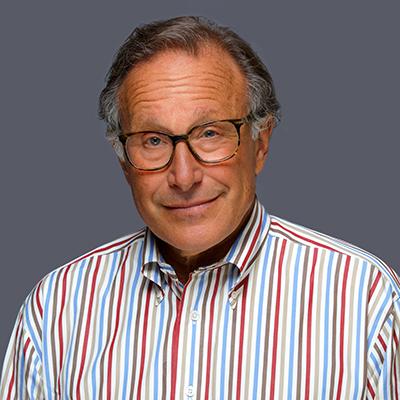
David Bernstein
· ProfessorBoston University · School of Education
Active 1946–2026
Academic metrics are sourced from OpenAlex and public funding records; values may differ from Google Scholar.
About
David W. Bernstein is a professor of music at Mills College at Northeastern University. His professional interests include John Cage, Pauline Oliveros, American Experimentalism, avant-garde music and aesthetics, Arnold Schoenberg’s tonal theories, post-tonal theory and analysis, 20th-century music literature, and the history of late 19th- and early 20th-century harmonic theory. His publications include books such as The San Francisco Tape Music Center: 1960s Counterculture and the Avant-Garde and Writings through John Cage’s Music, Poetry, and Art, along with essays in various scholarly collections and journals. Bernstein has also served as editor of Music Theory Spectrum. Currently, he is working on a book about Pauline Oliveros for the University of Illinois Press and developing an online archive documenting the history of experimental music on the Mills campus.
Research topics
- Computer Science
- Biology
- Computational biology
- Ecology
- Biological system
- Engineering
- Artificial Intelligence
- Machine Learning
- Data science
- Biochemical engineering
Selected publications
arXiv (Cornell University) · 2020 · 15 citations
Genome-scale stoichiometric modeling of metabolism has become a standard systems biology tool for modeling cellular physiology and growth. Extensions of this approach are also emerging as a valuable avenue for predicting, understanding and designing microbial communities. COMETS (Computation Of Microbial Ecosystems in Time and Space) was initially developed as an extension of dynamic flux balance analysis, which incorporates cellular and molecular diffusion, enabling simulations of multiple micr…
Gastroenterology · 2024-05-01
articleGastroenterology · 2024-05-01
articleProbabilistic metabolic modeling of microbial communities
OpenBU (Boston University) · 2020-01-01
dissertationOpen access1st authorCorrespondingMicrobial communities (microbiomes) comprise a vast component of life on our planet. They are involved in many fundamental processes, ranging from balancing global biogeochemical cycles to influencing human health. Recently, advances in genome sequencing technologies have allowed us to explore the genetic diversity of microbiomes in high-throughput, cataloging hundreds of thousands of microbial species and millions of genes. As genomic data is accumulating, the challenge remains: to translate ge…
Journal of Hepatology · 2018-04-01
article
Frequent coauthors
- 9 shared
Daniel Segrè
Boston University
- 6 shared
Anne M. Stringer
- 6 shared
Joseph T. Wade
- 5 shared
Daniel S. Reynolds
Inspire
- 5 shared
Nae Gyune Rim
Boston University
- 5 shared
Cari Meisel
Boston University
- 5 shared
Winnie Wong
- 5 shared
Anna Lyubetskaya
Bristol-Myers Squibb (United States)
Education
B.A.
Queens College
M.A.
Columbia University
Ph.D.
Columbia University
Similar researchers at Boston University
- Resume-aware match score
- Save to shortlist
- AI-drafted outreach
See your match with David Bernstein
PhdFit ranks faculty by your research interests, methods, and publications — grounded in their actual work, not templates.
- Free to start
- No credit card
- 30-second signup