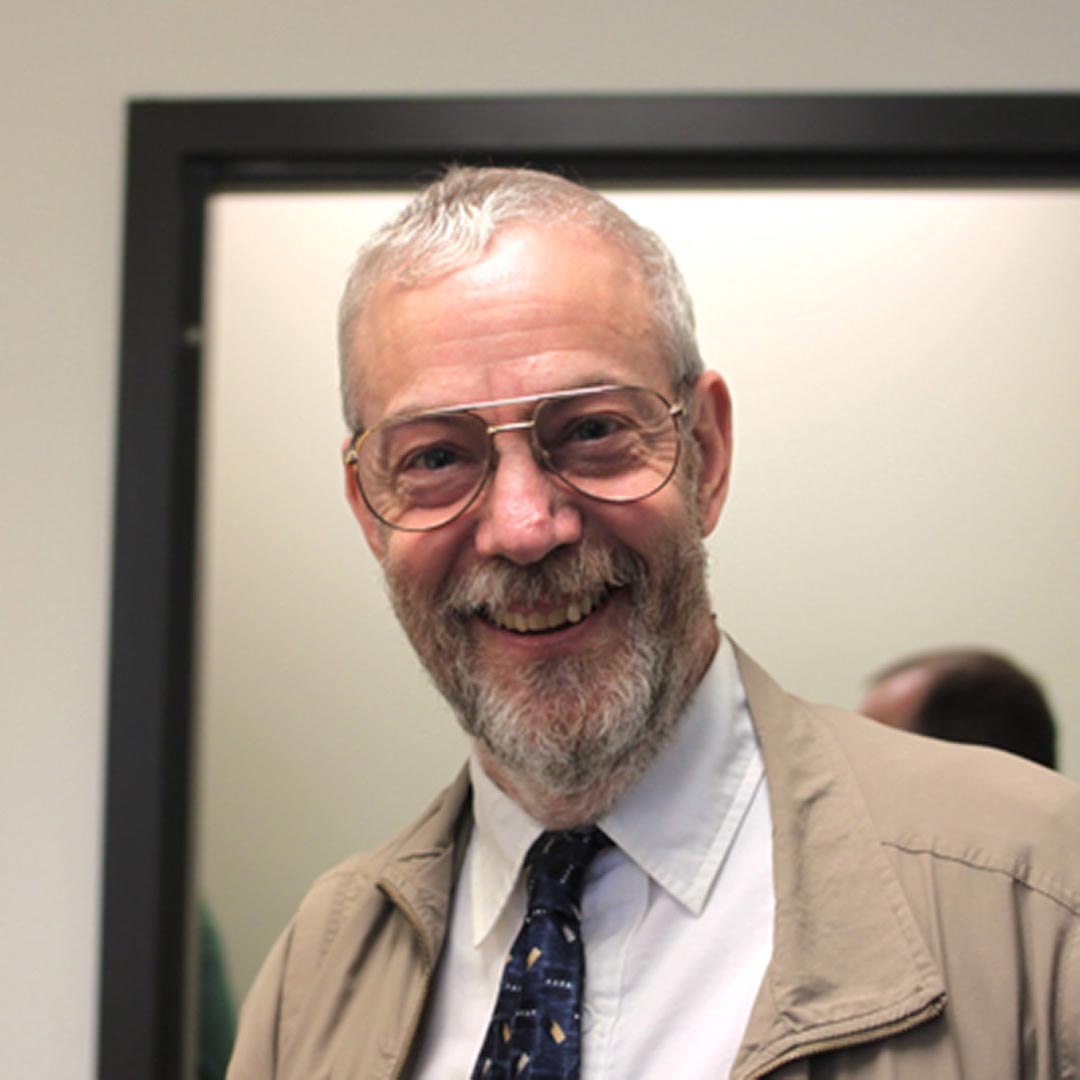
Howard Lasnik
· Professor Emeritus, LinguisticsVerifiedUniversity of Maryland, College Park · Linguistics
Active 1971–2022
Research topics
- Computer Science
- Artificial Intelligence
- Philosophy
- Linguistics
- Cognitive science
- Psychology
- Epistemology
Selected publications
The MIT Press eBooks · 2022 · 8 citations
1st authorCorresponding- Computer Science
- Artificial Intelligence
- Computer Science
Natural phenomena, including human language, are not just series of events but are organized quasi-periodically; sentences have structure, and that structure matters. Howard Lasnik and Juan Uriagereka “were there” when generative grammar was being developed into the Minimalist Program. In this presentation of the universal aspects of human language as a cognitive phenomenon, they rationally reconstruct syntactic structure. In the process, they touch upon structure dependency and its consequences for learnability, nuanced arguments (including global ones) for structure presupposed in standard linguistic analyses, and a formalism to capture long-range correlations. For practitioners, the authors assess whether “all we need is Merge,” while for outsiders, they summarize what needs to be covered when attempting to have structure “emerge.” Reconstructing the essential history of what is at stake when arguing for sentence scaffolding, the authors cover a range of larger issues, from the traditional computational notion of structure (the strong generative capacity of a system) and how far down into words it reaches to whether its variants, as evident across the world's languages, can arise from non-generative systems. While their perspective stems from Noam Chomsky's work, it does so critically, separating rhetoric from results. They consider what they do to be empirical, with the formalism being only a tool to guide their research (of course, they want sharp tools that can be falsified and have predictive power). Reaching out to skeptics, they invite potential collaborations that could arise from mutual examination of one another's work, as they attempt to establish a dialogue beyond generative grammar.
Frequent coauthors
- 10 shared
Juan Uriagereka
University of Maryland, College Park
- 6 shared
Norbert Hornstein
University of Maryland, Baltimore
- 6 shared
Terje Lohndal
Norwegian University of Science and Technology
- 5 shared
Marcel den Dikken
Eötvös Loránd University
- 5 shared
Robert Freidin
Princeton University
- 4 shared
Željko Bošković
University of Connecticut
- 3 shared
Robert Fiengo
- 3 shared
Noam Chomsky
Similar researchers at University of Maryland, College Park
- Resume-aware match score
- Save to shortlist
- AI-drafted outreach
See your match with Howard Lasnik
PhdFit ranks faculty by your research interests, methods, and publications — grounded in their actual work, not templates.
- Free to start
- No credit card
- 30-second signup