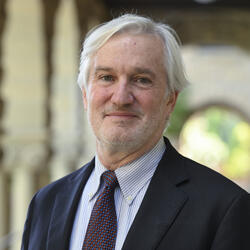
Allen S. Weiner
· Senior Lecturer in Law, Director, Stanford Program in International Law, Co-Director, Stanford Center on International Conflict and Negotiation, CISAC Core Faculty Member, Europe Center Affiliated FacultyStanford University · International Security Studies
Active 1991–2022
Research signals
Five dimensions sourced from public faculty / publication signals. Sign in to compare against your own profile and see your match score.
Research topics
- Sociology
- Computer Security
- Political Science
- Criminology
- Law and economics
- Law
Selected publications
The Rule of Law and the Role of Strategy in U.S. Nuclear Doctrine
International Security · 2021 · 36 citations
Senior authorCorresponding- Political Science
- Political Science
- Law
Abstract In 2013, the U.S. government announced that its nuclear war plans would be “consistent with the fundamental principles of the Law of Armed Conflict” and would “apply the principles of distinction and proportionality and seek to minimize collateral damage to civilian populations and civilian objects.” If properly applied, these legal principles can have a profound impact on U.S. nuclear doctrine. The prohibition against targeting civilians means that “countervalue” targeting and “minimum deterrence” strategies are illegal. The principle of distinction and the impermissibility of reprisal against civilians make it illegal for the United States, contrary to what is implied in the 2018 Nuclear Posture Review, to intentionally target civilians even in reprisal for a strike against U.S. or allied civilians. The principle of proportionality permits some, but not all, potential U.S. counterforce nuclear attacks against military targets. The precautionary principle means that the United States must use conventional weapons or the lowest-yield nuclear weapons that would be effective against legitimate military targets. The law of armed conflict also restricts targeting of an enemy's leadership to officials in the military chain of command or directly participating in hostilities, meaning that broad targeting to destroy an enemy's entire political leadership is unlawful.
Frequent coauthors
- 3 shared
Scott D. Sagan
- 2 shared
Lauren Sukin
Charles University
- 2 shared
Barry E. Carter
- 2 shared
Phillip R. Trimble
- 1 shared
Michael M. May
RheinMain University of Applied Sciences
- 1 shared
Paul Mcdaniel
United States Courts
- 1 shared
Dinah Shelton
- 1 shared
Barry Carter
Similar researchers at Stanford University
- Resume-aware match score
- Save to shortlist
- AI-drafted outreach
See your match with Allen S. Weiner
PhdFit ranks faculty by your research interests, methods, and publications — grounded in their actual work, not templates.
- Free to start
- No credit card
- 30-second signup