
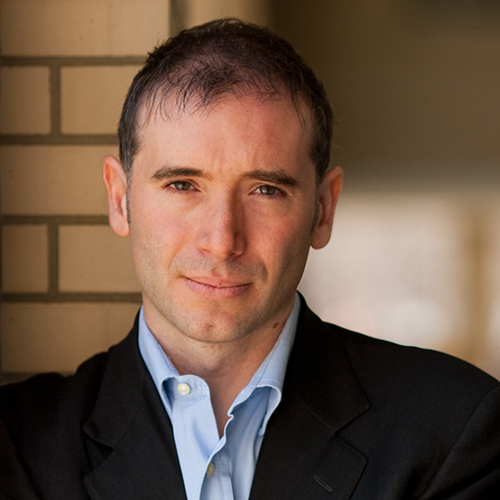
Alessandro Acquisti
· Trustees Professor of Information Technology and Public PolicyCarnegie Mellon University · Heinz College
Active 1997–2026
Academic metrics are sourced from OpenAlex and public funding records; values may differ from Google Scholar.
About
Alessandro Acquisti is Trustees Professor of Information Technology and Public Policy at Carnegie Mellon University's Heinz College, where he also serves as co-director of the CMU Center for Behavioral Decision Research (CBDR). His research investigates the economics and behavioral economics of privacy, as well as privacy issues in online social networks. His work has been published in leading journals across diverse disciplines, including Proceedings of the National Academy of Science, Journal of Consumer Research, Marketing Science, and Information Systems Research. Acquisti has received numerous awards for his research, including the PET Award for Outstanding Research in Privacy Enhancing Technologies and the IBM Best Academic Privacy Faculty Award, and has been involved in policy discussions through invitations to participate in the Federal Trade Commission's Privacy Roundtables and co-chairing the Cyber-Economics Track at the National Cyber Leap Year Summit. He holds a PhD from UC Berkeley and Master Degrees from UC Berkeley, the London School of Economics, and Trinity College Dublin. Prior to his academic career, he worked as a classical music producer and soundtrack composer, and raced in the USGPRU national championship.
Research topics
- Computer Science
- Internet privacy
- Psychology
- Business
- Computer Security
- World Wide Web
- Political Science
- Human–computer interaction
- Public relations
- Advertising
Selected publications
Secrets and Likes: The Drive for Privacy and the Difficulty of Achieving It in the Digital Age
Journal of Consumer Psychology · 2020 · 266 citations
1st authorCorrespondingWe review different streams of social science literature on privacy with the goal of understanding consumer privacy decision making and deriving implications for policy. We focus on psychological and economic factors influencing both consumers' desire and consumers' ability to protect their privacy, either through individual action or through the implementation of regulations applying to firms. Contrary to depictions of online sharing behaviors as careless, we show how consumers fundamentally ca…
"It's a scavenger hunt": Usability of Websites' Opt-Out and Data Deletion Choices
2020 · 107 citations
We conducted an in-lab user study with 24 participants to explore the usefulness and usability of privacy choices offered by websites. Participants were asked to find and use choices related to email marketing, targeted advertising, or data deletion on a set of nine websites that differed in terms of where and how these choices were presented. They struggled with several aspects of the interaction, such as selecting the correct page from a site's navigation menu and understanding what informatio…
Informing the Design of a Personalized Privacy Assistant for the Internet of Things
2020 · 101 citations
Internet of Things (IoT) devices create new ways through which personal data is collected and processed by service providers. Frequently, end users have little awareness of, and even less control over, these devices' data collection. IoT Personalized Privacy Assistants (PPAs) can help overcome this issue by helping users discover and, when available, control the data collection practices of nearby IoT resources. We use semi-structured interviews with 17 participants to explore user perceptions o…
Proceedings on Privacy Enhancing Technologies · 2023-01-01 · 37 citations
articleOpen accessSenior authorPrivacy scholars have long studied, and argued about, a so-called privacy paradox---the alleged gap between individuals' claims of caring about privacy and their actual behaviors. This manuscript explores whether a different type of mismatch occurs in an online sample of US participants: a mismatch between participants' dismissive perspectives on privacy and their privacy-protective behaviors. In a series of online studies with Prolific US participants we tackle two research questions: is there…
Encouraging Users to Change Breached Passwords Using the Protection Motivation Theory
ACM Transactions on Computer-Human Interaction · 2024-08-30 · 13 citations
articleOpen accessWe draw on the Protection Motivation Theory (PMT) to design interventions that encourage users to change breached passwords. Our online experiment ( \(n=1{,}386\) ) compared the effectiveness of a threat appeal (highlighting the negative consequences after passwords were breached) and a coping appeal (providing instructions on changing the breached password) in a 2 \(\times\) 2 factorial design. Compared to the control condition, participants receiving the threat appeal were more likely to inten…
Recent grants
Evaluating and Enhancing Privacy and Information Sharing in Online Social Networks
NSF · $387k · 2007–2011
IBSS: Societal, Economic, Technological, and Legal Implications of Personalized Face Composites
NSF · $624k · 2013–2019
EAGER: Collaborative: Design, Perception, and Action - Engineering Information Give-Away
NSF · $49k · 2015–2019
Frequent coauthors
- 49 shared
George Loewenstein
- 48 shared
Lorrie Faith Cranor
Carnegie Mellon University
- 37 shared
Laura Brandimarte
- 23 shared
Idris Adjerid
- 22 shared
Norman Sadeh
Carnegie Mellon University
- 21 shared
Sasha Romanosky
- 17 shared
Florian Schaub
University of Michigan–Ann Arbor
- 15 shared
Leslie K. John
Harvard University Press
Education
- 2001
Ph.D., Computer Science
Carnegie Mellon University
- 1998
M.S., Computer Science
Carnegie Mellon University
- 1995
B.S., Computer Science
University of Pisa
Awards & honors
- PET Award for Outstanding Research in Privacy Enhancing Tech…
- IBM Best Academic Privacy Faculty Award
- Heinz College's School of Information Teaching Excellent Awa…
Similar researchers at Carnegie Mellon University
- Resume-aware match score
- Save to shortlist
- AI-drafted outreach
See your match with Alessandro Acquisti
PhdFit ranks faculty by your research interests, methods, and publications — grounded in their actual work, not templates.
- Free to start
- No credit card
- 30-second signup