About
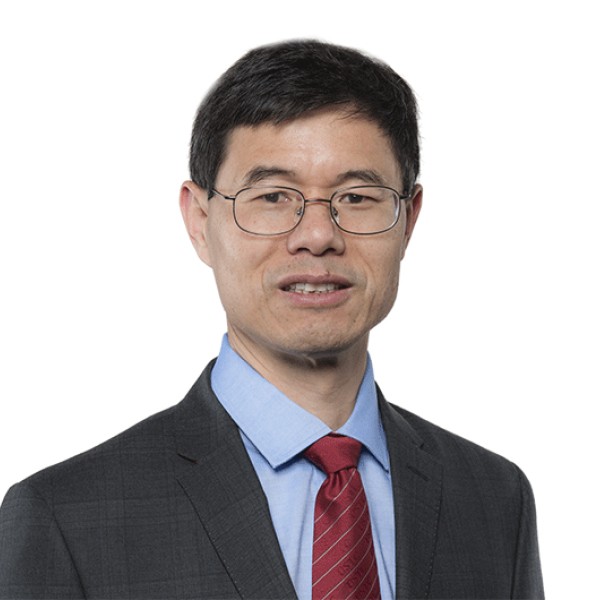
Wenbin Lin is the James Franck Professor of Chemistry at The University of Chicago, with research interests spanning materials chemistry, catalysis, inorganic chemistry, and chemical biology. His group works on interdisciplinary projects concerning sustainability and human health, addressing fundamental chemical problems alongside social issues such as environmental sustainability, renewable energy, and human health. His research encompasses the design and application of metal-organic frameworks (MOFs), catalysis, renewable energy technologies including solar fuels, biofuels, and nuclear energy, as well as nanomedicine and cancer therapy. Notably, his team has pioneered the rational design of functional solids based on MOFs, exploring their applications in nonlinear optics, gas storage, and solar energy utilization, and developing nanomedicines that have been licensed for clinical use and are in phase 2 trials. His work in nanomedicine includes developing hybrid nanomaterials for biomedical imaging and targeted drug delivery, with a focus on translating these technologies into clinical settings for cancer diagnosis and treatment. Lin's contributions extend to designing nanotherapeutics that enhance chemotherapy, radiotherapy, and immunotherapy, with several in clinical trials. His academic background includes a B.S. from the University of Science and Technology of China and a Ph.D. from the University of Illinois at Urbana-Champaign, followed by postdoctoral work at Northwestern University. He has held faculty positions at the University of North Carolina at Chapel Hill before joining The University of Chicago. Lin has received numerous awards and honors, including the Royal Society of Chemistry Horizon Prize, European Academy of Sciences fellowship, and recognition as a Highly Cited Researcher in Chemistry.
Research topics
- Chemistry
- Photochemistry
- Organic chemistry
- Cancer research
- Combinatorial chemistry
- Immunology
- Biochemistry
- Biology
- Medicine
- Physics
- Nanotechnology
- Physical chemistry
- Materials science
- Inorganic chemistry
Selected publications
Nature Nanotechnology · 2022 · 200 citations
- Cancer research
- Chemistry
- Materials science
Metal–organic frameworks embedded in a liposome facilitate overall photocatalytic water splitting
Nature Chemistry · 2021 · 281 citations
- Chemistry
- Photochemistry
- Combinatorial chemistry
Journal of the American Chemical Society · 2020 · 294 citations
Senior authorCorresponding- Chemistry
- Photochemistry
- Inorganic chemistry
We report here the design of two multifunctional metal−organic frameworks (MOFs), mPT-Cu/Co and mPT-Cu/Re, comprising cuprous photosensitizers (Cu-PSs) and molecular Co or Re catalysts for photocatalytic hydrogen evolution (HER) and CO2 reduction (CO2RR), respectively. Hierarchical organization of Cu-PSs and Co/Re catalysts in these MOFs facilitates multielectron transfer to drive HER and CO2RR under visible light with an HER turnover number (TON) of 18 700 for mPT-Cu/Co and a CO2RR TON of 1328 for mPT-Cu/Re, which represent a 95-fold enhancement over their homogeneous controls. Photophysical and electrochemical investigations revealed the reductive quenching pathway in HER and CO2RR catalytic cycles and attributed the significantly improved performances of MOFs over their homogeneous counterparts to enhanced electron transfer due to close proximity between Cu-PSs and active catalysts and stabilization of Cu-PSs and molecular catalysts by the MOF framework.
Intratumoral accumulation of gut microbiota facilitates CD47-based immunotherapy via STING signaling
The Journal of Experimental Medicine · 2020 · 376 citations
- Biology
- Immunology
- Cancer research
Most studies focus on how intestinal microbiota influence cancer immunotherapy through activating gut immunity. However, immunotherapies related to innate responses such as CD47 blockade rely on the rapid immune responses within the tumor microenvironment. Using one defined anaerobic gut microbiota to track whether microbiota interact with host immunity, we observed that Bifidobacterium facilitates local anti-CD47 immunotherapy on tumor tissues through the capacity to accumulate within the tumor microenvironment. Systemic administration of Bifidobacterium leads to its accumulation within the tumor and converts the nonresponder mice into responders to anti-CD47 immunotherapy in a stimulator of interferon genes (STING)- and interferon-dependent fashion. Local delivery of Bifidobacterium potently stimulates STING signaling and increases cross-priming of dendritic cells after anti-CD47 treatment. Our study identifies the mechanism by which gut microbiota preferentially colonize in tumor sites and facilitate immunotherapy via STING signaling.
Recent grants
Functional Materials via Crystal- and Nano-engineering of Metal-Organic Frameworks
NSF · $52k · 2013–2014
NIH · $9.2M · 2016
NIH · $1.3M · 2023–2028
NIH · $1.8M · 2023–2028
Chiral Porous Metal-Organic Frameworks as A Tunable Platform for Asymmetric Catalysis
NSF · $331k · 2013–2014
Frequent coauthors
- 1681 shared
Xiaodong Zou
Stockholm University
- 1681 shared
Longshi Rao
- 1681 shared
Xiao‐Ming Chen
Albert Einstein College of Medicine
- 1681 shared
Jun Chen
Second Affiliated Hospital of Nanjing Medical University
- 1681 shared
Kailin Deng
University of Chicago
- 1681 shared
Jie Li
- 1681 shared
Yi Xie
University of Science and Technology of China
- 1681 shared
Yu Tang
Nanjing University of Chinese Medicine
Labs
Education
- 1994
Inorganic Chemistry, Chemistry
University of Illinois at Urbana-Champaign
- 1988
Chemical Physics, Chemical Physics
University of Science and Technology of China
Awards & honors
- Royal Society of Chemistry Horizon Prize 2024
- Foreign Fellow, European Academy of Sciences 2023
- OKeanos-CAPA Senior Investigator Award at the Chemical and B…
- Camille Dreyfus Teacher-Scholar Award 2001
- Arnold and Mabel Beckman Young Investigator Award 2000
Similar researchers at University of Chicago
- Resume-aware match score
- Save to shortlist
- AI-drafted outreach
See your match with Wenbin Lin
PhdFit ranks faculty by your research interests, methods, and publications — grounded in their actual work, not templates.
- Free to start
- No credit card
- 30-second signup