
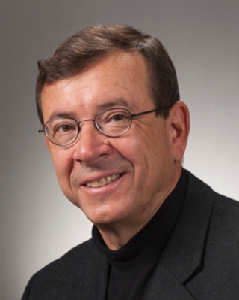
Vytas Bankaitis
· Professor and Wehner-Welch Foundation Chair in ChemistryTexas A&M University · Molecular and Cellular Biology
Active 1979–2026
Academic metrics are sourced from OpenAlex and public funding records; values may differ from Google Scholar.
About
Vytas A. Bankaitis, PhD, is a Distinguished Professor and the E.L. Wehner-Welch Foundation Chair in Chemistry at Texas A&M University Naresh K. Vashisht College of Medicine. His laboratory focuses on the regulatory interfaces between novel lipid-mediated signal transduction pathways and important cellular functions. The primary research interest is in phosphatidylinositol/phosphatidylcholine transfer proteins (PITPs), a ubiquitous but enigmatic class of proteins. His work involves biochemical characterization of novel metazoan PITP family members, as well as genetic, molecular, and biophysical approaches to detailed structural and functional analyses of PITPs. His research includes studying the mechanism of function of fungal and plant PITPs and generating knockout mice to analyze the function of specific PITP isoforms in mammals. His collective evidence indicates that PITPs coordinate key interfaces of lipid-driven metabolic reactions and intracellular signaling pathways in both yeast and mammals, with dysfunctions linked to membrane trafficking, growth factor receptor function, cell growth control, and developmental pathways, which are relevant to cancer mechanisms. His laboratory employs molecular biology, protein and lipid biochemistry, microscopy, gene knockout technology, and drug discovery approaches. Key contributions include demonstrating lipids' role in membrane trafficking regulation, identifying in vivo functions of PITPs, solving structural folds of PITPs, and…
Research topics
- Biology
- Cell biology
- Biochemistry
Selected publications
Noncanonical regulation of phosphatidylserine metabolism by a Sec14-like protein and a lipid kinase
The Journal of Cell Biology · 2020 · 21 citations
Senior authorCorrespondingThe yeast phosphatidylserine (PtdSer) decarboxylase Psd2 is proposed to engage in a membrane contact site (MCS) for PtdSer decarboxylation to phosphatidylethanolamine (PtdEtn). This proposed MCS harbors Psd2, the Sec14-like phosphatidylinositol transfer protein (PITP) Sfh4, the Stt4 phosphatidylinositol (PtdIns) 4-OH kinase, the Scs2 tether, and an uncharacterized protein. We report that, of these components, only Sfh4 and Stt4 regulate Psd2 activity in vivo. They do so via distinct mechanisms.…
Advances in Biological Regulation · 2020 · 20 citations
Restoration of PITPNA in Type 2 diabetic human islets reverses pancreatic beta-cell dysfunction
Nature Communications · 2023-07-17 · 15 citations
articleOpen accessAbstract Defects in insulin processing and granule maturation are linked to pancreatic beta-cell failure during type 2 diabetes (T2D). Phosphatidylinositol transfer protein alpha (PITPNA) stimulates activity of phosphatidylinositol (PtdIns) 4-OH kinase to produce sufficient PtdIns-4-phosphate (PtdIns-4-P) in the trans-Golgi network to promote insulin granule maturation. PITPNA in beta-cells of T2D human subjects is markedly reduced suggesting its depletion accompanies beta-cell dysfunction. Cond…
Cell Reports · 2022-05-01 · 14 citations
articleOpen accessSenior authorCorrespondingThe neocortex expands explosively during embryonic development. The earliest populations of neural stem cells (NSCs) form a thin pseudostratified epithelium whose contour determines that of the adult neocortex. Neocortical complexity is accompanied by disproportional expansion of the NSC layer in its tangential dimension to increase tissue surface area. How such disproportional expansion is controlled remains unknown. We demonstrate that a phosphatidylinositol transfer protein (PITP)/non-canonic…
Genetics · 2021-10-09 · 8 citations
articleOpen accessContinuously dividing cells coordinate their growth and division. How fast cells grow in mass determines how fast they will multiply. Yet, there are few, if any, examples of a metabolic pathway that actively drives a cell cycle event instead of just being required for it. Here, we show that translational upregulation of lipogenic enzymes in Saccharomyces cerevisiae increased the abundance of lipids and promoted nuclear elongation and division. Derepressing translation of acetyl-CoA carboxylase a…
Recent grants
Role of the Phospholipids in Golgi Secretory Function
NIH · $7.2M · 1991–2020
NIH · $370k · 2011
NIH · $1.1M · 2012
Frequent coauthors
- 66 shared
Carl J. Mousley
Curtin University
- 60 shared
Ashutosh Tripathi
The University of Texas Health Science Center at Houston
- 53 shared
Gabriel Schaaf
Institute of Crop Science
- 36 shared
Aaron H. Nile
Enzo Life Sciences (United States)
- 35 shared
Zhigang Xie
- 35 shared
James G. Alb
University of North Carolina at Chapel Hill
- 33 shared
Aby Grabon
Pediatrics and Genetics
- 27 shared
Max Lönnfors
Åbo Akademi University
Awards & honors
- NCAA Postgraduate Fellowship (1978)
- President's Award for the outstanding student research prese…
- Predoctoral Fellowship of the Humphrey Foundation (1980)
- Postdoctoral Fellowship of the Helen Hay Whitney Foundation…
- Arnold Beckman Scholar (1986)
Similar researchers at Texas A&M University
- Resume-aware match score
- Save to shortlist
- AI-drafted outreach
See your match with Vytas Bankaitis
PhdFit ranks faculty by your research interests, methods, and publications — grounded in their actual work, not templates.
- Free to start
- No credit card
- 30-second signup