
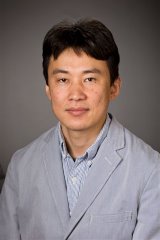
Fei Liu
· Associate Professor, Institute of Regenerative MedicineTexas A&M University · Molecular and Cellular Biology
Active 1991–2026
Academic metrics are sourced from OpenAlex and public funding records; values may differ from Google Scholar.
About
Fei Liu, PhD, is an Associate Professor at Texas A&M University Naresh K. Vashisht College of Medicine, affiliated with the Institute for Regenerative Medicine. He received his PhD in immunology from the 4th Military Medical University in Xi'an, China, in 2002, and completed postdoctoral training in developmental biology at the University of Dundee and University of Pennsylvania. His research focuses on the pathogenesis and novel therapies of severe dry mouth caused by radiation therapy or autoimmune responses, with particular attention to the role of salivary gland tissue resident macrophages in tissue regeneration. Liu's lab investigates the dynamic changes of these immune cells during development, homeostasis, and regeneration, as well as approaches to target these cells to promote functional tissue repair. Additionally, his work involves the standardization and application of mesenchymal stem cells derived from induced pluripotent stem cells for treating diseases related to immune responses and tissue degeneration. Liu's contributions include establishing standardized human mesenchymal stem cells and their extracellular vesicles for therapeutic purposes, and exploring mechanisms underlying their effects. He directs graduate courses and participates in advisory committees, hosting students for research and directed study courses. Liu's research is supported by federal grants from NIH and DoD, and he serves on multiple grant review panels nationally and internationally.…
Research topics
- Cell biology
- Medicine
- Biology
- Biochemistry
- Chemistry
- Biomedical engineering
- Internal medicine
- Cancer research
- Materials science
- Pathology
Selected publications
Stem Cell Research & Therapy · 2021 · 59 citations
Senior authorCorrespondingBACKGROUND: Extracellular vesicles (EVs) and their mimics from mesenchymal stem cells (MSCs) are promising drug carriers to improve cancer treatment, but their application is hindered by donor variations and expansion limitations of conventional tissue-derived MSCs. To circumvent these issues, we made EV-mimicking nanovesicles from standardized MSCs derived from human induced pluripotent stem cells (iPSCs) with a theoretically limitless expandability, and examined the targeting capacity of these…
Nature Communications · 2020 · 52 citations
Approximately 10% of fractures will not heal without intervention. Current treatments can be marginally effective, costly, and some have adverse effects. A safe and manufacturable mimic of anabolic bone is the primary goal of bone engineering, but achieving this is challenging. Mesenchymal stem cells (MSCs), are excellent candidates for engineering bone, but lack reproducibility due to donor source and culture methodology. The need for a bioactive attachment substrate also hinders progress. Here…
Stem Cells Translational Medicine · 2021 · 33 citations
Human mesenchymal stem cells (hMSCs) are effective in treating disorders resulting from an inflammatory or heightened immune response. The hMSCs derived from induced pluripotent stem cells (ihMSCs) share the characteristics of tissue derived hMSCs but lack challenges associated with limited tissue sources and donor variation. To meet the expected future demand for ihMSCs, there is a need to develop scalable methods for their production at clinical yields while retaining immunomodulatory efficacy…
International Journal of Molecular Sciences · 2021-12-16 · 21 citations
articleOpen accessSenior authorCorrespondingSalivary gland function is commonly and irreversibly damaged by radiation therapy for head and neck cancer. This damage greatly decreases the patient's quality of life and is difficult to remedy. Previously, we found that the transient activation of Hedgehog signaling alleviated salivary hypofunction after radiation in both mouse and pig models through the inhibition of radiation-induced cellular senescence that is mediated by resident macrophages in mouse submandibular glands. Here we report th…
International Journal of Molecular Sciences · 2023-03-09 · 19 citations
articleOpen accessSenior authorCorrespondingExtracellular vesicles (EVs) from allogeneic-tissue-derived mesenchymal stem cells (MSCs) are promising to improve Sjögren’s syndrome (SS) treatment, but their application is hindered by high variations in and limited expandability of tissue MSCs. We derived standardized and scalable MSCs from iPS cells (iMSCs) and reported that EVs from young but not aging iMSCs (iEVs) inhibited sialadenitis onset in SS mouse models. Here, we aim to determine cellular mechanisms and optimization approaches of S…
Recent grants
NIH · $1.8M · 2021–2027
NIH · $1.4M · 2016
NIH · $763k · 2012
Frequent coauthors
- 77 shared
Qingguo Zhao
- 68 shared
Bo Hai
- 40 shared
Yanqiu Zhao
Qilu University of Technology
- 39 shared
D Rangaraj
- 38 shared
Lizheng Qin
Capital Medical University
- 38 shared
Sangroh Kim
- 38 shared
Lei Shangguan
Air Force Medical University
- 34 shared
Xinyu Ti
Labs
Fei Liu LaboratoryPI
Similar researchers at Texas A&M University
- Resume-aware match score
- Save to shortlist
- AI-drafted outreach
See your match with Fei Liu
PhdFit ranks faculty by your research interests, methods, and publications — grounded in their actual work, not templates.
- Free to start
- No credit card
- 30-second signup