
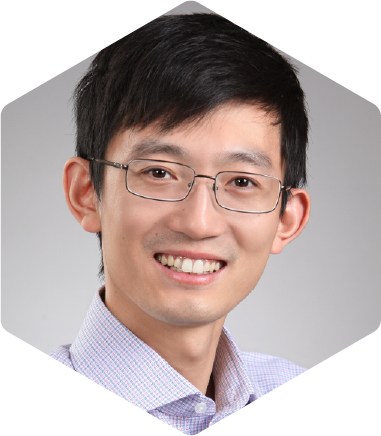
Tengyu Ma
· Machine Learning, Deep Learning & Reinforcement LearningStanford University · Learning, Design, and Technology
Active 2011–2026
Academic metrics are sourced from OpenAlex and public funding records; values may differ from Google Scholar.
About
Tengyu Ma is an assistant professor of computer science at Stanford University. His research broadly encompasses machine learning, algorithms, and their theoretical foundations. His interests include deep learning, (deep) reinforcement learning, pre-training and foundation models, robustness, non-convex optimization, distributed optimization, and high-dimensional statistics. Ma's work focuses on advancing the understanding and development of machine learning algorithms with provable guarantees and practical impact. He has contributed to areas such as reasoning models, reinforcement learning, large language models, representation learning, robustness, deep learning theory, and uncertainty quantification. Ma is actively involved in teaching courses related to statistical and machine learning theory, machine learning, and nonparametric statistics. He has also served on program committees and as area chair for major conferences including AAAI, ICLR, NeurIPS, and COLT. His research excellence has been recognized with several awards, including the 2022 Samsung AI Researcher of the Year, the Sloan Research Fellowship, the NSF CAREER Award, and the ACM Doctoral Dissertation Award Honorable Mention.
Research topics
- Computer Science
- Artificial Intelligence
- Machine Learning
- Data Mining
- Natural Language Processing
- Political Science
- Data science
- Mathematics
- Computer vision
- Engineering ethics
Selected publications
On the Opportunities and Risks of Foundation Models
arXiv (Cornell University) · 2021 · 2169 citations
AI is undergoing a paradigm shift with the rise of models (e.g., BERT, DALL-E, GPT-3) that are trained on broad data at scale and are adaptable to a wide range of downstream tasks. We call these models foundation models to underscore their critically central yet incomplete character. This report provides a thorough account of the opportunities and risks of foundation models, ranging from their capabilities (e.g., language, vision, robotics, reasoning, human interaction) and technical principles(…
Document-Level Relation Extraction with Adaptive Thresholding and Localized Context Pooling
Proceedings of the AAAI Conference on Artificial Intelligence · 2021 · 288 citations
Document-level relation extraction (RE) poses new challenges compared to its sentence-level counterpart. One document commonly contains multiple entity pairs, and one entity pair occurs multiple times in the document associated with multiple possible relations. In this paper, we propose two novel techniques, adaptive thresholding and localized context pooling, to solve the multi-label and multi-entity problems. The adaptive thresholding replaces the global threshold for multi-label classificatio…
SAM 2: Segment Anything in Images and Videos
arXiv (Cornell University) · 2024-08-01 · 227 citations
preprintOpen accessWe present Segment Anything Model 2 (SAM 2), a foundation model towards solving promptable visual segmentation in images and videos. We build a data engine, which improves model and data via user interaction, to collect the largest video segmentation dataset to date. Our model is a simple transformer architecture with streaming memory for real-time video processing. SAM 2 trained on our data provides strong performance across a wide range of tasks. In video segmentation, we observe better accura…
MOPO: Model-based Offline Policy Optimization
arXiv (Cornell University) · 2020 · 217 citations
Senior authorCorrespondingOffline reinforcement learning (RL) refers to the problem of learning policies entirely from a large batch of previously collected data. This problem setting offers the promise of utilizing such datasets to acquire policies without any costly or dangerous active exploration. However, it is also challenging, due to the distributional shift between the offline training data and those states visited by the learned policy. Despite significant recent progress, the most successful prior methods are mo…
Large Language Models as Tool Makers
arXiv (Cornell University) · 2023-05-26 · 19 citations
preprintOpen accessRecent research has highlighted the potential of large language models (LLMs) to improve their problem-solving capabilities with the aid of suitable external tools. In our work, we further advance this concept by introducing a closed-loop framework, referred to as LLMs A s Tool Makers (LATM), where LLMs create their own reusable tools for problem-solving. Our approach consists of two phases: 1) tool making: an LLM acts as the tool maker that crafts tools for a set of tasks. 2) tool using: anothe…
Frequent coauthors
- 34 shared
Sanjeev Arora
- 24 shared
Yingyu Liang
- 23 shared
Colin Wei
- 18 shared
Percy Liang
- 18 shared
Yuanzhi Li
- 17 shared
Andrej Risteski
- 14 shared
Sang Michael Xie
- 12 shared
Ananya Kumar
Labs
Research interests broadly include topics in machine learning, algorithms and their theory, such as deep learning, (deep) reinforcement learning, pre-training / foundation models, robustness, non-convex optimization, distributed optimization, and high-dimensional statistics.
Awards & honors
- 2022 Samsung AI Researcher of the Year
- Sloan Research Fellowships 2021
- NSF CAREER Award
- ACM Doctoral Dissertation Award Honorable Mention
- 2018 COLT Best Paper Award
Similar researchers at Stanford University
- Resume-aware match score
- Save to shortlist
- AI-drafted outreach
See your match with Tengyu Ma
PhdFit ranks faculty by your research interests, methods, and publications — grounded in their actual work, not templates.
- Free to start
- No credit card
- 30-second signup