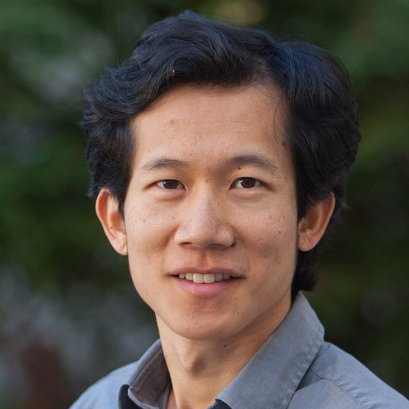
Percy Liang
· Machine Learning & Natural Language ProcessingStanford University · Learning, Design, and Technology
Active 2004–2025
Academic metrics are sourced from OpenAlex and public funding records; values may differ from Google Scholar.
About
Percy Liang is a Professor of Computer Science with courtesy in Statistics. His research interests encompass fundamental questions around learning and intelligence, including how well we can learn in data-limited, infinite compute regimes, modeling interestingness and curiosity, and pushing the frontier of human knowledge. He leads Marin, an initiative to build models openly through experiments that are preregistered and accessible for public engagement, practicing a radical form of openness that extends beyond open-weight and open-source models. Liang is dedicated to enabling understanding, shaping, and contributing to foundation model development, exemplified by his teaching of CS336 (Language Models from Scratch). He advocates for efficient and reproducible research, having created CodaLab Worksheets, a platform that maintains full experiment provenance from raw data to results, with some papers on CodaLab as executable papers. His educational background includes a Ph.D. from Berkeley, advised by Michael Jordan and Dan Klein, an MEng from MIT, and a B.S. from MIT. His honors include the Presidential Early Career Award for Scientists and Engineers, the IJCAI Computers and Thought Award, an NSF CAREER Award, a Sloan Research Fellowship, and a Microsoft Research Faculty Fellowship. Liang has a diverse background with experience in programming contests, music competitions, and various academic and research roles, and he has mentored numerous students and post-docs who have…
Research topics
- Computer Science
- Artificial Intelligence
- Natural Language Processing
- Machine Learning
- Engineering
- Psychology
- Data Mining
- Mathematics
- Information Retrieval
- Human–computer interaction
Selected publications
On the Opportunities and Risks of Foundation Models
arXiv (Cornell University) · 2021 · 2169 citations
Senior authorCorrespondingAI is undergoing a paradigm shift with the rise of models (e.g., BERT, DALL-E, GPT-3) that are trained on broad data at scale and are adaptable to a wide range of downstream tasks. We call these models foundation models to underscore their critically central yet incomplete character. This report provides a thorough account of the opportunities and risks of foundation models, ranging from their capabilities (e.g., language, vision, robotics, reasoning, human interaction) and technical principles(…
Prefix-Tuning: Optimizing Continuous Prompts for Generation
2021 · 2165 citations
Senior authorCorrespondingXiang Lisa Li, Percy Liang. Proceedings of the 59th Annual Meeting of the Association for Computational Linguistics and the 11th International Joint Conference on Natural Language Processing (Volume 1: Long Papers). 2021.
Generative Agents: Interactive Simulacra of Human Behavior
2023 · 1333 citations
Believable proxies of human behavior can empower interactive applications ranging from immersive environments to rehearsal spaces for interpersonal communication to prototyping tools. In this paper, we introduce generative agents: computational software agents that simulate believable human behavior. Generative agents wake up, cook breakfast, and head to work; artists paint, while authors write; they form opinions, notice each other, and initiate conversations; they remember and reflect on days…
Emergent Abilities of Large Language Models
arXiv (Cornell University) · 2022 · 1027 citations
Scaling up language models has been shown to predictably improve performance and sample efficiency on a wide range of downstream tasks. This paper instead discusses an unpredictable phenomenon that we refer to as emergent abilities of large language models. We consider an ability to be emergent if it is not present in smaller models but is present in larger models. Thus, emergent abilities cannot be predicted simply by extrapolating the performance of smaller models. The existence of such emerge…
Beyond the Imitation Game: Quantifying and extrapolating the capabilities of language models
arXiv (Cornell University) · 2022 · 548 citations
Language models demonstrate both quantitative improvement and new qualitative capabilities with increasing scale. Despite their potentially transformative impact, these new capabilities are as yet poorly characterized. In order to inform future research, prepare for disruptive new model capabilities, and ameliorate socially harmful effects, it is vital that we understand the present and near-future capabilities and limitations of language models. To address this challenge, we introduce the Beyon…
Recent grants
CAREER: Interactive Training of Semantic Parsers via Paraphrasing
NSF · $550k · 2016–2022
Frequent coauthors
- 46 shared
Tatsunori Hashimoto
- 46 shared
Christopher D. Manning
- 38 shared
Aditi Raghunathan
- 33 shared
Robin Jia
- 31 shared
Pang Wei Koh
- 29 shared
Panupong Pasupat
- 27 shared
Jure Leskovec
Stanford University
- 27 shared
Michihiro Yasunaga
Education
- 2004
B.S.
MIT
- 2005
Other
MIT
- 2011
Ph.D.
Berkeley
Awards & honors
- Presidential Early Career Award for Scientists and Engineers…
- IJCAI Computers and Thought Award (2016)
- NSF CAREER Award (2016)
- Sloan Research Fellowship (2015)
- Microsoft Research Faculty Fellowship (2014)
Similar researchers at Stanford University
- Resume-aware match score
- Save to shortlist
- AI-drafted outreach
See your match with Percy Liang
PhdFit ranks faculty by your research interests, methods, and publications — grounded in their actual work, not templates.
- Free to start
- No credit card
- 30-second signup