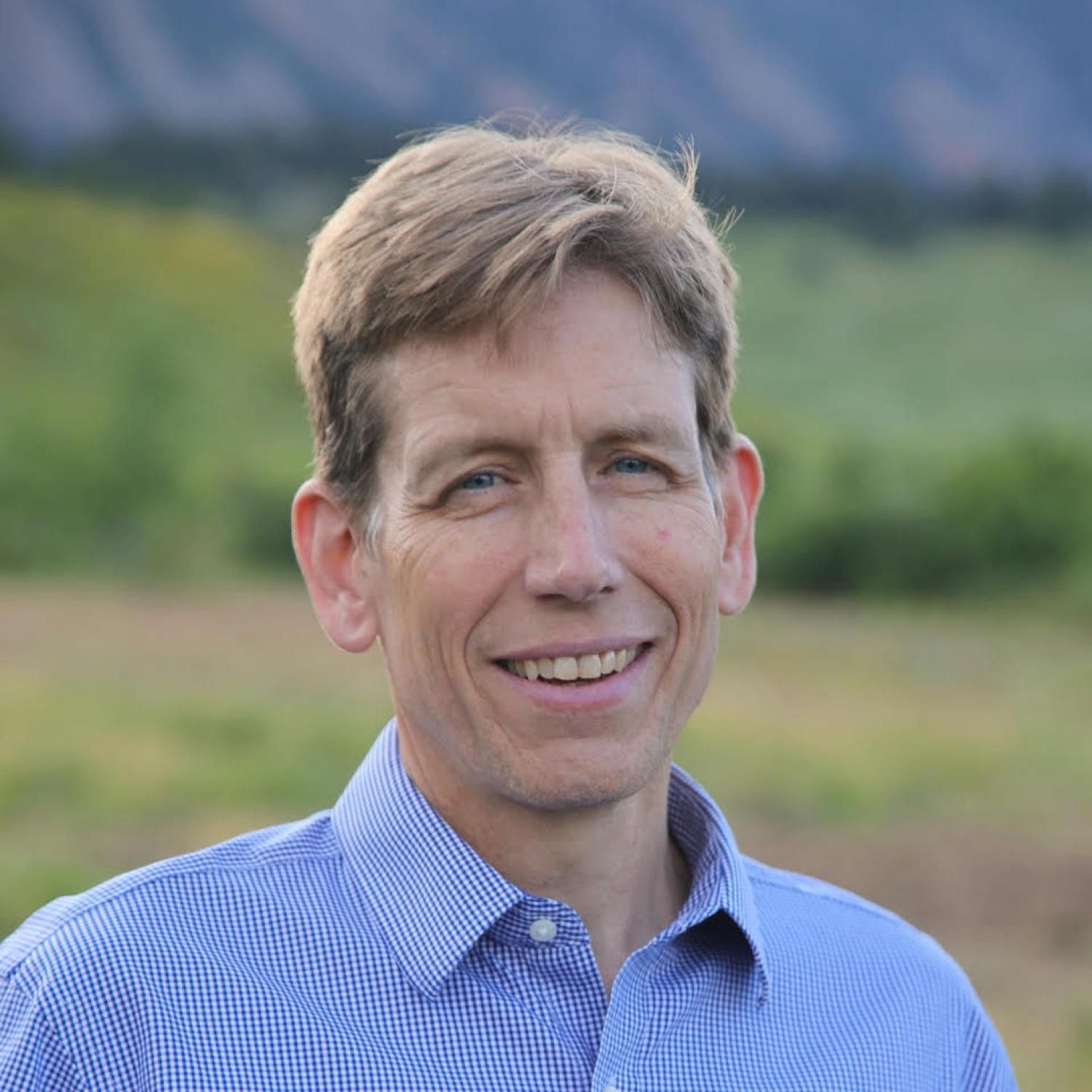
Steven Brown
· Professor Adjoint • Researcher, NOAAUniversity of Colorado Boulder · Chemistry
Active 1987–2024
About
Dr. Steven S. Brown is an Adjunct Professor in the Department of Chemistry at the University of Colorado Boulder. He is affiliated with the NOAA Chemical Sciences Laboratory in Boulder, CO. His professional contact information includes a phone number at 303-351-2115 and email addresses steven.s.brown@noaa.gov and steven.s.brown@colorado.edu. The provided information indicates his role involves research related to chemical sciences, though specific details about his research focus, background, or key contributions are not included in the page text.
Research topics
- Environmental science
- Meteorology
- Geography
- Geology
- Chemistry
- Environmental chemistry
- Computer Science
- Waste management
- Engineering
- Oceanography
- Cartography
- Physics
- Climatology
- Atmospheric sciences
- Environmental engineering
- Telecommunications
- Organic chemistry
Selected publications
Volatile chemical product emissions enhance ozone and modulate urban chemistry
Proceedings of the National Academy of Sciences · 2021 · 360 citations
- Environmental science
- Environmental chemistry
- Chemistry
from fragranced VCPs and other anthropogenic sources, which is comparable to that of a summertime forest. Photochemical modeling of an extreme heat event, with ozone well in excess of US standards, illustrates the significant impact of VCPs on air quality. In the most populated regions of NYC, ozone was sensitive to anthropogenic VOCs (AVOCs), even in the presence of biogenic sources. Within this VOC-sensitive regime, AVOCs contributed upwards of ∼20 ppb to maximum 8-h average ozone. VCPs accounted for more than 50% of this total AVOC contribution. Emissions from fragranced VCPs, including personal care and cleaning products, account for at least 50% of the ozone attributed to VCPs. We show that model simulations of ozone depend foremost on the magnitude of VCP emissions and that the addition of oxygenated VCP chemistry impacts simulations of key atmospheric oxidation products. NYC is a case study for developed megacities, and the impacts of VCPs on local ozone are likely similar for other major urban regions across North America or Europe.
Bulletin of the American Meteorological Society · 2021 · 31 citations
- Environmental science
- Meteorology
- Climatology
Wintertime episodes of high aerosol concentrations occur frequently in urban and agricultural basins and valleys worldwide. These episodes often arise following development of persistent cold-air pools (PCAPs) that limit mixing and modify chemistry. While field campaigns targeting either basin meteorology or wintertime pollution chemistry have been conducted, coupling between interconnected chemical and meteorological processes remains an insufficiently studied research area. Gaps in understanding the coupled chemical-meteorological interactions that drive high pollution events make identification of the most effective air-basin specific emission control strategies challenging. To address this, a September 2019 workshop occurred with the goal of planning a future research campaign to investigate air quality in Western U.S. basins. Approximately 120 people participated, representing 50 institutions and 5 countries. Workshop participants outlined the rationale and design for a comprehensive wintertime study that would couple atmospheric chemistry and boundary-layer and complex-terrain meteorology within western U.S. basins. Participants concluded the study should focus on two regions with contrasting aerosol chemistry: three populated valleys within Utah (Salt Lake, Utah, and Cache Valleys) and the San Joaquin Valley in California. This paper describes the scientific rationale for a campaign that will acquire chemical and meteorological datasets using airborne platforms with extensive range, coupled to surface-based measurements focusing on sampling within the near-surface boundary layer, and transport and mixing processes within this layer, with high vertical resolution at a number of representative sites. No prior wintertime basin-focused campaign has provided the breadth of observations necessary to characterize the meteorological-chemical linkages outlined here, nor to validate complex processes within coupled atmosphere-chemistry models.
Proceedings of the National Academy of Sciences · 2020 · 357 citations
- Computer Science
- Environmental science
- Atmospheric sciences
SCHO), identified through global-scale airborne observations that demonstrate it to be a major reservoir of marine sulfur. Observationally constrained model results show that more than 30% of oceanic DMS emitted to the atmosphere forms HPMTF. Coincident particle measurements suggest a strong link between HPMTF concentration and new particle formation and growth. Analyses of these observations show that HPMTF chemistry must be included in atmospheric models to improve representation of key linkages between the biogeochemistry of the ocean, marine aerosol formation and growth, and their combined effects on climate.
Frequent coauthors
- 502 shared
W. P. Dubé
Emory University
- 442 shared
C. Warneke
NOAA Chemical Sciences Laboratory
- 396 shared
J. A. de Gouw
Cooperative Institute for Research in Environmental Sciences
- 386 shared
Jeff Peischl
National Oceanic and Atmospheric Administration
- 305 shared
P. R. Veres
National Oceanic and Atmospheric Administration
- 297 shared
R. A. Washenfelder
National Oceanic and Atmospheric Administration
- 286 shared
J. A. Neuman
Cooperative Institute for Research in Environmental Sciences
- 263 shared
J. B. Gilman
Education
- 1996
Ph.D.
University of Wisconsin-Madison
- 1989
B.A.
Dartmouth College
Awards & honors
- Fellow of the American Association for Advancement of Scienc…
- Fellow of the American Geophysical Union, 2022
- Colorado Governor’s Award for High Impact Research, 2022
- Boulder County Healthy Community Award, 2022
- NOAA Bronze Medal Award (Highest level granted by the Unders…
Similar researchers at University of Colorado Boulder
- Resume-aware match score
- Save to shortlist
- AI-drafted outreach
See your match with Steven Brown
PhdFit ranks faculty by your research interests, methods, and publications — grounded in their actual work, not templates.
- Free to start
- No credit card
- 30-second signup