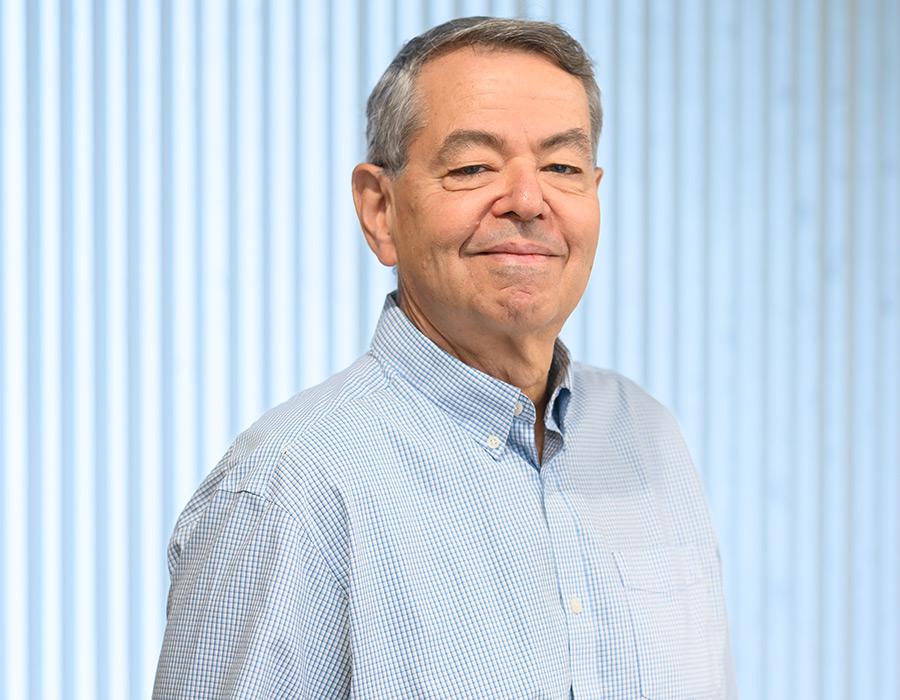
Stephen Leffler Buchwald
· Camille Dreyfus ProfessorMassachusetts Institute of Technology · Chemistry
Active 1976–2026
Academic metrics are sourced from OpenAlex and public funding records; values may differ from Google Scholar.
About
Stephen Leffler Buchwald is the Camille Dreyfus Professor of Chemistry at MIT. His research group combines elements of organic synthesis, physical organic chemistry, and organometallic chemistry to develop catalytic processes that address fundamental problems. His work involves inventing and developing new techniques, understanding their mechanisms, and applying them in synthetically interesting contexts. Key areas of his research include the creation and study of new ligands, the design of methods for forming carbon-nitrogen and carbon-fluorine bonds—particularly using metal catalysts based on palladium or copper—and employing mechanistic and structural studies to aid in ligand and catalyst development. Additionally, his group explores continuous flow chemistry using microreactors and capillary tubing to optimize chemical processes on a small scale, leveraging the enhanced heat and mass transfer properties of silicon microreactors.
Research topics
- Combinatorial chemistry
- Organic chemistry
- Chemistry
- Stereochemistry
- Nanotechnology
- Materials science
- Photochemistry
- Inorganic chemistry
- Physical chemistry
- Medicinal chemistry
Selected publications
CuH-Catalyzed Olefin Functionalization: From Hydroamination to Carbonyl Addition
Accounts of Chemical Research · 2020 · 449 citations
Senior authorCorrespondingIn organic synthesis, ligand-modified copper(I) hydride (CuH) complexes have become well-known reagents and catalysts for selective reduction, particularly toward Michael acceptors and carbonyl compounds. Recently, our group and others have found that these hydride complexes undergo migratory insertion (hydrocupration) with relatively unactivated and electronically unpolarized olefins, producing alkylcopper intermediates that can be leveraged to forge a variety of useful bonds. The resulting for…
Microfluidic electrochemistry for single-electron transfer redox-neutral reactions
Science · 2020 · 319 citations
)-O cross-coupling. The cathode and anode simultaneously generate the corresponding reactive intermediates, and selective transformation is facilitated by the rapid molecular diffusion across a microfluidic channel that outpaces the decomposition of the intermediates. μRN-eChem was shown to enable a two-step gram-scale electrosynthesis of a nematic liquid crystal compound, demonstrating its practicality.
Journal of the American Chemical Society · 2020 · 118 citations
Senior authorCorrespondingof the Ni-bound amine and the barrier to reductive elimination from the resultant Ni(II)-amido complex. Moreover, we determined that the preclusion of Lewis acid-base complexation between the Ni catalyst and the base, due to steric factors, is important for avoiding catalyst inhibition.
Journal of the American Chemical Society · 2020 · 63 citations
Senior authorCorrespondingBis(phosphine) copper hydride complexes are uniquely able to catalyze direct dearomatization of unactivated pyridines with carbon nucleophiles, but the mechanistic basis for this result has been unclear. Here we show that, contrary to our initial hypotheses, the catalytic mechanism is monometallic and proceeds via dearomative rearrangement of the phenethylcopper nucleophile to a Cpara-metalated form prior to reaction at heterocycle C4. Our studies support an unexpected heterocycle-promoted pathw…
Journal of the American Chemical Society · 2024-06-26 · 47 citations
articleOpen accessSenior authorCorrespondingWe report a general and functional-group-tolerant method for the Cu-catalyzed amination of base-sensitive aryl bromides including substrates possessing acidic functional groups and small five-membered heteroarenes. The results presented herein substantially expand the scope of Cu-catalyzed C–N coupling reactions. The combination of L8, an anionic N1,N2-diarylbenzene-1,2-diamine ligand, along with the mild base NaOTMS leads to the formation of a stable yet reactive catalyst that resists deactivat…
Recent grants
NIH · $8.1M · 2010
NIH · $296k · 2000
Metal-Catalyzed Methods for Organic Synthesis
NIH · $10.2M · 2017–2027
Frequent coauthors
- 54 shared
Bradley L. Pentelute
Massachusetts Institute of Technology
- 49 shared
Brett P. Fors
University of California, Santa Barbara
- 38 shared
Timothy E. Barder
- 38 shared
Phillip J. Milner
University of California, Berkeley
- 38 shared
Mingjuan Su
Massachusetts Institute of Technology
- 38 shared
John P. Wolfe
University of Michigan–Ann Arbor
- 38 shared
Richard Y. Liu
Duke University
- 34 shared
Klavs F. Jensen
Massachusetts Institute of Technology
Similar researchers at Massachusetts Institute of Technology
- Resume-aware match score
- Save to shortlist
- AI-drafted outreach
See your match with Stephen Leffler Buchwald
PhdFit ranks faculty by your research interests, methods, and publications — grounded in their actual work, not templates.
- Free to start
- No credit card
- 30-second signup