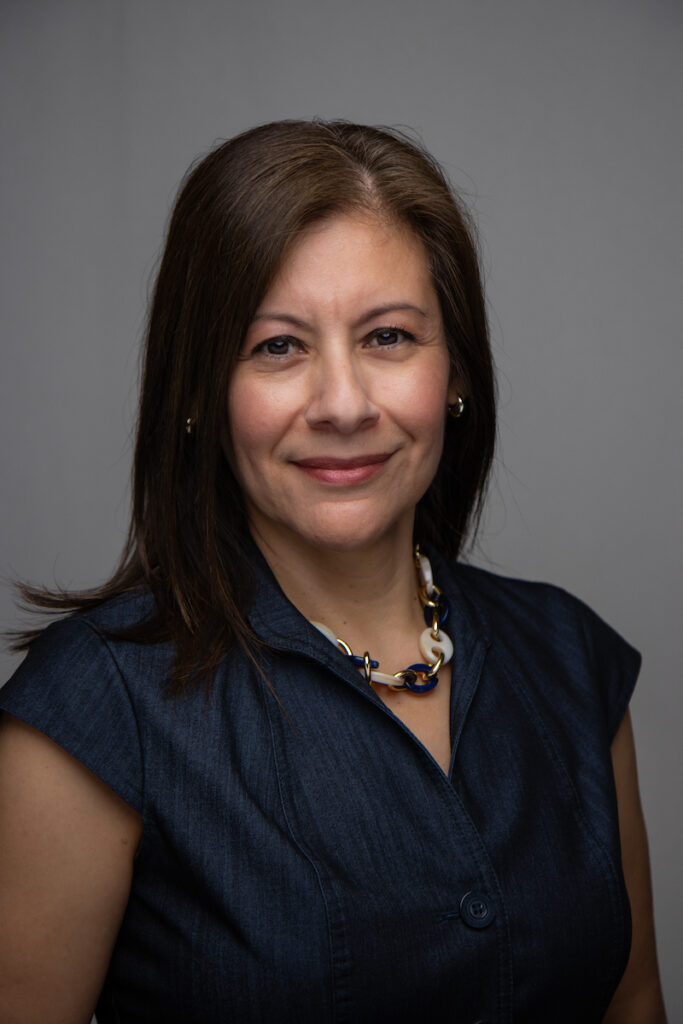
Sonia Hernandez
· George T. & Gladys H. Abell Professor of Liberal Arts II, ProfessorTexas A&M University · History
Active 1995–2024
About
Dr. Sonia Hernández is the George T. & Gladys H. Abell Professor of Liberal Arts II at Texas A&M University, within the Department of History in the College of Arts and Sciences. She earned her Ph.D. in Latin American History from the University of Houston in 2006. Her research specializes in the intersections of gender and labor in the U.S.-Mexican Borderlands, Chicana/o history, and Modern Mexico. Dr. Hernández is a co-founder of the award-winning public history project, Refusing to Forget, which has received recognition from the American Historical Association (AHA), Organization of American Historians (OAH), and the Western History Association (WHA). Her scholarly work includes her first book, 'Working Women into the Borderlands,' published by Texas A&M University Press in 2014, which earned three book prizes and was translated and published in Mexico. Her second book, 'For a Just and Better World: Engendering Anarchism in the Mexican Borderlands, 1900-1938,' published by the University of Illinois Press in 2021, earned the Philip Taft Book Prize and is in the process of being translated into Spanish. Funded by a Fulbright García-Robles Fellowship and a National Endowment for the Humanities Fellowship, she is currently working on a book project that explores the gendered, racial, and transnational dimensions of the 1901 lynching attempt of migrant cowboy Gregorio Cortez. Her research interests include the U.S.-Mexican Borderlands, Chicana/o gender and labor, and Modern Mexico.
Research topics
- Sociology
- Political Science
- Law
- Art
- Computer Science
- History
- Humanities
- Philosophy
- Gender studies
- Psychology
- Political economy
- Economic history
- Religious studies
Selected publications
Bad Mexicans: Race, Empire, and Revolution in the Borderlands
Hispanic American Historical Review · 2023 · 22 citations
1st authorCorresponding- Humanities
- Political Science
- Sociology
Amid a journalist killing spree in Mexico, President Andrés Manuel López Obrador (AMLO) declared 2022 as the Year of Ricardo Flores Magón. Among the best-known Mexican journalists of all time, Flores Magón, as well as a cadre of like-minded colleagues, unleashed a far-reaching revolution that threatened dictator Porfirio Díaz's rule as well as US investments in Mexico. While AMLO's administration has used Flores Magón's history to legitimize its vision of a government that works for all, it struggles to deal with the country's unrelenting violence. Historian Kelly Lytle Hernández's Bad Mexicans could not have come at a better time, and while we can debate the effectiveness of AMLO's use of Flores Magón to gain popular support, Hernández's book on him and his colleagues is hard evidence of Flores Magón's far-reaching influence on Mexican and US history. It lays out clearly the reasons why Flores Magón remains a compelling historical figure.Engagingly written without sacrificing archival evidence, Hernández's book details the early twentieth-century Magonista revolutionary movement focused on ridding Mexico of Díaz to effect transformational change. She re-creates the vision and plotting, strategies, challenges, and real outcomes of Magonismo in both Mexico and the United States. Among the many lessons of Bad Mexicans is how social revolutions take constant perseverance and commitment, even when the bulk of the membership has lost faith. Visionaries such as Flores Magón, Juana Belén Gutiérrez de Mendoza, Librado Rivera, and others who risked everything day in, day out were labeled “bad Mexicans” by Mexican and US government officials. Such labeling had bloody consequences and reveals the centrality of rhetoric and discourse in enacting so-called progress and development through violence. Bad Mexicans reminds of how labeling people remains a dangerous tool too often used to promote both fringe and mainstream political ideas that marginalize and justify keeping certain populations out of the country (in both Mexico and the United States).Díaz's regime had grown strong, affecting every single aspect of life. Magonismo's concerns with the Díaz government's abuse of power were legitimate. Local jefaturas led by unscrupulous jefes políticos often sexually abused women as they wielded regional control. On a more national scale, Mexican agents wooed foreign investors with endless natural resources, access to cheap, readily available labor, and guarantees of a safe environment for US capital investments. This alliance went a long way. As Hernández explains, besides aiding Díaz in his quest to make Mexico modern, the safeguarding of US interests in Mexico yielded high returns. US agents worked to keep unruly, “bad” Mexicans such as Flores Magón at bay. Flores Magón and others had no other option than to take their movement underground, even while serving prison sentences in some of the period's most notorious jails. The silencing of movements by discrediting their leaders through labeling involved extensive transnational state collaboration and constant surveillance. As Hernández aptly points out, the Mexican state grew stronger as it sought collaboration with the United States to track these individuals who threatened the stability of both countries. Such alliance was further solidified with cooperation from newly formed departments like the Federal Bureau of Investigation.Hernández is quick to remind us, however, that while intricate transnational networks of state power could threaten democratic visions, grassroots networks rooted in alliances of workers, writers, and individuals seeking a dignified way of life—on both sides of the border—remained a constant threat to government officials. In the end, no strong transnational surveillance state could contain Magonismo's vision of a new and more equitable world. As the movement inspired many to demand land, women's, labor, and political rights, it also witnessed internal fissures, competing personal agendas, financial crises, and the continuation of a transnational crackdown on suspected rebeldes. As landed regional elites including Francisco Madero and Venustiano Carranza eventually served as president of Mexico, Magonismo meshed, clashed, or revived under new sociopolitical banners. As Flores Magón took his last breath and the revolution became institutionalized, Magonismo left an indelible mark on the growing Latino community in the United States. This legacy's importance sets this book apart from many others on Flores Magón. Bad Mexicans centers the way in which Magonista ideals shaped US residents and workers. Whether via labor collectives such as the Industrial Workers of the World or community-based efforts to end racially based lynching in Texas and other states, Hernández shows how Mexican and US history have always been entwined. Magonismo was a movement that countered a transnational vision of order and progress that favored industrial capitalist development over the lives of ordinary people; it not only sparked the beginning of one of the bloodiest revolutions of the twentieth century but uncovered the brutality with which US state and federal agents handled suspected revolutionaries, making clear its profound influence on contemporary ideas shaping immigration policy, law enforcement practices, and race relations.
Introduction: Memory, Violence, and History in the 1919 Canales Investigation
University of Texas Press eBooks · 2021
1st authorCorresponding- Computer Science
- History
- Psychology
University of Illinois Press eBooks · 2021 · 4 citations
1st authorCorresponding- Political Science
- Sociology
- Gender studies
Building upon historic transnational connections between the cosmopolitan port of Tampico, the Rio Grande Valley of Texas, the Mexican north, and ports of entry across the Atlantic, a network of labor activists including women such as Caritina Piña emerged in the early twentieth century to address labor inequities. This book retraces the emergence of this network circulating on the eve of the 1910 Mexican Revolution. The early revolutionary period ushered in a wave of anarcho-syndicalist groups privileging organizing via labor unions and other collectives. Organizations such as the Partido Liberal Mexicano (PLM) were among the most progressive of collectives that incorporated women’s issues in their agenda. Its members encouraged women’s participation as <italic>compañeras</italic>, key to creating a real revolution. Yet, despite such progressive stance, gendered ideas about femininity and masculinity shaped members’ perspectives just as much as they shaped mainstream media outlets casting radical female activists as “women of ill-repute.” Their own understanding of gender and ideas about motherhood shaped women activists too. While anarcho-syndicalism declined as the revolutionary state grew stronger in its co-opting of organized labor, the legacy of women’s activism remained a distinctive feature of the greater Mexican borderlands. Women left an indelible mark on the Tamaulipas-Texas borderlands’ labor history. Such historic and gendered border solidarities, while imperfect, helped to build a foundation for postrevolutionary labor alliances.
Frequent coauthors
- 38 shared
Francisco Barnés De Castro
- 13 shared
Xavier Cortés Rocha
Universidad Nacional Autónoma de México
- 6 shared
Francisco Bolívar Zapata
- 6 shared
Laura Romero Mireles
- 5 shared
Esther Sanromà
- 5 shared
Mar Vaquero
- 5 shared
Brent W. Barbee
- 4 shared
Maruthi R. Akella
The University of Texas at Austin
Awards & honors
- Philip Taft Book Prize
Similar researchers at Texas A&M University
- Resume-aware match score
- Save to shortlist
- AI-drafted outreach
See your match with Sonia Hernandez
PhdFit ranks faculty by your research interests, methods, and publications — grounded in their actual work, not templates.
- Free to start
- No credit card
- 30-second signup