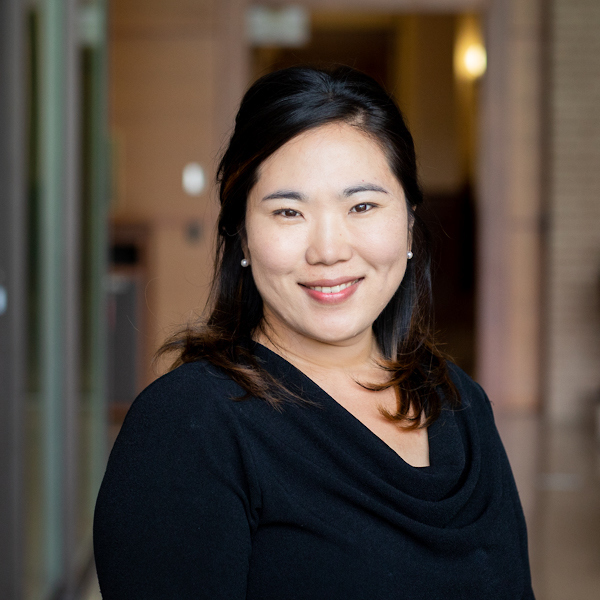
Shinye Kim
· Assistant ProfessorUniversity of Wisconsin-Madison · Counseling Psychology
Active 2023–2024
About
Shinye Kim, Ph.D., is an Assistant Professor in the Department of Counseling Psychology at the University of Wisconsin-Madison and a licensed psychologist. She completed her doctoral training in Counseling Psychology at the University of Wisconsin-Milwaukee with a minor in Educational Statistics and Measurement, and an APA-accredited internship at NYC Health + Hospitals|Kings County. She also holds an M.Ed. in Prevention Science and Practice from Harvard University. Dr. Kim has extensive experience working with underserved and underrepresented populations across diverse healthcare settings in urban and rural areas of Massachusetts, Wisconsin, New York, and Texas. Her clinical expertise spans inpatient to outpatient care, addressing psychological adjustment challenges, severe mental health issues, and illnesses of temporary to chronic and terminal nature. Her clinical work in health psychology, particularly in consultation-liaison psychiatry and pain psychology, has significantly influenced her research focus. Her scholarship emphasizes understanding chronic pain and opioid use within social, cultural, linguistic, and psychological contexts, especially among diverse populations including ethnic and linguistic minorities. She collaborates with multidisciplinary teams in family medicine and surgery departments to provide behavioral pain interventions aimed at preventing opioid misuse. Her research is use-inspired and translational, focusing on developing comprehensive pain assessment tools and digital health technologies to reduce health disparities. Dr. Kim’s work is grounded in a biopsychosocial and ecological systems perspective, examining how social support, cultural orientation, and family dynamics influence pain experiences and health outcomes. Her recent NSF-funded research involves interviewing healthcare providers and chronic pain patients from ethnic and linguistic minority backgrounds to improve pain communication and develop culturally sensitive digital health tools. Her clinical and research endeavors aim to enhance health equity in pain management and inform policy changes to improve healthcare delivery for marginalized populations.
Research topics
- Developmental psychology
- Psychiatry
- Psychology
- Clinical psychology
- Medicine
- Sociology
- Social Science
- Political Science
- Psychotherapist
- Environmental health
- Social psychology
Selected publications
Chronic Pain in Children of Immigrants: A Multidimensional Mediation Analysis
Journal of Pain · 2024
Senior authorCorresponding- Sociology
- Political Science
- Psychology
Child Abuse & Neglect · 2023 · 2 citations
- Psychology
- Developmental psychology
- Clinical psychology
International Healthcare Review (online) · 2023 · 1 citations
- Psychology
- Clinical psychology
- Developmental psychology
Background: Sexual minorities experience disproportionate stress from historical and current oppression and social discrimination/isolation compared to their heterosexual counterparts, leading to greater risks of adverse mental health. Although social support serves as a significant protector buffering stress on physical and mental health, little is known about its effect on psychological well-being among sexual minority aging adults. Study objective: We aimed to explore the effects of social support from family and family on three psychological outcomes: life satisfaction, self-esteem, and social well-being: between sexual minority and heterosexual aging adults using national representative data from the 2013-2014 Midlife Development in the United States (MIDUS 3) in the U.S. Methods: Key variables included: sexual orientation, family support, friend support, life satisfaction, self-esteem, and social well-being. We conducted adjusted, multiple linear regressions to examine life satisfaction/self-esteem/social well-being in relation to perceived discrimination, family support, friend support, and two-way interactions using backward stepwise regression. Results: Of the 2,596 U.S. participants (Mean[age]=64.19; SD=11.0), 3% identified as sexual minorities and 9.7 % were racial/ethnic minorities. Sexual minority participants were more likely to perceive discrimination and less likely to have family support compared to their heterosexual counterparts. Regarding to adjusted linear regression models, heterosexual participants with greater family support had greater psychological wellbeing compared to their sexual minority counterparts with greater family support. However, sexual minority participants with greater friend support experienced a steeper increase in psychological outcomes based on life satisfaction, self-esteem, and social well-being compared to heterosexual participants with greater friend support. Contribution to Evidence-Based Care: The findings suggest that sexual minority aging adults experience disproportionately more lifetime discrimination and lower family support compared to their heterosexual peers. Future studies and social programs should address the differential effects of family and friend support on physical and psychological indicators among sexual minority aging adults.
Frequent coauthors
- 1 shared
Hui Xie
University of Wisconsin–Milwaukee
- 1 shared
Bethany Canales
- 1 shared
Jyotsna Dhar
- 1 shared
Amber J. Morrow
Texas Tech University
- 1 shared
Yuki Shigemoto
Prairie View A&M University
- 1 shared
Joaquín Borrego
National University of Distance Education
- 1 shared
Sarah E. Victor
Texas Tech University
- 1 shared
Tre D. Gissandaner
Labs
KIM LabPI
Awards & honors
- Dorothy Booz Black Award for Outstanding Research in Counsel…
- Outstanding Contribution to Scholarship on Race and Ethnicit…
- Faculty Mentor Award, UW-Madison Multicultural Student Cente…
- Mentor Award, Psi Chi (2022)
- Presidents’ Innovation Award, Texas Tech University (2021)
Similar researchers at University of Wisconsin-Madison
- Resume-aware match score
- Save to shortlist
- AI-drafted outreach
See your match with Shinye Kim
PhdFit ranks faculty by your research interests, methods, and publications — grounded in their actual work, not templates.
- Free to start
- No credit card
- 30-second signup