
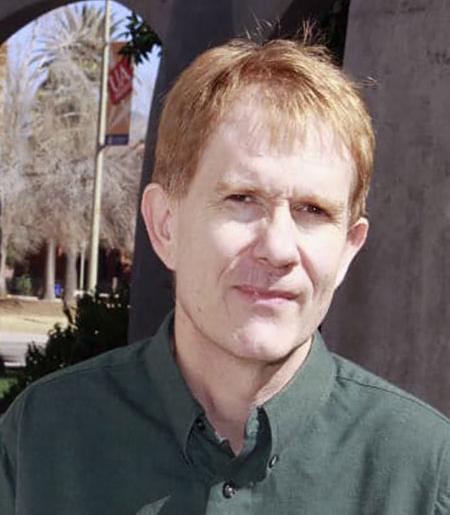
Shaun Nichols
· Distinguished Professor of Arts & Sciences in Philosophy Department Chair Philosophy, PsychologyCornell University · Philosophy
Active 1990–2026
Academic metrics are sourced from OpenAlex and public funding records; values may differ from Google Scholar.
About
Shaun Nichols is a Distinguished Professor of Arts & Sciences in Philosophy at Cornell University, working in the philosophy of cognitive science. His research concerns the psychological foundations of philosophical thought, with a recent focus on drawing on learning theory to understand how people acquire philosophically significant concepts and distinctions, especially in the domain of morality. His work aims to explore the cognitive processes underlying moral and philosophical understanding, contributing to the broader fields of moral psychology and cognitive science.
Research topics
- Philosophy
- Psychology
- Epistemology
- Computer Science
- Social psychology
- Biology
Selected publications
Oxford University Press eBooks · 2021 · 59 citations
1st authorCorrespondingMoral systems, like normative systems more broadly, involve complex mental representations. <italic>Rational Rules</italic> offers an account of the acquisition of key aspects of normative systems in terms of general-purpose rational learning procedures. In particular, it offers statistical learning accounts of: (1) how people come to think that a rule is act-based, that is, the rule prohibits producing certain consequences but not allowing such consequences to occur or persist; (2) how people c…
Oxford Studies in Experimental Philosophy
Oxford University Press eBooks · 2024 · 43 citations
Senior authorCorrespondingAbstract The fifth volume of Oxford Studies in Experimental Philosophy showcases the growing depth and breadth of the field. The essays here advance debates in several areas of experimental philosophy, including the measurement of beliefs about free will and moral objectivism, as well as methodological issues at the core of both experimental philosophy and philosophy more generally. This volume also includes work on new topics in experimental philosophy: attitudes about time, the auditory charac…
Teleological Essentialism: Generalized
Cognitive Science · 2020 · 32 citations
Senior authorCorrespondingNatural/social kind essentialism is the view that natural kind categories, both living and non-living natural kinds, as well as social kinds (e.g., race, gender), are essentialized. On this view, artifactual kinds are not essentialized. Our view-teleological essentialism-is that a broad range of categories are essentialized in terms of teleology, including artifacts. Utilizing the same kinds of experiments typically used to provide evidence of essentialist thinking-involving superficial change (…
“False positive” emotions, responsibility, and moral character
Cognition · 2021 · 20 citations
Norms emerge through iterated learning
Proceedings of the National Academy of Sciences · 2025-07-18 · 2 citations
articleOpen accessSenior authorInjunctive norms are universal: Every culture has rules that specify what actions are forbidden, obligatory, or permitted. Where do all of these norms come from? In this paper, we identify a mechanism of cultural transmission that can explain the emergence of injunctive norms. In particular, we develop an iterated learning account that shows how weak biases in pedagogy and inference can drive norm emergence through cultural transmission. Using transmission chain studies, we confirm the core pred…
Frequent coauthors
- 338 shared
Graeme M. Bydder
Mātai Medical Research Institute
- 169 shared
Paul J. Cannon
- 169 shared
Ken P. Whittall
University of British Columbia
- 169 shared
Kurt H. Bockhorst
- 169 shared
M. D. Smith
- 169 shared
Ashok Rakhit
- 169 shared
A Als
Korea Institute for Advanced Study
- 169 shared
G. McGibney
Traclabs (United States)
Awards & honors
- Neil Lubow Prize
Similar researchers at Cornell University
- Resume-aware match score
- Save to shortlist
- AI-drafted outreach
See your match with Shaun Nichols
PhdFit ranks faculty by your research interests, methods, and publications — grounded in their actual work, not templates.
- Free to start
- No credit card
- 30-second signup