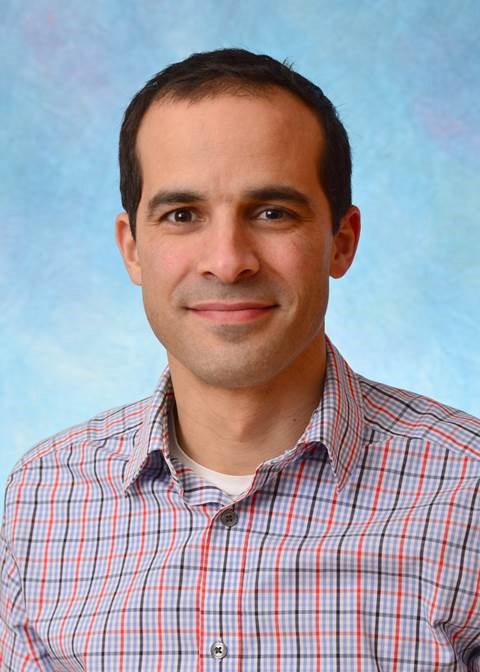
Samir Kelada
· Associate ProfessorUniversity of North Carolina at Chapel Hill · Toxicology
Active 2010–2024
About
Samir Kelada is an Associate Professor at the University of North Carolina School of Medicine. His research focuses on understanding the complex interactions between genes and environmental factors in human health, particularly in relation to airway diseases such as asthma. His lab aims to identify and characterize gene-environment interactions that influence disease susceptibility, with a specific interest in how the airway responds to exposures like allergens or pathogens. To achieve this, he employs a systems genetics approach to study gene expression in the lung, especially airway epithelia, across many individuals to identify genetic determinants of gene expression. This work seeks to uncover master regulators of gene expression that may serve as therapeutic targets or provide insight into disease mechanisms.
Research topics
- Art history
- Philosophy
- Paleontology
- Medicine
- Biology
- Classics
- Environmental ethics
- Evolutionary biology
- History
- Library science
- Genetics
Selected publications
Ozone‐induced changes in the murine lung extracellular vesicle small RNA landscape
Physiological Reports · 2021 · 18 citations
Senior authorCorresponding- Library science
- Medicine
- Environmental ethics
-induced respiratory inflammation.
Inferring the Allelic Series at QTL in Multiparental Populations
Genetics · 2020 · 17 citations
- Biology
- Genetics
- Evolutionary biology
Synthetic Population Resource (DSPR). We find that, although posterior inference of the exact allelic series is often uncertain, we are able to distinguish biallelic QTL from more complex multiallelic cases. Additionally, our allele-based approach improves haplotype effect estimation when the true number of functional alleles is small. Our method, Tree-Based Inference of Multiallelism via Bayesian Regression (TIMBR), provides new insight into the genetic architecture of QTL in MPPs.
Recent grants
Systems-level transcriptomic analyses to Identify mouse models of asthma
NIH · $2.0M · 2015–2020
Gene-Environment Interactions with Ozone in Experimental Asthma
NIH · $2.2M · 2015–2020
Frequent coauthors
- 27 shared
Gregory J. Smith
- 23 shared
Kathryn M. McFadden
University of North Carolina at Chapel Hill
- 20 shared
Francis S. Collins
National Institutes of Health
- 20 shared
Adelaide Tovar
University of Michigan–Ann Arbor
- 19 shared
Joseph M. Thomas
- 18 shared
Elissa J. Chesler
Jackson Laboratory
- 17 shared
Barbara R. Grubb
- 17 shared
William Valdar
University of North Carolina at Chapel Hill
Labs
Education
- 2000
Ph.D., Toxicology
University of North Carolina at Chapel Hill
- 1996
M.S., Toxicology
University of North Carolina at Chapel Hill
- 1994
B.S., Toxicology
University of North Carolina at Chapel Hill
Similar researchers at University of North Carolina at Chapel Hill
- Resume-aware match score
- Save to shortlist
- AI-drafted outreach
See your match with Samir Kelada
PhdFit ranks faculty by your research interests, methods, and publications — grounded in their actual work, not templates.
- Free to start
- No credit card
- 30-second signup