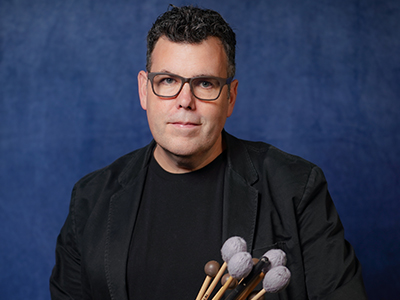
Doug Perkins
· Associate Professor of Music; Director of PercussionVerifiedUniversity of North Carolina at Chapel Hill · Department of Winds and Percussion
Active 1922–2026
About
Doug Perkins is a GRAMMY nominated percussionist, producer, and conductor who has been declared a “percussion virtuoso” by the New York Times. He has performed at prominent venues including Carnegie Hall, the Barbican Center, and the Alaskan Tundra. Perkins has commissioned and premiered numerous works from composers such as John Luther Adams, Tristan Perich, Michael Gordon, David Lang, Paul Lansky, Roshanne Etezady, Christian Wolff, Sofia Gubaidulina, and Steve Reich. He founded the percussion quartet So Percussion, the Meehan/Perkins Duo, and performs regularly with Ensemble Signal. His recordings as a performer, conductor, and producer are released on labels including Bridge, Cantaloupe, Harmonia Mundi, New Focus, New World, and Nonesuch. Perkins directed and produced John Luther Adams’ Inuksuit, which was named one of 2013’s top records by NPR, the New York Times, the Boston Globe, the New Yorker, New Music Box, and Time Out New York. His recording of Tristan Perich’s Drift Multiply made 2020 “Best Of” lists of the New York Times, NPR, PopMatters, and Bandcamp. His recent recording of John Luther Adams’ Sila: The Breath of the World was nominated for a 2023 GRAMMY for Best Orchestral Performance and a 2023 BBC Choral Award. In the last decade, Perkins has organized large-scale outdoor musical events, including bringing Iannis Xenakis’ Persephassa to Central Park Lake and performing John Luther Adams’ music at Lincoln Center, California shores, and the peaks of the Italian Alps. Alex Ross praised his production of Inuksuit at the Park Avenue Armory as “one of the most rapturous listening experiences of my life.” Most recently, he directed the premiere of Michael Gordon’s Field of Vision for 36 percussionists in 2022. Perkins holds a DMA from Stony Brook University, an Artist Diploma and MM from Yale University, and a BM from Cincinnati College-Conservatory of Music. His principal percussion teachers were Jack DiIanni, Jim Culley, and Robert Van Sice. He is an Associate Professor of Percussion and Director of Percussion at the University of Michigan, where he is part of the faculty at the School of Music, Theatre & Dance, and also teaches at the Festival Institute. Perkins has previously taught at the Boston Conservatory at Berklee and Dartmouth College. He performs with Vic Firth Drumsticks and Mallets, Pearl/Adams drums and keyboards, Black Swamp Percussion accessories, Remo Drumheads, and Zildjian Cymbals.
Research topics
- Biology
- Genetics
- Computer Science
- Psychiatry
- Psychology
- Internal medicine
- Medicine
- Neuroscience
- Evolutionary biology
- Clinical psychology
- Computational biology
- Demography
- Oncology
Selected publications
631. Clinical and Neuroanatomical Variability Across Psychotic Diagnoses
Biological Psychiatry · 2026-04-25
articleTranslational Psychiatry · 2026-04-11
articleOpen accessSenior authorThe Pearson sample correlation between two biomarkers across a group of individuals can sometimes be much stronger than expected by chance. In the context of psychosis risk, we previously analyzed blood plasma protein data from initial presentations as collected in the North American Prodrome Longitudinal Study 2 (NAPLS2). We found enhanced correlation between proteins SERPINE1 and TIMP1, both promoters of coagulation and inhibitors of remodeling of extracellular matrix (ECM). Participants were unaffected community controls vs. others of clinical high risk. The SERPINE1-TIMP1 correlation was consistently higher in individuals at clinical high risk for psychosis who later converted to a psychotic disorder vs. participants who were nonconverters or unaffected community controls. Here, we extend those findings using data from a larger cohort, the North American Prodrome Longitudinal Study 3 (NAPLS3). Again, the correlation between SERPINE1 and TIMP1 remained higher in psychosis high-risk converters vs. the other groups. In NAPLS3 we added an assay for PLAT (anti-coagulation plasminogen activator strongly inhibited by SERPINE1). Comparing the three NAPLS3 groups we found a decreased correlation between SERPINE1 and PLAT in converters. In summary, the increased correlation of SERPINE1 and TIMP1 in converters is consistent with restricted brain circuit remodeling and increased tendency to coagulation. Rigorous application of permutation testing yielded NAPLS2 vs. NAPLS3 consistency of SERPINE1-TIMP1 correlation patterns with empirical p-value 0.03.
UNC Libraries · 2025-12-09
articleOpen accessUNC Libraries · 2025-12-06
articleOpen accessSleep Disturbance in Individuals at Clinical High Risk for Psychosis
UNC Libraries · 2025-12-09
articleOpen accessINTRODUCTION: Disturbed sleep is a common feature of psychotic disorders that is also present in the clinical high risk (CHR) state. Evidence suggests a potential role of sleep disturbance in symptom progression, yet the interrelationship between sleep and CHR symptoms remains to be determined. To address this knowledge gap, we examined the association between disturbed sleep and CHR symptoms over time. METHODS: Data were obtained from the North American Prodrome Longitudinal Study (NAPLS)-3 consortium, including 688 CHR individuals and 94 controls (mean age 18.25, 46% female) for whom sleep was tracked prospectively for 8 months. We used Cox regression analyses to investigate whether sleep disturbances predicted conversion to psychosis up to >2 years later. With regressions and cross-lagged panel models, we analyzed longitudinal and bidirectional associations between sleep (the Pittsburgh Sleep Quality Index in conjunction with additional sleep items) and CHR symptoms. We also investigated the independent contribution of individual sleep characteristics on CHR symptom domains separately and explored whether cognitive impairments, stress, depression, and psychotropic medication affected the associations. RESULTS: Disturbed sleep at baseline did not predict conversion to psychosis. However, sleep disturbance was strongly correlated with heightened CHR symptoms over time. Depression accounted for half of the association between sleep and symptoms. Importantly, sleep was a significant predictor of CHR symptoms but not vice versa, although bidirectional effect sizes were similar. DISCUSSION: The critical role of sleep disturbance in CHR symptom changes suggests that sleep may be a promising intervention target to moderate outcome in the CHR state.
Family history of psychosis in youth at clinical high risk: A replication study
UNC Libraries · 2025-12-09
articleOpen accessUNC Libraries · 2025-12-06
articleOpen accessUNC Libraries · 2025-12-09
articleOpen accessImportance: Although clinical criteria for identifying youth at risk for psychosis have been validated, they are not sufficiently accurate for predicting outcomes to inform major treatment decisions. The identification of biomarkers may improve outcome prediction among individuals at clinical high risk for psychosis (CHR-P). Objective: To examine whether mismatch negativity (MMN) event-related potential amplitude, which is deficient in schizophrenia, is reduced in young people with the CHR-P syndrome and associated with outcomes, accounting for effects of antipsychotic medication use. Design, Setting, and Participants: MMN data were collected as part of the multisite case-control North American Prodrome Longitudinal Study (NAPLS-2) from 8 university-based outpatient research programs. Baseline MMN data were collected from June 2009 through April 2013. Clinical outcomes were assessed throughout 24 months. Participants were individuals with the CHR-P syndrome and healthy controls with MMN data. Participants with the CHR-P syndrome who developed psychosis (ie, converters) were compared with those who did not develop psychosis (ie, nonconverters) who were followed up for 24 months. Analysis took place between December 2019 and December 2021. Main Outcomes and Measures: Electroencephalography was recorded during a passive auditory oddball paradigm. MMN elicited by duration-, pitch-, and duration + pitch double-deviant tones was measured. Results: The CHR-P group (n = 580; mean [SD] age, 19.24 [4.39] years) included 247 female individuals (42.6%) and the healthy control group (n = 241; mean age, 20.33 [4.74] years) included 114 female individuals (47.3%). In the CHR-P group, 450 (77.6%) were not taking antipsychotic medication at baseline. Baseline MMN amplitudes, irrespective of deviant type, were deficient in future CHR-P converters to psychosis (n = 77, unmedicated n = 54) compared with nonconverters (n = 238, unmedicated n = 190) in both the full sample (d = 0.27) and the unmedicated subsample (d = 0.33). In the full sample, baseline medication status interacted with group and deviant type indicating that double-deviant MMN, compared with single deviants, was reduced in unmedicated converters compared with nonconverters (d = 0.43). Further, within the unmedicated subsample, deficits in double-deviant MMN were most strongly associated with earlier conversion to psychosis (hazard ratio, 1.40 [95% CI, 1.03-1.90]; P = .03], which persisted over and above positive symptom severity. Conclusions and Relevance: This study found that MMN amplitude deficits were sensitive to future psychosis conversion among individuals at risk of CHR-P, particularly those not taking antipsychotic medication at baseline, although associations were modest. While MMN shows limited promise as a biomarker of psychosis onset on its own, it may contribute novel risk information to multivariate prediction algorithms and serve as a translational neurophysiological target for novel treatment development in a subgroup of at-risk individuals.
UNC Libraries · 2025-12-06
articleOpen accessBACKGROUND: The clinical high-risk (CHR) period offers a temporal window into neurobiological deviations preceding psychosis onset, but little attention has been given to regions outside the cerebrum in large-scale studies of CHR. Recently, the North American Prodrome Longitudinal Study (NAPLS)-2 revealed altered functional connectivity of the cerebello-thalamo-cortical circuitry among individuals at CHR; however, cerebellar morphology remains underinvestigated in this at-risk population, despite growing evidence of its involvement in psychosis. STUDY DESIGN: In this multisite study, we analyzed T1-weighted magnetic resonance imaging scans obtained from N = 469 CHR individuals (61% male, ages = 12-36 years) and N = 212 healthy controls (52% male, ages = 12-34 years) from NAPLS-2, with a focus on cerebellar cortex and white matter volumes separately. Symptoms were rated by the Structured Interview for Psychosis-Risk Syndromes (SIPS). The outcome by two-year follow-up was categorized as in-remission, symptomatic, prodromal-progression, or psychotic. General linear models were used for case-control comparisons and tests for volumetric associations with baseline SIPS ratings and clinical outcomes. STUDY RESULTS: Cerebellar cortex and white matter volumes differed between the CHR and healthy control groups at baseline, with sex moderating the difference in cortical volumes, and both sex and age moderating the difference in white matter volumes. Baseline ratings for major psychosis-risk dimensions as well as a clinical outcome at follow-up had tissue-specific associations with cerebellar volumes. CONCLUSIONS: These findings point to clinically relevant deviations in cerebellar cortex and white matter structures among CHR individuals and highlight the importance of considering the complex interplay between sex and age when studying the neuromaturational substrates of psychosis risk.
UNC Libraries · 2025-12-06
articleOpen accessThe Hierarchical Taxonomy of Psychopathology (HiTOP) consortium's transdiagnostic dimensional model of psychopathology has considerable support; however, this model has been underresearched in individuals at clinical high risk for psychosis (CHR-P), a population that may advance the model. CHR-P individuals not only have attenuated psychotic symptoms that vary in severity, but also have many comorbid diagnoses and varied clinical outcomes, including disorders with uncertain relations to HiTOP (e.g., obsessive-compulsive disorder). The present study used self-report and interview data from North American Prodrome Longitudinal Study-3 (710 CHR, 96 controls) to replicate the HiTOP model and test specific hypotheses regarding disorders with uncertain relations to its dimensions. Additionally, the present study examined the HiTOP model in relation to childhood trauma, declines in social functioning, and development of full psychosis. Confirmatory factor analysis indicated that the HiTOP model's fit was nearly adequate (e.g., comparative fit index = .89), though several theory-relevant modifications were indicated. Additionally, specific tests were conducted to gain a more fine-grained perspective on how disorders with less clear prior evidence were related to the HiTOP model. Notable findings from these analyses include bipolar spectrum disorders relating to the psychosis super spectrum (i.e., .39 loading), and obsessive-compulsive disorder showing a complex pattern of loadings (e.g., internalizing and psychosis). The final model parsimoniously accounted for childhood trauma (e.g., super spectra <em>r</em><sup>s</sup> = .22-.32), associations with current functioning, and predicted future conversion to a psychotic disorder (e.g., super spectra <em>R</em>² = .13). Overall, these results inform the HiTOP model and suggest its promise for CHR-P research.
Recent grants
NIH · $7.5M · 2021
NIH · $479k · 2016
NIH · $826k · 2006
NSF · $123k · 2010–2013
NIH · $11.8M · 2002
Frequent coauthors
- 720 shared
Larry J. Seidman
Beth Israel Deaconess Medical Center
- 662 shared
Barbara A. Cornblatt
- 634 shared
Scott W. Woods
Yale University
- 606 shared
Jean Addington
- 583 shared
Ming T. Tsuang
- 576 shared
Tyrone D. Cannon
Yale University
- 574 shared
Kristin S. Cadenhead
University of California, San Diego
- 564 shared
Elaine F. Walker
Education
- 1984
MD
University of Maryland Medical Center
- 1980
BS
University of Maryland University College
Awards & honors
- 2023 GRAMMY nomination for Best Orchestral Performance for J…
- 2023 BBC Choral Award for John Luther Adams’ Sila: The Breat…
- Inuksuit directed and produced by Doug Perkins named one of…
- Most recent recording of John Luther Adams’ Sila: The Breath…
- Resume-aware match score
- Save to shortlist
- AI-drafted outreach
See your match with Doug Perkins
PhdFit ranks faculty by your research interests, methods, and publications — grounded in their actual work, not templates.
- Free to start
- No credit card
- 30-second signup