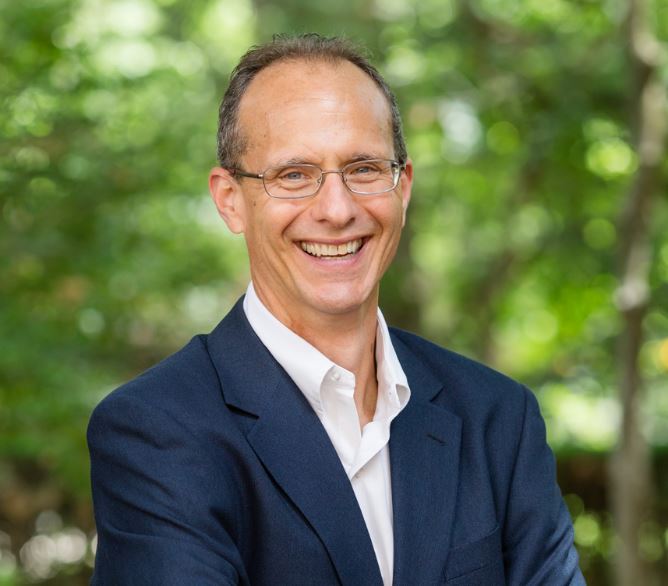
Robert Bruno
University of Illinois Urbana-Champaign · Department of Labor and Employment Relations
Active 1992–2025
About
Robert Bruno is a Professor of Labor and Employment and the Director of the Labor Education Program at the University of Illinois, Urbana-Champaign. He also serves as the director of the Project for Middle Class Renewal within the School of Labor and Employment Relations. His academic background includes a PhD in Political Theory from New York University, earned in 1994, with a dissertation focused on class relations, culture, and consciousness among steelworkers in the post-World War II era. He holds a Labor Studies Certificate from Cornell University, an MA in Political Science from Bowling Green State University, and a BA in Political Science from Ohio University. Professor Bruno's research interests encompass union political action, union strategic campaigns, the role of union stewards, union governance, quality of worklife issues, working-class culture, and media coverage of unions, as well as labor and employment policy. He has published numerous scholarly articles and co-authored research reports on labor unions, workplace practices, and labor policy topics. He is the author of five books, including 'Steelworker Alley: How Class Works In Youngstown,' 'Reforming the Chicago Teamsters,' 'Justified by Work,' 'A Fight for the Soul of Public Education,' which received the United Association for Labor Education Best Book award in 2017, and 'What Work Is' (2024). In addition to his scholarly work, Professor Bruno has provided expert testimony to the US House Committee on Education and the Workforce and to Illinois state legislative committees. He is a frequent commentator on labor relations for regional and national media outlets and has served as a commentator for various newspapers. He has taught courses on collective bargaining, labor history, and American politics, and has delivered numerous public presentations on labor relations. He is also the co-editor of the Labor Studies Journal and an executive board member of the United Association for Labor Education and the Chicago Chapter of the Labor Employment Relations Association.
Research topics
- Political Science
- Law
- Medicine
- Sociology
- Social Science
- Virology
- Economics
- Economy
- Nursing
- Public relations
Selected publications
What Happened Again? A Post-2024 U.S. Presidential Election Analysis
Labor Studies Journal · 2025-05-19
article1st authorCorrespondingAdvancing Worker State Constitutional Rights: Illinois as Model
Labor Studies Journal · 2024-09-01
article1st authorCorrespondingUniversity of Illinois Press eBooks · 2024-01-09
book-chapter1st authorCorrespondingChapter 4 explores the reality that there always was a purpose for the work people do. In fact, in nearly all cases there are more than one. This chapter identifies the following four forms of purpose for work: to provide, to build society, to be free, and to be fulfilled. Work had extrinsic rewards and intrinsic benefits. Workers did their jobs faithfully and seemingly without need for daily justification but never without intent. Something motivated them to get out of bed every day to arrive at work. Much of their labor felt compelled. If work was difficult, poorly paid, and disrespected then work was sacrifice. But workers wanted more from their honest labors. They worked for bread and, yes, for roses too.
University of Illinois Press eBooks · 2024-01-09
book-chapter1st authorCorrespondingThe impact of labor, or what it does to a person and society, is profound and the subject of chapter 3. Work disables and abuses. It exhausts, stresses, and ultimately kills. It also invigorates, inspires, satisfies, and brings joy. In this chapter the diverse impacts of work are described in the following categorical ways: work produces meaning, work exacts a cost, and work creates and enhances life. The physical, mental, and emotional effect of their labor on themselves and others was a conditional state of existence that workers had to constantly navigate. Work’s impact was not uniform. It was good, bad, and ugly. Human consciousness, as well as body, nature, and society, are made by and influence the work a person does.
University of Illinois Press eBooks · 2024-01-09 · 3 citations
book1st authorCorrespondingOur physical and social world is a product of the collective work we do. Work is arguably the most consequential human activity. This book is about the ways that a person’s work—the making, buying, or selling of goods or services—manifests itself in the world and is then realized by the worker. It explores how the worker understands his or her paid labor to uncover the phenomenology of work. Importantly, it examines work from the worker’s point of view and explores why it matters to society. It privileges a worker’s meaning of work above the views of corporate owners, bosses, media heads, and politicians who use their power to not only exploit workers but to define them. More to the point, it shifts what we think we know about work away from the self-serving narratives of those who most benefit from other’s labor. The book articulates a vision of how largely wage workers define themselves in terms relevant to their class relations. Here they are dignified rational agents and not costs of production, objects of recruitment, observation, evaluation, and discipline. Drawing on thousands of personal worker essays and diverse academic and philosophical sources, including music and poetry, the author presents a rich tapestry of how workers become conscious actors in their working-class lives.
University of Illinois Press eBooks · 2024-01-09
book-chapter1st authorCorrespondingIn chapter 1, work is measured and encapsulated in time. Workers’ notions of time were conveyed in nearly every statement they made. Essays revealed that in work, past, present, and future coexisted. A person’s labor can be thought of as a mere exchange for an immediate gain, but it also has a legacy component and is an investment meant to be realized at a later date—a down payment on the future. Hour to hour, day to day, shift to shift, assignment to assignment a person’s labor is appropriated. Time and work are used and thereby used up. Labor transcended time and set expectations. Every worker thought they would always have to work. In this way, workers’ conception of time was collapsed.
Labor Studies Journal · 2023
1st authorCorresponding- Political Science
- Economics
- Political Science
Labor Studies Journal · 2022-02-16 · 1 citations
articleSenior authorThe positive effects of union canvassing on individual-level union member voter turnout within union-friendly environments have been well documented. Yet, whether unions increase turnout among their membership under constrained circumstances has remained unexamined. Furthermore, there is little consensus on whether union canvassing effects are generalizable to populations with heterogeneous political attributes and individual characteristics. This paper identifies the mechanisms that might explain how union canvassing can be effective under conditions characterized by anti-union legislative actions, adversarial judicial decisions, and right-wing populist rhetoric. We use canvassing and turnout data taken from the 2016 Democratic state and Cook County primary election in Illinois, and our results show that, despite constrained political circumstances relative to those found in previous studies, union canvassing achieved positive union membership turnout effects. This study also tests the moderating effects of individual political attributes (ideology and vote propensity) and voter characteristics (income and ethnicity). The most salient finding is that the effects are more potent for ideologically conservative registered Democrat voters, highlighting the imperative of recognizing the ideological heterogeneity among union members and suggesting specific resource allocation strategies under politically constrained conditions.
A Good Job not Just Any Job: Employment Quality in Illinois
SSRN Electronic Journal · 2022-01-01 · 1 citations
articleOpen accessSenior authorWomen and Child Care in Illinois: A Survey of Working Mothers During the COVID-19 Pandemic
2021-05-05
article
Frequent coauthors
- 11 shared
Steven Ashby
University of Illinois Urbana-Champaign
- 7 shared
Lonnie Golden
- 7 shared
Alison Dickson
- 5 shared
Frank Manzo
Economic Policy Institute
- 4 shared
Wonjoon Chung
- 3 shared
Monica Bielski Boris
University of Illinois Urbana-Champaign
- 3 shared
Lisa Jordan
Drew University
- 2 shared
Jill Gigstad
Economic Policy Institute
Awards & honors
- United Association for Labor Education Best Book award (2017…
- A Fight for the Soul of Public Education : The Story of the…
- Resume-aware match score
- Save to shortlist
- AI-drafted outreach
See your match with Robert Bruno
PhdFit ranks faculty by your research interests, methods, and publications — grounded in their actual work, not templates.
- Free to start
- No credit card
- 30-second signup