
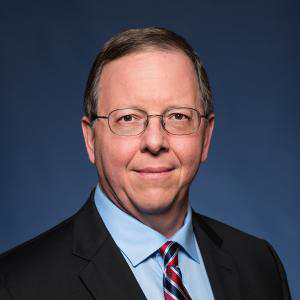
Robert A. Pape
University of Chicago · Middle Eastern Studies
Active 1916–2026
Academic metrics are sourced from OpenAlex and public funding records; values may differ from Google Scholar.
About
Professor Robert A. Pape is a Professor of Political Science at the University of Chicago, specializing in international security affairs. His research focuses on international relations theory, national security, international terrorism, and American political violence. He is the director of the Chicago Project on Security and Threats and has authored significant publications including 'Cutting the Fuse: The Explosion of Global Suicide Terrorism and How to Stop It' and 'Dying to Win: The Strategic Logic of Suicide Terrorism.' His recent work explores topics such as the causes of suicide terrorism, the political geography of insurrectionists, and the impact of military service on support for political violence. Professor Pape's commentary on national and international security policy has been featured in major media outlets including The New York Times, Washington Post, and CNN. Before joining the University of Chicago in 1999, he taught international relations at Dartmouth College and air power strategy at the USAF's School of Advanced Airpower Studies. He earned his PhD from the University of Chicago in 1988 and graduated summa cum laude from the University of Pittsburgh in 1982.
Research topics
- Political science
- Medicine
- Computer science
- Criminology
- Psychology
Selected publications
A multilevel social neuroscience perspective on radicalization and terrorism
Social Neuroscience · 2017-11-01 · 73 citations
reviewOpen accessWhy are some people capable of sympathizing with and/or committing acts of political violence, such as attacks aimed at innocent targets? Attempts to construct terrorist profiles based on individual and situational factors, such as clinical, psychological, ethnic, and socio-demographic variables, have largely failed. Although individual and situational factors must be at work, it is clear that they alone cannot explain how certain individuals are radicalized. In this paper, we propose that a com…
Days of Action or Restraint? How the Islamic Calendar Impacts Violence
American Political Science Review · 2017-07-27 · 40 citations
articleSenior authorCorrespondingDoes the religious calendar promote or suppress political violence in Islamic societies? This study challenges the presumption that the predominant impact of the Islamic calendar is to increase violence, particularly during Ramadan. This study develops a new theory that predicts systematic suppression of violence on important Islamic holidays, those marked by public days off for dedicated celebration. We argue that militant actors anticipate societal disapproval of violence, predictably inducing…
Cornell University Press eBooks · 2019-08-14 · 37 citations
book1st authorCorrespondingFrom Iraq to Bosnia to North Korea, the first question in American foreign policy debates is increasingly: Can air power alone do the job? Robert A. Pape provides a systematic answer. Analyzing the results of over thirty air campaigns, including a detailed reconstruction of the Gulf War, he argues that the key to success is attacking the enemy's military strategy, not its economy, people, or leaders. Coercive air power can succeed, but not as cheaply as air enthusiasts would like to believe.Pape…
EEG distinguishes heroic narratives in ISIS online video propaganda
Scientific Reports · 2020-11-11 · 17 citations
articleOpen accessThe Islamic State (ISIS) was uniquely effective among extremist groups in the Middle East at recruiting Westerners. A major way ISIS accomplished this was by adopting Hollywood-style narrative structures for their propaganda videos. In particular, ISIS utilized a heroic martyr narrative, which focuses on an individual's personal glory and empowerment, in addition to traditional social martyr narratives, which emphasize duty to kindred and religion. The current work presented adult participants (…
Introducing the new CPOST dataset on suicide attacks
Journal of Peace Research · 2021-04-26 · 8 citations
article1st authorCorrespondingAbstract The University of Chicago Project on Security and Threats presents the updated and expanded Database on Suicide Attacks (DSAT), which now links to Uppsala Conflict Data Program data on armed conflicts and includes a new dataset measuring the alliance and rivalry relationships among militant groups with connections to suicide attack groups. We assess global trends in suicide attacks over four decades, and demonstrate the value of the expanded DSAT with special attention to the growing di…
Frequent coauthors
- 82 shared
Chaim Kaufmann
- 81 shared
Lynne Bush Managing
University of Chicago
- 81 shared
Jonathan E. Golub
Johns Hopkins University
- 81 shared
Beth A. Simmons
- 81 shared
Michael Hiscox
Harvard University Press
- 81 shared
Frances Rosenbluth
Yale University
- 81 shared
Chnster Jonsson
University of Georgia
- 81 shared
Peter Gourevitch
Similar researchers at University of Chicago
- Resume-aware match score
- Save to shortlist
- AI-drafted outreach
See your match with Robert A. Pape
PhdFit ranks faculty by your research interests, methods, and publications — grounded in their actual work, not templates.
- Free to start
- No credit card
- 30-second signup