
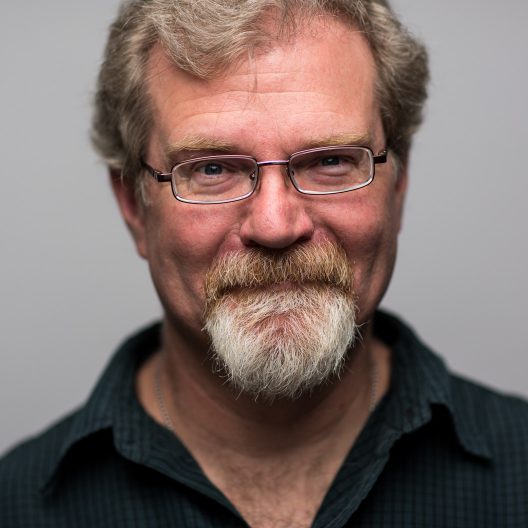
Richard Keil
· OceanographyUniversity of Washington · Program on the Environment
Active 1883–2025
Academic metrics are sourced from OpenAlex and public funding records; values may differ from Google Scholar.
About
Richard Keil is a professor at the College of the Environment, where he is interested in applying organic geochemistry to pressing environmental issues, especially climate change. His research focuses on the fate of organic matter in aquatic environments and the causes and consequences of oxygen minimum zones throughout the world. In addition to his research, he initiated SoundCitizen in 2008, a citizen science project that involves Puget Sound residents sampling water from various sites to analyze links between urban settings and aquatic systems, documenting pollutants and emerging contaminants. He holds the Lowell A. and Frankie L. Wakefield Endowed Professorship of Ocean and Fishery Sciences.
Research topics
- Oceanography
- Geology
- Chemistry
- Environmental science
- Biology
- Ecology
- Environmental chemistry
- Geography
- Atmospheric sciences
- Inorganic chemistry
Selected publications
Microbial sulfate reduction and organic sulfur formation in sinking marine particles
Science · 2021 · 128 citations
Climate change is driving an expansion of marine oxygen-deficient zones, which may alter the global cycles of carbon, sulfur, nitrogen, and trace metals. Currently, however, we lack a full mechanistic understanding of how oxygen deficiency affects organic carbon cycling and burial. Here, we show that cryptic microbial sulfate reduction occurs in sinking particles from the eastern tropical North Pacific oxygen-deficient zone and that some microbially produced sulfide reacts rapidly to form organi…
The ISME Journal · 2019-06-27 · 93 citations
articleOpen accessAbstract Up to half of marine N losses occur in oxygen-deficient zones (ODZs). Organic matter flux from productive surface waters is considered a primary control on N2 production. Here we investigate the offshore Eastern Tropical North Pacific (ETNP) where a secondary chlorophyll a maximum resides within the ODZ. Rates of primary production and carbon export from the mixed layer and productivity in the primary chlorophyll a maximum were consistent with oligotrophic waters. However, sediment trap…
Global Biogeochemical Cycles · 2021-09-01 · 33 citations
articleOpen accessAbstract Organic matter (OM) sulfurization can enhance the preservation and sequestration of carbon in anoxic sediments, and it has been observed in sinking marine particles from marine O 2 ‐deficient zones. The magnitude of this effect on carbon burial remains unclear, however, because the transformations that occur when sinking particles encounter sulfidic conditions remain undescribed. Here, we briefly expose sinking marine particles from the eastern tropical North Pacific O 2 ‐deficient zone…
Frontiers in Microbiology · 2019-04-11 · 32 citations
articleOpen accessArchaea are ubiquitous in the modern ocean where they are involved in the carbon and nitrogen biogeochemical cycles. However, the majority of Archaea remain uncultured. Archaeal specific membrane intact polar lipids (IPLs) are biomarkers of the presence and abundance of living cells. They comprise archaeol and glycerol dibiphytanyl glycerol tetraethers (GDGTs) attached to various polar headgroups. However, little is known of the IPLs of uncultured marine Archaea, complicating their use as biomar…
Global Biogeochemical Cycles · 2021 · 28 citations
Abstract Models and observations suggest that particle flux attenuation is lower across the mesopelagic zone of anoxic environments compared to oxic environments. Flux attenuation is controlled by microbial metabolism as well as aggregation and disaggregation by zooplankton, all of which shape the relative abundance of differently sized particles. Observing and modeling particle spectra can provide information about the contributions of these processes. We measured particle size spectrum profile…
Recent grants
NSF · $618k · 2010–2014
NSF · $235k · 2012–2016
NSF · $297k · 2007–2011
Frequent coauthors
- 33 shared
Allan H. Devol
University of Washington
- 27 shared
David L. Kirchman
- 26 shared
Nicholas Ward
Pacific Northwest National Laboratory
- 22 shared
Jeffrey E. Richey
University of Washington
- 19 shared
Jacquelyn Neibauer
College of Charleston
- 18 shared
John I. Hedges
- 16 shared
Stephen A. Macko
- 16 shared
Kathleen C. Ruttenberg
University of Hawaiʻi at Mānoa
Labs
OceanographyPI
Similar researchers at University of Washington
- Resume-aware match score
- Save to shortlist
- AI-drafted outreach
See your match with Richard Keil
PhdFit ranks faculty by your research interests, methods, and publications — grounded in their actual work, not templates.
- Free to start
- No credit card
- 30-second signup