
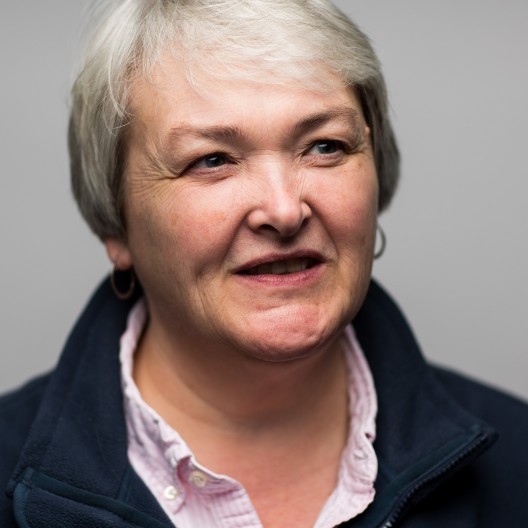
Deborah Kelley
· OceanographyVerifiedUniversity of Washington · Program on the Environment
Active 1985–2026
About
Deborah Kelley is a marine geologist who studies how submarine volcanoes support life in the absence of sunlight. She has dived in the submersible Alvin more than 50 times, reaching depths of 4000 meters beneath the ocean's surface, and routinely uses robotic vehicles to study some of the most extreme environments on Earth, such as submarine underwater hot springs. Her fieldwork takes her to volcanoes and hot springs off the Washington and Oregon coasts, the Lost City hydrothermal field on the Mid-Atlantic Ridge, and to the island of Cyprus. She is the Director for Science for the cabled component of the National Science Foundation’s Ocean Observatories Initiative, a project that utilizes high-power and high-bandwidth submarine fiber-optic cables to bring the Internet into the Pacific Ocean and onto the seafloor, providing high-quality, real-time data from more than 100 instruments including high-definition video, seismicity, ocean acidity, and oxygen levels.
Research topics
- Paleontology
- Geology
- Geomorphology
- Earth science
- Seismology
- Oceanography
- Geochemistry
- Chemistry
- Environmental chemistry
- Ecology
Selected publications
Sustained Cabled Seafloor Observations of the Cascadia Subduction Zone off Central Oregon
2026-03-14
articleOpen accessLong-term submarine observations are critical for understanding subduction zones because the slip of great earthquakes occurs offshore. Geophysical observations suggest that the Cascadia megathrust is locked from the coastline to the deformation front in many places, but off central Oregon they are consistent with a narrowly locked megathrust near the deformation front and creeping behavior beneath the shelf where there are two clusters of earthquakes near the plate boundary, including repeating and very low frequency earthquakes. In this region, scientific objectives include understanding how megathrust locking transitions between the deformation front and the coastline, determining whether there is transient slip behavior, improving constraints on how shallow offshore earthquake clusters are linked to the megathrust, and characterizing the baseline deformation rate and fault slip behavior of the accretionary prism. This summer, the Cascadia Offshore Subduction Zone Observatory (COSZO), an infrastructure project funded by the US National Science Foundation, will add seismic and geodetic instruments to the Ocean Observatories Initiative (OOI) Regional Cabled Array (RCA) off Newport, Oregon. New seafloor science junction boxes, with updates to the RCA design, will be connected to three primary nodes on the continental slope and shelf that currently do not support seafloor geophysical observations. At each new junction box and a fourth site on the shelf where there is an existing science junction box but no geophysical instruments, COSZO will install a Nanometrics Atlantis Cabled Observatory ocean bottom seismic package comprising a buried broadband seismometer, a strong-motion accelerometer, a low-frequency hydrophone, and a differential pressure gauge. The project incorporates two types of calibrated absolute pressure gauges that utilize Paroscientific resonant quartz crystal sensors. The Geodetic and Seismic Sensor Module combines a triaxial accelerometer with two pressure gauges that are periodically calibrated against the internal pressure of the housing measured by a barometer. The Self-Calibrating Pressure Recorder also includes two pressure gauges but performs calibrations with a reference pressure close to ambient generated by a piston gauge. COSZO will also install uncalibrated absolute pressure gauges and Nortek Vector 3-component ocean current meters. Together with sensors already on the OOI RCA at the Slope Base and Hydrate Ridge sites and autonomous long-term geodetic observations, the COSZO infrastructure will form a critical mass observatory on the Cascadia Subduction Zone to support scientific studies and efforts to prototype offshore earthquake and tsunami early warning. COSZO will stream data into EarthScope Data Services and a workshop is planned for spring 2027 to engage early career scientists. Looking forward, each science junction box includes open ports and any unspent COSZO funds and independent PI-driven proposals can add to the suite of cabled instruments. The OOI RCA has also hosted three short fiber sensing experiments, demonstrating the potential for single- and multi-span distributed acoustic sensing concurrent with observatory operations. Implementing permanent fiber sensing on the OOI RCA would complement COSZO by adding additional observations over an expanded footprint.
The Cascadia Offshore Subduction Zone Observatory Infrastructure Project
2025-12-17
articleThe Cascadia Offshore Subduction Zone Observatory (COSZO) is an NSF-funded Mid-scale Research Infrastructure-1 Project that will add seismic and geodetic instrumentation in summer 2026 to the Ocean Observatories Initiative (OOI) Regional Cabled Array (RCA) off Newport, Oregon. In Cascadia, geophysical observations indicate that the megathrust is mostly locked from the coastline to the deformation front, but off central Oregon they are consistent with a locked megathrust near the deformation front that transitions to creeping behavior beneath the shelf where there are two sustained clusters of earthquakes. To enable COSZO, we have updated the design of the RCA science junction boxes to eliminate obsolete components and new junction boxes are being constructed to connect to three primary nodes on the continental slope and shelf that currently do not support seafloor geophysical observations. At each new junction box and fourth site on the shelf, we will install a Nanometrics Atlantis Cabled Observatory ocean bottom seismic package which comprises a buried broadband seismometer and strong motion accelerometer, a low-frequency hydrophone and a differential pressure gauge. We are building two types of calibrated pressure gauges that utilize Paroscientific resonant quartz crystal sensors. The Geodetic and Seismic Sensor Module combines a triaxial accelerometer with two absolute pressure guages that are periodically calibrated against the internal pressure of the housing measured by a barometer. The Cabled Self Calibrating Pressure Recorder also includes two absolute pressure gauges but performs calibrations with a reference pressure close to ambient generated by a piston gauge. COSZO will also include uncalibrated absolute pressure gauges and Nortec Vektor 3-component ocean current meters. Together with sensors already on the OOI RCA at the Slope Base and Hydrate Ridge sites, the infrastructure will enable studies of fault coupling and transient fault slip of the Cascadia megathrust and the overlying accretionary prism and support efforts to prototype offshore earthquake and tsunami early warning. COSZO is also implementing procedures to stream data into Earthscope Data Services and the data storage system used by the RCA for added instruments.
Multiplexed Distributed Acoustic Sensing Offshore Central Oregon
Seismological Research Letters · 2025-02-28 · 12 citations
articleOpen accessAbstract Distributed acoustic sensing (DAS) on submarine fiber-optic cables is providing new observational insights into solid Earth processes and ocean dynamics. However, the availability of offshore dark fibers for long-term deployment remains limited. Simultaneous telecommunication and DAS operating at different wavelengths in the same fiber, termed optical multiplexing, offers one solution. In May 2024, we collected a four-day DAS dataset utilizing an L-band DAS interrogator and multiplexing on the submarine cables of the Ocean Observatory Initiative’s Regional Cabled Array offshore central Oregon. Our findings show that multiplexed DAS has no impact on communications and is unaffected by network traffic. Moreover, the quality of DAS data collected via multiplexing matches that of data obtained from dark fiber. With a machine-learning event detection workflow, we detect 31 T waves and the S wave of one regional earthquake, demonstrating the feasibility of continuous earthquake monitoring using the multiplexed offshore DAS. We also examine ocean waves and ocean-generated seismic noise. We note high-frequency seismic noise modulated by low-frequency ocean swell and hypothesize about its origins. The complete dataset is freely available.
Multiplexed Distributed Acoustic Sensing offshore Central Oregon
2024-12-18 · 3 citations
preprintDistributed acoustic sensing (DAS) on submarine fiber-optic cables is providing new observational insights into solid Earth processes and ocean dynamics. However, the availability of offshore dark fibers for long-term deployment remains limited. Simultaneous telecommunication and DAS operating at different wavelengths in the same fiber, termed optical multiplexing, offers one solution. In May 2024, we collected a four-day DAS dataset utilizing an L-band DAS interrogator and multiplexing on the submarine cables of the Ocean Observatory Initiative's Regional Cabled Array offshore central Oregon. Our findings show that multiplexed DAS has no impact on communications and is unaffected by network traffic. Moreover, the quality of DAS data collected via multiplexing matches that of data obtained from dark fiber. With a machine-learning event detection workflow, we detect 31 T waves and the S wave of one regional earthquake, demonstrating the feasibility of continuous earthquake monitoring using the multiplexed offshore DAS. We also examine ocean waves and ocean-generated seismic noise. We note high-frequency seismic noise modulated by low-frequency ocean swell and hypothesize about its origins. The complete dataset is freely available.
Science Advances · 2023-01-25 · 13 citations
articleOpen accessPythia’s Oasis is a newly discovered seafloor seep on the Central Oregon segment of the Cascadia Subduction Zone, where focused venting emits highly altered fluids ~9°C above the background temperature. The seep fluid chemistry is unique for Cascadia and includes extreme enrichment of boron and lithium and depletion of chloride, potassium, and magnesium. We conclude that the fluids are sourced from pore water compaction and mineral dehydration reactions with minimum source temperatures of 150° to 250°C, placing the source at or near the plate boundary offshore Central Oregon. Estimated fluid flow rates of 10 to 30 cm s −1 are orders of magnitude higher than those estimated elsewhere along the margin and are likely driven by extreme overpressures along the plate boundary. Probable draining of the overpressured reservoir along the vertical Alvin Canyon Fault indicates the important role that such faults may play in the regulation of pore fluid pressure throughout the forearc in Central Cascadia.
Frontiers in Marine Science · 2022-05-13 · 21 citations
articleOpen accessThe unique ecosystems and biodiversity associated with mid-ocean ridge (MOR) hydrothermal vent systems contrast sharply with surrounding deep-sea habitats, however both may be increasingly threatened by anthropogenic activity (e.g., mining activities at massive sulphide deposits). Climate change can alter the deep-sea through increased bottom temperatures, loss of oxygen, and modifications to deep water circulation. Despite the potential of these profound impacts, the mechanisms enabling these systems and their ecosystems to persist, function and respond to oceanic, crustal, and anthropogenic forces remain poorly understood. This is due primarily to technological challenges and difficulties in accessing, observing and monitoring the deep-sea. In this context, the development of deep-sea observatories in the 2000s focused on understanding the coupling between sub-surface flow and oceanic and crustal conditions, and how they influence biological processes. Deep-sea observatories provide long-term, multidisciplinary time-series data comprising repeated observations and sampling at temporal resolutions from seconds to decades, through a combination of cabled, wireless, remotely controlled, and autonomous measurement systems. The three existing vent observatories are located on the Juan de Fuca and Mid-Atlantic Ridges (Ocean Observing Initiative, Ocean Networks Canada and the European Multidisciplinary Seafloor and water column Observatory). These observatories promote stewardship by defining effective environmental monitoring including characterizing biological and environmental baseline states, discriminating changes from natural variations versus those from anthropogenic activities, and assessing degradation, resilience and recovery after disturbance. This highlights the potential of observatories as valuable tools for environmental impact assessment (EIA) in the context of climate change and other anthropogenic activities, primarily ocean mining. This paper provides a synthesis on scientific advancements enabled by the three observatories this last decade, and recommendations to support future studies through international collaboration and coordination. The proposed recommendations include: i) establishing common global scientific questions and identification of Essential Ocean Variables (EOVs) specific to MORs, ii) guidance towards the effective use of observatories to support and inform policies that can impact society, iii) strategies for observatory infrastructure development that will help standardize sensors, data formats and capabilities, and iv) future technology needs and common sampling approaches to answer today’s most urgent and timely questions.
Diversity of magmatism, hydrothermal processes and microbial interactions at mid-ocean ridges
Nature Reviews Earth & Environment · 2022 · 87 citations
- Earth science
- Geology
- Geochemistry
Variability of Natural Methane Bubble Release at Southern Hydrate Ridge
Geochemistry Geophysics Geosystems · 2021-09-21 · 16 citations
articleOpen accessAbstract Current estimations of seabed methane release into the ocean (0.4–48 Tg yr −1 ) are based on short‐term observations and implicitly assume that fluxes are constant over time. However, the intensity of gas seepage varies significantly throughout a seep lifetime. We used instruments operated by the Ocean Observatories Initiative's Regional Cabled Array to monitor variations of gas emissions over the entire Southern Hydrate Ridge summit. We show that bubble plumes emanate from distinct and persistent vents. Multiple plumes can occur within each vent and the location of their outlets may shift progressively. Active bubble plumes vary temporally in number and intensity, even within single vents. Gas emission fluctuations are partly periodic and linked to the local tide. However, short‐term variability and high ebullition events unrelated to tidal cycles are also commonly observed. Our data indicate that small‐scale processes beneath or at the sediment surface are responsible for the short‐term variability of the venting activity that is otherwise modulated by tides. Furthermore, a decrease of venting at one vent may coincide with an increase in plume activity at other vents. Our results depict a spatially and temporally dynamic seep environment, the variability of which cannot be fully characterized without systematic and comprehensive monitoring of the entire area. These results indicate that flux estimations may be largely overestimated or underestimated depending on the time, duration, and place of observation. Although sudden ebullition bursts are hardly predictable, we argue that tidal cycles must be taken into consideration when estimating gas fluxes.
KRAKENS Underwater Drill System for the InVADER Project: Tech Demo for Ocean Worlds
52nd Lunar and Planetary Science Conference · 2021-03-01
articleSenior authorRaman-LIBS Data Fusion for Ocean World Exploration
2021-06-01
article
Recent grants
Linkages to Microbial Diversity and Their Environment Within Active Submarine Hydrothermal Systems
NSF · $534k · 2001–2008
NSF · $1.2M · 2003–2010
NSF · $193k · 2010–2014
NSF · $924k · 2004–2012
Frequent coauthors
- 96 shared
Gretchen L. Früh‐Green
ETH Zurich
- 88 shared
Marvin D. Lilley
University of Washington
- 80 shared
G. Proskurowski
NeuroMetrix (United States)
- 70 shared
E. J. Olson
- 62 shared
Sean P. Sylva
Woods Hole Oceanographic Institution
- 60 shared
D. A. Butterfield
University of Washington
- 60 shared
Jeffrey A. Karson
- 57 shared
John A. Baross
University of Washington
Labs
OceanographyPI
- Resume-aware match score
- Save to shortlist
- AI-drafted outreach
See your match with Deborah Kelley
PhdFit ranks faculty by your research interests, methods, and publications — grounded in their actual work, not templates.
- Free to start
- No credit card
- 30-second signup