
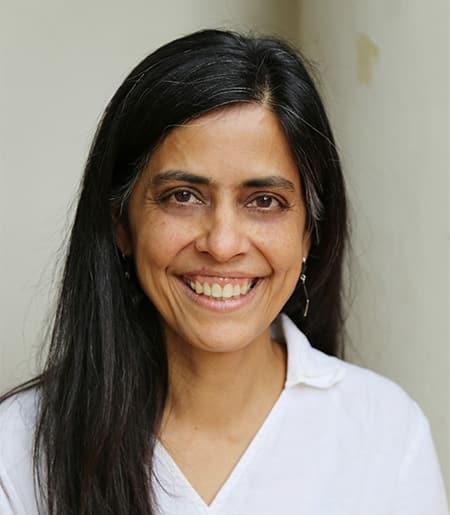
Rachana Kamtekar
· Bryce and Edith M. Bowmar Professor in Humanistic StudiesCornell University · Classics
Active 1995–2026
Academic metrics are sourced from OpenAlex and public funding records; values may differ from Google Scholar.
About
Rachana Kamtekar is the Bryce and Edith M. Bowmar Professor in Humanistic Studies at Cornell University, affiliated with the Department of Classics and Philosophy. She earned her PhD in Philosophy from the University of Chicago in 1995, having completed her MA in 1989, and holds a B.A. with honors and distinction in Philosophy and Religious Studies from Stanford University, obtained in 1987. Her primary research focuses on ancient philosophy, especially ethics, politics, and moral psychology, with a significant emphasis on Plato, Aristotle, and Stoicism. Kamtekar has authored the monograph 'Plato's Moral Psychology: Intellectualism, the Divided Soul, and Desire for Good' (Oxford University Press, 2017), which challenges mainstream narratives about Socrates and Plato's views on motivation and the soul, proposing that both philosophers advocate for a natural desire for the good and that conflicting motivations are unwilling rather than rationally justified. She is also engaged in projects exploring anti-determinist arguments in antiquity, and as of July 1, 2022, she serves as the editor of Oxford Studies in Ancient Philosophy. Her extensive publication record includes articles and chapters on Plato, Aristotle, Stoicism, and ancient political thought, contributing significantly to the understanding of ancient moral psychology, virtue ethics, and political philosophy.
Research topics
- Political Science
- Epistemology
- Law
- Philosophy
- Sociology
- Psychology
- Social psychology
- Literature
- History
- Art
Selected publications
Agent‐Regret and Accidental Agency
Midwest Studies in Philosophy · 2019-08-02 · 29 citations
article1st authorCorresponding“False positive” emotions, responsibility, and moral character
Cognition · 2021 · 20 citations
Weaving together Natural Courage and Moderation
Oxford University Press eBooks · 2021 · 20 citations
1st authorCorrespondingAbstract Chapter 11 discusses Statesman 305e8-308b9, where the Visitor identifies, as a source of civic conflict, disagreements about whether a course of action or a person is courageous or rash, moderate or cowardly, disagreements he analyses as conducted using thick ethical terms. He claims that these disagreements are rooted in natural temperamental differences among human beings (some are naturally courageous and others naturally moderate) and are to be reconciled by political expertise’s pr…
Platonic Pity, or Why Compassion Is Not a Platonic Virtue
BRILL eBooks · 2020 · 12 citations
1st authorCorrespondingFrom Socrates’ claim in the Apology that a good person cannot be harmed to Plato’s characterizations of virtue as godlikeness in later dialogues like the Theaetetus and Timaeus, Platonic virtue seems to be an ideal of invulnerability. One might conclude that Plato would not count as virtues some of the qualities of character that we count as virtues, such as a compassionate disposition or disposition to pity, insofar as such qualities require their possessor to be vulnerable in ways that the god…
2019-10-04 · 6 citations
reference-entry1st authorCorrespondingPlato’s philosophy of education and art begins (in the <italic>Apology, Protagoras</italic>, and <italic>Gorgias</italic>) with reflection on the differences between the sophists’ and Socrates’s methods of engaging would-be students, and turns to an account of what these methods presuppose about the nature of the soul that is to be educated (in the <italic>Republic</italic>). Developments in Plato’s educational proposals throughout the dialogues (from the early dialogues to the <italic>Republic<…
Frequent coauthors
- 4 shared
Christopher Bobonich
Stanford University
- 3 shared
Shaun Nichols
Cornell University
- 3 shared
Sara Ahbel‐Rappe
- 2 shared
Julia Annas
- 2 shared
Richard Kraut
- 1 shared
Włodek Rabinowicz
Lund University
- 1 shared
David Sedley
- 1 shared
David Bostock
Awards & honors
- Editor of Oxford Studies in Ancient Philosophy (2022)
Similar researchers at Cornell University
- Resume-aware match score
- Save to shortlist
- AI-drafted outreach
See your match with Rachana Kamtekar
PhdFit ranks faculty by your research interests, methods, and publications — grounded in their actual work, not templates.
- Free to start
- No credit card
- 30-second signup