
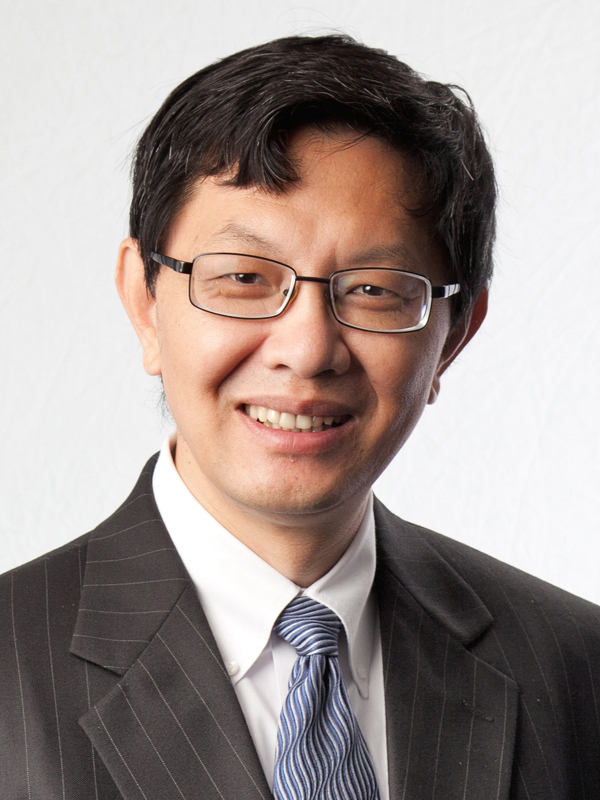
Ping Yang
· University Distinguished Professor and David Bullock Harris Chair in GeosciencesTexas A&M University · Atmospheric Sciences
Active 1995–2026
Academic metrics are sourced from OpenAlex and public funding records; values may differ from Google Scholar.
About
Ping Yang is a University Distinguished Professor and the David Bullock Harris Chair in Geosciences at Texas A&M University. He has held the title of University Distinguished Professor since 2020 and has been a faculty member in the Department of Atmospheric Sciences since September 2008. Yang also serves as an adjunct professor in the Departments of Oceanography and Physics & Astronomy at TAMU, and is affiliated with the Institute for Quantum Science & Engineering. He has held leadership roles including Senior Associate Dean for Research in the College of Arts and Sciences and Department Head of Atmospheric Sciences. His research focuses on remote sensing of cloud and aerosol properties from satellite observations, radiation parameterizations, radiative forcing effects, and the optical properties of particles relevant to atmospheric and oceanic systems. Yang's group utilizes data from instruments such as MODIS, CERES, AIRS, POLDER, and CALIPSO to study ice clouds, dust aerosols, and their radiative impacts, developing advanced computational models and databases for optical properties. His contributions include developing state-of-the-science light scattering computational capabilities, creating extensive optical property databases, and improving radiative transfer models for climate and remote sensing applications. Yang has received numerous awards and honors, including fellowships from the American Geophysical Union, OPTICA, AMS, APS, and AAAS, as well as prestigious…
Research topics
- Environmental science
- Geology
- Physics
- Meteorology
- Remote sensing
- Optics
- Materials science
- Computer Science
- Geography
- Algorithm
Selected publications
CERES MODIS Cloud Product Retrievals for Edition 4—Part I: Algorithm Changes
IEEE Transactions on Geoscience and Remote Sensing · 2020 · 204 citations
The Edition 2 (Ed2) cloud property retrieval algorithm system was upgraded and applied to the MODerate-resolution Imaging Spectroradiometer (MODIS) data for the Clouds and the Earth's Radiant Energy System (CERES) Edition 4 (Ed4) products. New calibrations for solar channels and the use of the 1.24-μm channel for cloud optical depth (COD) over snow improve the daytime consistency between Terra and Aqua MODIS retrievals. Use of additional spectral channels and revised logic enhanced the cloud-top…
Journal of the Atmospheric Sciences · 2021 · 79 citations
Abstract A database (TAMUdust2020) of the optical properties of irregular aerosol particles is developed for applications to radiative transfer simulations involving aerosols, particularly dust and volcanic ash particles. The particle shape model assumes an ensemble of irregular hexahedral geometries to mimic complex aerosol particle shapes in nature. State-of-the-art light scattering computational capabilities are employed to compute the single-scattering properties of these particles for wide…
Geophysical Research Letters · 2021 · 60 citations
Senior authorCorrespondingAbstract Sensitivities of the backscattering properties to the microphysical properties (in particular, size and shape) of mineral dust aerosols are examined based on TAMUdust2020, a comprehensive single‐scattering property database of irregular aerosol particles. We develop the bulk mineral dust particle models based on size‐resolved particle ensembles with randomly distorted shapes and spectrally resolved complex refractive indices, which are constrained by using in situ observations reported…
Remote Sensing of Ice Cloud Properties With Millimeter and Submillimeter-Wave Polarimetry
IEEE Journal of Microwaves · 2024-10-01 · 8 citations
articleOpen accessIce clouds are poorly constrained in current global climate and weather models and have been used as a tuning parameter in the models to balance radiation budget at the top of atmosphere and precipitation at the surface. Sub-millimeter-wave (Submm) remote sensing can fill the sensitivity gap of cloud ice observations between visible/infrared (VIS/IR) and microwave (MW) frequencies. The added value from submm-wave bands has been recognized for achieving a better understanding of cloud, convection…
Optics Express · 2025-08-20 · 2 citations
articleOpen accessSenior authorA spheroid has one more degree of freedom than a sphere, namely the aspect ratio defined as the ratio of the length of the rotational axis to that of the other axis perpendicular to the rotational symmetry axis. Previous studies demonstrated that the optical properties of natural nonspherical particles can be reasonably represented by those of spheroids. A two-layer spheroid has different refractive indices for the inner and outer layers, and accounts for both nonsphericity and inhomogeneity of…
Recent grants
NSF · $197k · 2015–2018
NSF · $565k · 2013–2017
NSF · $200k · 2021–2023
Frequent coauthors
- 140 shared
Bryan A. Baum
Science and Technology Corporation (United States)
- 132 shared
George W. Kattawar
Texas A&M University
- 75 shared
Yongxiang Hu
Langley Research Center
- 68 shared
Steven Platnick
Goddard Space Flight Center
- 61 shared
Patrick Minnis
Northern Health and Social Care Trust
- 56 shared
Michael D. King
University of Colorado Boulder
- 53 shared
K. N. Liou
- 44 shared
Lei Bi
Zhejiang University
Education
- 1995
Ph.D., Department of Meteorology
University of Utah
- 1988
M.S.
Lanzhou Institute of Plateau Atmospheric Physics, Chinese Academy of Science
Awards & honors
- Fellow, the American Geophysical Union (AGU)
- Fellow, OPTICA (formerly, the Optical Society of America, OS…
- Fellow, the American Meteorological Society (AMS)
- Fellow, the American Physical Society (APS)
- Fellow, the American Association for the Advancement of Scie…
Similar researchers at Texas A&M University
- Resume-aware match score
- Save to shortlist
- AI-drafted outreach
See your match with Ping Yang
PhdFit ranks faculty by your research interests, methods, and publications — grounded in their actual work, not templates.
- Free to start
- No credit card
- 30-second signup