
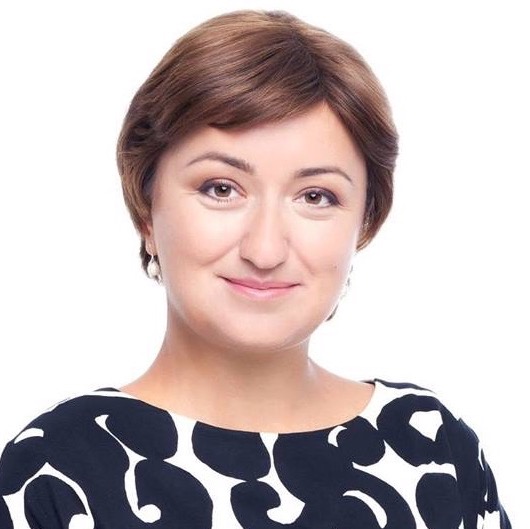
Olga Kamenchuk
· Associate Professor of InstructionNorthwestern University · Communication Studies
Active 2003–2025
Academic metrics are sourced from OpenAlex and public funding records; values may differ from Google Scholar.
About
Olga Kamenchuk is an associate research professor in the Institute for Policy Research and an associate professor of instruction in the School of Communication at Northwestern University. Her scholarship centers on the intersections of political psychology, public opinion, and policy analysis across a range of international security and inter-cultural contexts, especially in the Eurasian region. She is a Co-Principal Investigator on the Comparative National Elections Project for Russian, Ukrainian, and Serbian electoral studies. Prior to her current roles, she was co-director of the Eurasian Security & Governance Program at the Ohio State University Mershon Center for International Security Studies and an associate professor (clinical) in the OSU School of Communication. Dr. Kamenchuk has over twenty years of extensive experience working with governmental agencies, intergovernmental organizations, and NGOs on communication, program evaluation, and public opinion projects across various policy contexts. Her work includes conducting hundreds of opinion research projects for organizations such as the World Bank, United Nations, Cambridge University, University of Pennsylvania, U.S. Global Media Agency, Asahi Shimbun, among others. Her research, published in journals like the International Journal of Public Opinion Research, Social Science Quarterly, and the Hague Journal of Diplomacy, focuses on political psychology, public opinion, and policy analysis, particularly in…
Research topics
- Political Science
- Psychology
- Computer Science
- Social psychology
- Sociology
- Public relations
- History
- Medicine
- Law
- Political economy
Selected publications
International Journal of Public Opinion Research · 2021 · 31 citations
Senior authorCorrespondingAbstract The COVID-19 pandemic has been paired with a global misinformation “infodemic.” Citizens in authoritarian countries, where most media is state controlled, often do not have access to credible information sources to help combat misinformation. In fact, the news media in these countries may be the primary drivers of misinformation while digital media may be sources of more accurate information. We test how news and digital media in an authoritarian context are associated with endorsing mi…
New Media & Society · 2022 · 9 citations
Senior authorCorrespondingNetworked authoritarian governments’ use of digital repression creates uncertainty and amplifies risk signals for ordinary citizens using social media for political expression. Employing theoretical frameworks from the risk and decision-making literature, we experimentally examine how citizens perceive and respond to the risks of low-effort forms of online activism in an authoritarian context. Our online field experiment demonstrates that emotional responses to the regime’s risk signals about on…
The Psychology of State-Sponsored Disinformation Campaigns and Implications for Public Diplomacy
2019-07-02 · 4 citations
book-chapterSenior authorSummary Policy discourse about disinformation focuses heavily on the technological dimensions of state-sponsored disinformation campaigns. Unfortunately, this myopic focus on technology has led to insufficient attention being paid to the underlying human factors driving the success of state-sponsored disinformation campaigns. Academic research on disinformation strongly suggests that belief in false or misleading information is driven more by individual emotional and cognitive responses — amplif…
Power Distance Perceptions in Post-Soviet Russia: Understanding the Workplace Environment
Digital Commons - USU (Utah State University) · 2021-10-08 · 2 citations
articleOpen access1st authorCorrespondingThe modem business economy is characterized by increased collaboration among different organizations across nation al boundaries. Post-Soviet Russia is one of the regions that is witnessing rapid economic growth and development of international business relations. Because of the challenges in intercultural communication the current study focuses on the problem of power distance, specifically in the workplace (in post-Soviet Russia). A phenomenological perspective, based on qualitative methodolog…
Edward Elgar Publishing eBooks · 2025-02-11 · 1 citations
book-chapterSenior authorPolicy discourse about disinformation has focused on the technological dimensions and strategies of adversarial state-sponsored disinformation campaigns. Unfortunately, this myopic focus on technology has led to insufficient attention being paid to the underlying psychological factors driving the success of state-sponsored disinformation operations. The scientific evidence about disinformation strongly suggests that belief in false or misleading information is driven more by individual emotional…
Frequent coauthors
- 6 shared
Erik C. Nisbet
Northwestern University
- 2 shared
Aysenur Dal
Bilkent University
- 1 shared
Thorsten Fass
- 1 shared
Robert Mattes
Oxford University Press (United Kingdom)
- 1 shared
Alejandro Moreno
The University of Texas at Austin
- 1 shared
Pedro C. Magalhães
Similar researchers at Northwestern University
- Resume-aware match score
- Save to shortlist
- AI-drafted outreach
See your match with Olga Kamenchuk
PhdFit ranks faculty by your research interests, methods, and publications — grounded in their actual work, not templates.
- Free to start
- No credit card
- 30-second signup