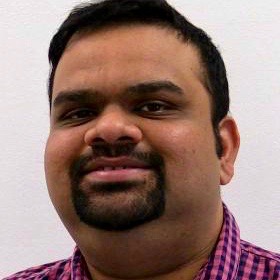
Mohammed Suhail Rehman
· Assistant Professor of Computer ScienceUniversity of Chicago · Computer Science
Active 2019–2022
About
Mohammed Suhail Rehman is an Assistant Instructional Professor of Computer Science at the University of Chicago. His role involves teaching and research within the Department of Computer Science, which is dedicated to defining and building the future of computer science through a broad spectrum of areas including theory, applications, and societal impact. The department emphasizes cutting-edge research in fields such as quantum computing, data science, artificial intelligence and machine learning, human-computer interaction, security and privacy, and systems and architecture. Rehman's work is situated within a vibrant academic environment that fosters collaboration across academia, industry, government, and non-profit sectors. He is involved in the department's initiatives to provide world-class research opportunities for students and postdoctoral researchers, contributing to the department's mission of advancing knowledge and education in computer science.
Research topics
- Computer Science
- Artificial Intelligence
- Data Mining
- Information Retrieval
- Database
- Operating system
- Programming language
- Biology
- Software engineering
- Distributed computing
Selected publications
2022 · 2 citations
1st authorCorresponding- Computer Science
- Computer Science
- Data Mining
Dataframes have become a popular means to represent, transform and analyze data. This approach has gained traction and a large user base for data science practitioners - resulting in a new wave of systems that implement a dataframe API but allow for performance, efficiency, and distributed/parallel extensions to systems such as R and pandas. However, unlike relational databases and NoSQL systems with a variety of benchmarking, testing, and workload generation suites, there is an acute lack of similar tools for dataframe-based systems. This paper presents fuzzydata, a first step in providing an extensible workflow generation system that targets dataframe-based APIs. We present an abstract data processing workflow model, random table and workflow generators, and three clients implemented using our model. Using fuzzydata, we can encode a real-world workflow or randomly generate workflows using various parameters. These workflows can be scaled and replayed on multiple systems to provide stress testing, performance evaluation, and a breakdown of performance bottlenecks present on popular dataframe systems.
Proceedings of the VLDB Endowment · 2021 · 2 citations
1st authorCorresponding- Computer Science
- Computer Science
- Information Retrieval
The ad-hoc, heterogeneous process of modern data science typically involves loading, cleaning, and mutating dataset(s) into multiple versions recorded as artifacts by various tools within a single data science workflow. Lineage information, including the source datasets, data transformation programs or scripts, or manual annotations, is rarely captured, making it difficult to infer the relationships between artifacts in a given workflow retrospectively. We demonstrate Relic, a tool to retrospectively infer the lineage of data artifacts generated as a result of typical data science workflows, with an interactive demonstration that allows users to input artifact files and visualize the inferred lineage in a web-based setting.
Factor Xa Inhibitor-Related Intracranial Hemorrhage
Circulation · 2020 · 105 citations
- Medicine
- Internal medicine
- Surgery
BACKGROUND: Since the approval of the oral factor Xa inhibitors, there have been concerns regarding the ability to neutralize their anticoagulant effects after intracranial hemorrhage (ICH). Multiple guidelines suggest using prothrombin complex concentrates (PCCs) in these patients on the basis of research that includes a limited number of patients with ICH. Given this, we aimed to evaluate the safety and efficacy of PCCs for factor Xa inhibitor-related ICH in a large, multicenter cohort of patients. METHODS: This was a multicenter, retrospective, observational cohort study of patients with apixaban- or rivaroxaban-related ICH who received PCCs between January 1, 2015, and March 1, 2019. The study had 2 primary analysis groups: safety and hemostatic efficacy. The safety analysis evaluated all patients meeting inclusion criteria for the occurrence of a thrombotic event, which were censored at hospital discharge or 30 days after PCC administration. Patients with intracerebral, subarachnoid, or subdural hemorrhages who had at least 1 follow-up image within 24 hours of PCC administration were assessed for hemostatic efficacy. The primary efficacy outcome was the percentage of patients with excellent or good hemostasis on the basis of the modified Sarode criteria. Secondary outcomes included an evaluation of in-hospital mortality, length of stay, infusion-related reactions, and thrombotic event occurrence during multiple predefined periods. RESULTS: A total of 663 patients were included and assessed for safety outcomes. Of these, 433 patients met criteria for hemostatic efficacy evaluation. We observed excellent or good hemostasis in 354 patients (81.8% [95% CI, 77.9-85.2]). Twenty-five (3.8%) patients had a total of 26 thrombotic events, of which 22 occurred in the first 14 days after PCC administration. One patient had documentation of an infusion-related reaction. For the full cohort of patients, in-hospital mortality was 19.0%, and the median intensive care unit and hospital lengths of stay were 2.0 and 6.0 days, respectively. CONCLUSIONS: Administration of PCCs after apixaban- and rivaroxaban-related ICH provided a high rate of excellent or good hemostasis (81.8%) coupled with a 3.8% thrombosis rate. Randomized, controlled trials evaluating the clinical efficacy of PCCs in patients with factor Xa inhibitor-related ICH are needed.
Frequent coauthors
- 2 shared
Aaron J. Elmore
University of Chicago
- 1 shared
Silu Huang
Jilin University
Awards & honors
- Nick Feamster Receives 2026 Quantrell Teaching Award
- Brennan Schaffner Receives ACM SIGCHI Special Recognition Aw…
Similar researchers at University of Chicago
- Resume-aware match score
- Save to shortlist
- AI-drafted outreach
See your match with Mohammed Suhail Rehman
PhdFit ranks faculty by your research interests, methods, and publications — grounded in their actual work, not templates.
- Free to start
- No credit card
- 30-second signup