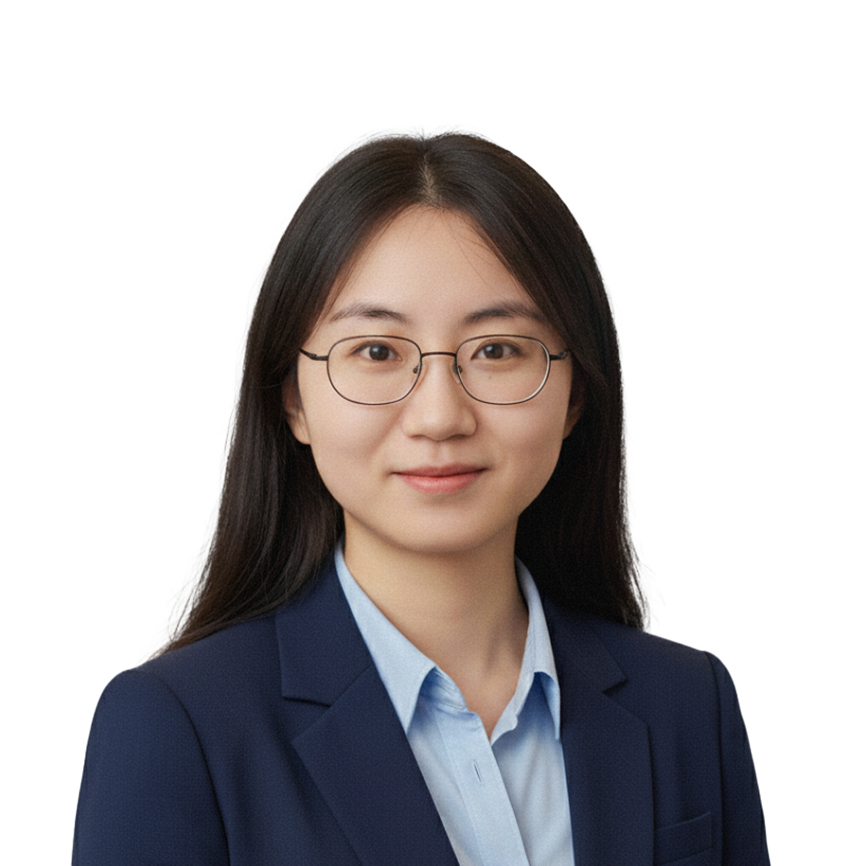
Mingjie Liu
· Assistant ProfessorUniversity of Florida · Chemistry
Active 2009–2023
About
Mingjie Liu is an Assistant Professor in the Department of Chemistry at the University of Florida. His research focuses on developing AI-driven methods to accelerate chemical discovery, with particular emphasis on generative models, deep learning, and optimization techniques. His work spans applications in energy, environment, and health, aiming to bridge computation and experimentation to enable faster innovation in chemistry and materials science. Liu's educational background includes a PhD in Materials Science and NanoEngineering from Rice University, completed in 2016. He has also conducted postdoctoral research at Brookhaven National Laboratory from 2016 to 2020 and at the Massachusetts Institute of Technology in Chemical Engineering from 2020 to 2022. His research contributions include harnessing density functional theory (DFT) and machine learning for accurate optical gap prediction in conjugated polymers, mapping structure-property relationships in fullerene systems, and developing transferable machine learning interatomic potentials for carbon-hydrogen systems.
Research topics
- Cell biology
- Chemistry
- Cancer research
- Molecular biology
- Immunology
- Biology
- Biochemistry
- Astrophysics
- Atomic physics
- Astronomy
- Physics
Selected publications
Oncogenesis · 2023 · 4 citations
- Molecular biology
- Biology
- Cell biology
Chimeric antigen receptor T-cell (CAR-T) therapy has demonstrated potent clinical efficacy in the treatment of hematopoietic malignancies. However, the application of CAR-T in solid tumors has been limited due in part to the expression of inhibitory molecules in the tumor microenvironment, leading to T-cell exhaustion. To overcome this limitation, we have developed a synthetic T-cell receptor (TCR) that targets programmed death-ligand 1 (PD-L1), a molecule that is widely expressed in various solid tumors and plays a pivotal role in T-cell exhaustion. Our novel TCR platform is based on antibody-based binding domain, which is typically a single-chain variable fragment (scFv), fused to the γδ TCRs (TCRγδ). We have utilized the T-cell receptor alpha constant (TRAC) locus editing approach to express cell surface scFv of anti-PD-L1, which is fused to the constant region of the TCRγ or TCRδ chain in activated T cells derived from peripheral blood mononuclear cells (PBMCs). Our results indicate that these reconfigured receptors, both γ-TCRγδ and δ-TCRγδ, have the capability to transduce signals, produce inflammatory cytokines, degranulate and exert tumor killing activity upon engagement with PD-L1 antigen in vitro. Additionally, we have also shown that γ-TCRγδ exerted superior efficacy than δ-TCRγδ in in vivo xenograft model.
The first Ka-band (26.1-35 GHz) blind line survey towards Orion KL
arXiv (Cornell University) · 2023
- Physics
- Astrophysics
- Astronomy
We conducted a Ka-band (26.1--35 GHz) line survey towards Orion KL using the TianMa 65-m Radio Telescope (TMRT). It is the first blind line survey in the Ka band, and achieves a sensitivity of mK level (1--3 mK at a spectral resolution of $\sim$1 km s$^{-1}$). In total, 592 Gaussian features are extracted. Among them, 257 radio recombination lines (RRLs) are identified. The maximum $Δn$ of RRLs of H, He and C are 20, 15, and 5, respectively. Through stacking, we have detected the $β$ lines of ion RRLs (RRLs of C$^+$ with possible contribution of other ions like O$^+$) for the first time, and tentative signal of the $γ$ lines of ion RRLs can also be seen on the stacked spectrum. Besides, 318 other line features were assigned to 37 molecular species, and ten of these species were not detected in the Q-band survey of TMRT. The vibrationally excited states of nine species were also detected. Emission of most species can be modeled under LTE. A number of transitions of E-CH3OH ($J_2-J_1$) display maser effects, which are confirmed by our modeling, and besides the bumping peak at $J\sim 6$ there is another peak at $J\sim 13$. Methylcyanoacetylene (CH$_3$C$_3$N) is detected in Orion KL for the first time. This work emphasizes that the Ka band, which was long-ignored for spectral line surveys, is very useful for surveying RRLs and molecular lines simultaneously.
Research Square (Research Square) · 2022
- Chemistry
- Cancer research
- Molecular biology
Abstract Chimeric antigen receptor (CAR)-T cells have shown potent clinical efficacy in the treatment of hematopoietic malignancies. However, much less has been achieved in solid tumors, in part due to the CAR-T cell exhaustion caused by inhibitory molecules in the tumor microenvironment. Given that PD-L1 is widely expressed in various tumor types and the PD1/PD-L1 axis plays a pivotal role in T cell exhaustion, we developed a novel platform using a single chain variable fragment (scFv) γδ-based TCR to target PD-L1 expressing tumors. We edited the TRAC locus in T cells and expressed an anti-PD-L1 scFv fused to the constant region of either the TCRδ or γ chain. We showed that the reconfigured γδ TCRs were capable of transducing signals once PD-L1 antigen was engaged by the scFv, leading to production of inflammatory cytokines, degranulation, and potent tumor killing activity both in vitro and in various xenograft solid tumor models. Surprisingly, we discovered that a new form of TCR, generated by fusing an scFv coding region to that of a single TCRγ chain, is sufficient to activate T cells and direct T cell functional activity. Moreover, in contrast to the classic TCRγδ, this new synthetic TCR appeared to transduce signals without complexing with endogenous CD3, which represents a new platform of cancer therapeutics.
Frequent coauthors
- 14 shared
Barış Coşkun
- 14 shared
Baba C. Vemuri
University of Florida
- 10 shared
Yifan Hu
Zhongnan Hospital of Wuhan University
- 7 shared
Le Lü
- 7 shared
Frank Nielsen
- 6 shared
Xiaojing Ye
Georgia State University
- 5 shared
Steven Skiena
- 5 shared
Rachid Deriche
Université Côte d'Azur
Education
- 2016
Ph.D., Materials Science and NanoEngineering
Rice University
Similar researchers at University of Florida
- Resume-aware match score
- Save to shortlist
- AI-drafted outreach
See your match with Mingjie Liu
PhdFit ranks faculty by your research interests, methods, and publications — grounded in their actual work, not templates.
- Free to start
- No credit card
- 30-second signup