
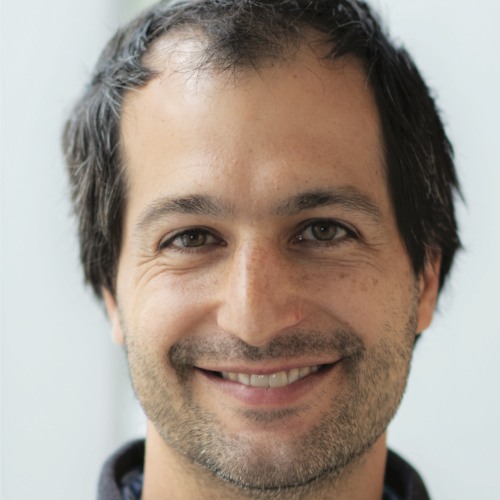
Matt Nassar
Brown University · Cognitive, Linguistic, and Psychological Sciences
Active 2006–2026
Academic metrics are sourced from OpenAlex and public funding records; values may differ from Google Scholar.
About
Matt Nassar is an Assistant Professor in the Department of Neuroscience at Brown University. His research focuses on Behavioral Neuroscience/Comparative, Cognitive Neuroscience, Higher-Level Cognition, Neural/Computational Models of Mind Brain and Behavior, and Perception and Action. He is engaged in exploring the neural mechanisms underlying cognition and perception, utilizing computational models to understand the mind and brain functions. His work aims to advance knowledge in these areas through experimental and theoretical approaches, contributing to the broader understanding of cognitive and psychological sciences.
Research topics
- Computer Science
- Artificial Intelligence
- Neuroscience
- Psychology
- Mathematics
- Communication
- Medicine
- Gerontology
- Cognitive psychology
- Audiology
Selected publications
Brain · 2020 · 73 citations
1st authorCorrespondingSchizophrenia is characterized by abnormal perceptions and beliefs, but the computational mechanisms through which these abnormalities emerge remain unclear. One prominent hypothesis asserts that such abnormalities result from overly precise representations of prior knowledge, which in turn lead beliefs to become insensitive to feedback. In contrast, another prominent hypothesis asserts that such abnormalities result from a tendency to interpret prediction errors as indicating meaningful change,…
Functional brain network reconfiguration during learning in a dynamic environment
Nature Communications · 2020 · 62 citations
When learning about dynamic and uncertain environments, people should update their beliefs most strongly when new evidence is most informative, such as when the environment undergoes a surprising change or existing beliefs are highly uncertain. Here we show that modulations of surprise and uncertainty are encoded in a particular, temporally dynamic pattern of whole-brain functional connectivity, and this encoding is enhanced in individuals that adapt their learning dynamics more appropriately in…
Prefrontal transthalamic uncertainty processing drives flexible switching
Nature · 2024-11-13 · 31 citations
articleOpen accessToward a functional future for the cognitive neuroscience of human aging
Neuron · 2025-01-01 · 25 citations
reviewOpen accessThe cognitive neuroscience of human aging seeks to identify neural mechanisms behind the commonalities and individual differences in age-related behavioral changes. This goal has been pursued predominantly through structural or "task-free" resting-state functional neuroimaging. The former has elucidated the material foundations of behavioral decline, and the latter has provided key insight into how functional brain networks change with age. Crucially, however, neither is able to capture brain ac…
Understanding learning through uncertainty and bias
Communications Psychology · 2025-02-13 · 16 citations
reviewOpen accessSenior authorLearning allows humans and other animals to make predictions about the environment that facilitate adaptive behavior. Casting learning as predictive inference can shed light on normative cognitive mechanisms that improve predictions under uncertainty. Drawing on normative learning models, we illustrate how learning should be adjusted to different sources of uncertainty, including perceptual uncertainty, risk, and uncertainty due to environmental changes. Such models explain many hallmarks of hum…
Recent grants
Cognitive and Molecular Challenges to Statistical Inference Across Healthy Aging.
NIH · $223k · 2017–2019
NIH · $78k · 2013
Cognitive and Molecular Challenges to Statistical Inference Across Healthy Aging.
NIH · $744k · 2019–2023
Frequent coauthors
- 69 shared
Michael J. Frank
- 49 shared
Rasmus Bruckner
- 44 shared
Oriel FeldmanHall
Providence College
- 30 shared
Markus Ullsperger
Otto-von-Guericke University Magdeburg
- 26 shared
Amitai Shenhav
University of California System
- 24 shared
Romy Frömer
Brown University
- 24 shared
Harrison Ritz
- 22 shared
Joseph W. Kable
University of Pennsylvania
Similar researchers at Brown University
- Resume-aware match score
- Save to shortlist
- AI-drafted outreach
See your match with Matt Nassar
PhdFit ranks faculty by your research interests, methods, and publications — grounded in their actual work, not templates.
- Free to start
- No credit card
- 30-second signup