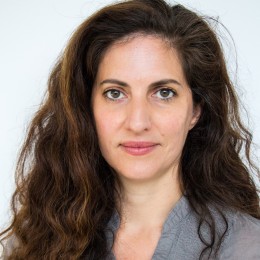
Lila Davachi
· Professor of Psychology, Co-Director of STAR ProgramColumbia University · Psychology
Active 1991–2024
Research topics
- Psychology
- Artificial Intelligence
- Cognitive psychology
- Computer Science
- Neuroscience
- Sociology
- Social Science
- History
- Cognitive science
- Speech recognition
- Social psychology
Selected publications
Tag and capture: how salient experiences target and rescue nearby events in memory
Trends in Cognitive Sciences · 2022 · 77 citations
Senior authorCorresponding- Artificial Intelligence
- Computer Science
- Psychology
Neurobiology of Learning and Memory · 2021 · 47 citations
Senior authorCorresponding- Psychology
- Neuroscience
- Cognitive psychology
Mnemonic prediction errors bias hippocampal states
Nature Communications · 2020 · 108 citations
Senior authorCorresponding- Computer Science
- Artificial Intelligence
- Computer Science
Abstract When our experience violates our predictions, it is adaptive to upregulate encoding of novel information, while down-weighting retrieval of erroneous memory predictions to promote an updated representation of the world. We asked whether mnemonic prediction errors promote hippocampal encoding versus retrieval states, as marked by distinct network connectivity between hippocampal subfields. During fMRI scanning, participants were cued to internally retrieve well-learned complex room-images and were then presented with either an identical or a modified image (0-4 changes). In the left hemisphere, we find that CA1-entorhinal connectivity increases, and CA1-CA3 connectivity decreases, with the number of changes. Further, in the left CA1, the similarity between activity patterns during cued-retrieval of the learned room and during the image is lower when the image includes changes, consistent with a prediction error signal in CA1. Our findings provide a mechanism by which mnemonic prediction errors may drive memory updating—by biasing hippocampal states.
The Future of Women in Psychological Science
Perspectives on Psychological Science · 2020 · 137 citations
- Sociology
- Social Science
- Psychology
There has been extensive discussion about gender gaps in representation and career advancement in the sciences. However, psychological science itself has yet to be the focus of discussion or systematic review, despite our field's investment in questions of equity, status, well-being, gender bias, and gender disparities. In the present article, we consider 10 topics relevant for women's career advancement in psychological science. We focus on issues that have been the subject of empirical study, discuss relevant evidence within and outside of psychological science, and draw on established psychological theory and social-science research to begin to chart a path forward. We hope that better understanding of these issues within the field will shed light on areas of existing gender gaps in the discipline and areas where positive change has happened, and spark conversation within our field about how to create lasting change to mitigate remaining gender differences in psychological science.
Pupil-linked arousal signals track the temporal organization of events in memory
Nature Communications · 2020 · 169 citations
Senior authorCorresponding- Cognitive psychology
- Psychology
- Neuroscience
Everyday life unfolds continuously, yet we tend to remember past experiences as discrete event sequences or episodes. Although this phenomenon has been well documented, the neuromechanisms that support the transformation of continuous experience into distinct and memorable episodes remain unknown. Here, we show that changes in context, or event boundaries, elicit a burst of autonomic arousal, as indexed by pupil dilation. Event boundaries also lead to the segmentation of adjacent episodes in later memory, evidenced by changes in memory for the temporal duration, order, and perceptual details of recent event sequences. These subjective and objective changes in temporal memory are also related to distinct temporal features of pupil dilations to boundaries as well as to the temporal stability of more prolonged pupil-linked arousal states. Collectively, our findings suggest that pupil measures reflect both stability and change in ongoing mental context representations, which in turn shape the temporal structure of memory.
Recent grants
Medial temporal lobe contributions to episodic memory
NIH · $438k · 2007–2022
Medial temporal lobe contributions to episodic memory
NIH · $531k · 2007–2019
Medial temporal lobe contributions to episodic memory
NIH · $4.9M · 2007–2023
NSF-BSF: Memory modification through concurrent conscious and unconscious stimulation
NSF · $126k · 2021–2022
Frequent coauthors
- 25 shared
Anthony D. Wagner
Stanford University
- 25 shared
Elizabeth A. Phelps
New York University
- 24 shared
Oded Bein
Princeton University
- 21 shared
Virginie Lambrecq
Institut du Cerveau
- 21 shared
Camille Gasser
Columbia University
- 20 shared
Orrin Devinsky
Toronto Western Hospital
- 19 shared
Séverine Samson
Inserm
- 19 shared
David Clewett
University of California, Los Angeles
Education
- 1999
Ph.D, Neurobiology
Yale University
- 1992
B.A., Psychology
Barnard College, Columbia University
Similar researchers at Columbia University
- Resume-aware match score
- Save to shortlist
- AI-drafted outreach
See your match with Lila Davachi
PhdFit ranks faculty by your research interests, methods, and publications — grounded in their actual work, not templates.
- Free to start
- No credit card
- 30-second signup