
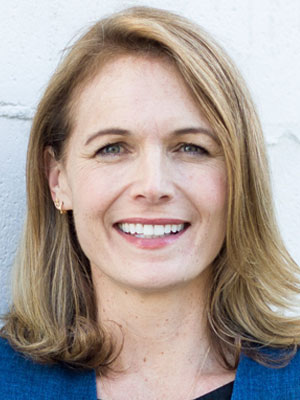
Lia Fernald
· Professor, Community Health SciencesUniversity of California, Berkeley · Community Health Sciences
Active 1997–2026
Academic metrics are sourced from OpenAlex and public funding records; values may differ from Google Scholar.
About
Lia Haskin Fernald, PhD, is a professor of Public Health at UC Berkeley. Her work focuses on using rigorous methodology to address inequalities, particularly in the areas of early child development, health and nutrition, and economic and safety net programs. She leads research projects that integrate and holistically approach child development interventions, such as the RINEW project in Bangladesh, and assesses community experiences with safety net supports, exemplified by the ACCESS survey in California. Additionally, she is involved in scaling up support for early child development through initiatives like the MAHAY project in Madagascar. Her research aims to improve outcomes for vulnerable populations by combining expertise in public health, economics, and social policy.
Research topics
- Medicine
- Biology
- Internal medicine
- Nursing
- Psychology
- Ecology
- Gerontology
- Psychiatry
- Environmental health
Selected publications
The Lancet Global Health · 2020 · 91 citations
BACKGROUND: Early childhood development (ECD) programmes can help address early disadvantages for the 43% of children younger than 5 years in low-income and middle-income countries who have compromised development. We aimed to test the effectiveness of two group-based delivery models for an integrated ECD responsive stimulation and nutrition education intervention using Kenya's network of community health volunteers. METHODS: We implemented a multi-arm, cluster-randomised community effectiveness…
American Journal of Clinical Nutrition · 2021 · 88 citations
BACKGROUND: Meta-analyses show that small-quantity lipid-based nutrient supplements (SQ-LNSs) reduce child stunting and wasting. Identification of subgroups who benefit most from SQ-LNSs may facilitate program design. OBJECTIVES: We aimed to identify study-level and individual-level modifiers of the effect of SQ-LNSs on child growth outcomes. METHODS: We conducted a 2-stage meta-analysis of individual participant data from 14 randomized controlled trials of SQ-LNSs provided to children 6-24 mo o…
American Journal of Clinical Nutrition · 2021 · 51 citations
BACKGROUND: Small-quantity lipid-based nutrient supplements (SQ-LNSs) have been shown to reduce the prevalence of child anemia and iron deficiency, but effects on other micronutrients are less well known. Identifying subgroups who benefit most from SQ-LNSs could support improved program design. OBJECTIVES: We aimed to identify study-level and individual-level modifiers of the effect of SQ-LNSs on child hemoglobin (Hb), anemia, and inflammation-adjusted micronutrient status outcomes. METHODS: We…
World Development · 2024-10-31 · 8 citations
articleOpen access• Fishery access benefits early childhood development through fishing income and fish consumption pathways. • Fish species shape the benefits of fish consumption. • Fishing income benefits early childhood development through its effect on child growth. Within many global communities, access to natural resources benefits nutrition through provision of both food and livelihoods. In fishing communities, fish provide a rich source of essential nutrients, and fishing represents a critical income sour…
Journal of Development Economics · 2024-07-19 · 8 citations
articleOpen accessWe provide evidence on the link between enrollment in public preschool and child vocabulary, a critical precursor to early literacy. We measure early childhood development among both in-school and out-of-school children in Kenya, allowing us to examine the association between preschool enrollment and cognitive outcomes. Children in our sample are more likely to start school at age three rather than age four if they live within a few hundred meters of the nearest primary school. Three-year-olds l…
Recent grants
NIH · $29k
NIH · $358k · 2006
Effects of Supplementation and Stimulation on Child Development: the MAHAY study
NIH · $138k · 2018–2020
Frequent coauthors
- 68 shared
Ann M. Weber
University of Nevada, Reno
- 64 shared
Emanuela Galasso
- 64 shared
Benjamin F. Arnold
Global Brain Health Institute
- 52 shared
Dilys Walker
Global Brain Health Institute
- 51 shared
Stephen P. Luby
Stanford University
- 51 shared
Heather A. Knauer
University of Michigan–Ann Arbor
- 49 shared
John M. Colford
Berkeley Public Health Division
- 45 shared
Christine P. Stewart
Labs
CEGAPI
Education
- 2000
M.B.A.
University of California Berkeley
- 1999
Ph.D.
University College London
- 1994
BA
Swarthmore College
Awards & honors
- Fulbright Scholar – Jamaica
Similar researchers at University of California, Berkeley
- Resume-aware match score
- Save to shortlist
- AI-drafted outreach
See your match with Lia Fernald
PhdFit ranks faculty by your research interests, methods, and publications — grounded in their actual work, not templates.
- Free to start
- No credit card
- 30-second signup