
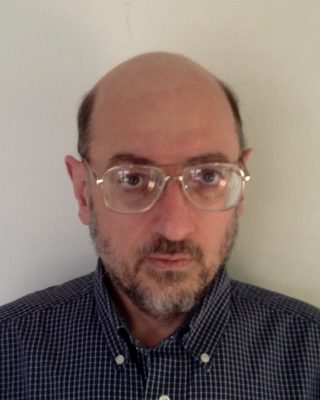
Levon Asryan
· Associate professorVirginia Tech · Materials Science and Engineering
Active 1987–2026
Academic metrics are sourced from OpenAlex and public funding records; values may differ from Google Scholar.
About
Levon Asryan is an associate professor at Virginia Tech in the Department of Materials Science and Engineering. His research interests include the physics of semiconductor materials and devices, nano- and optoelectronics, and photonics. He specializes in low-dimensional heterostructures, nanostructures, quantum dots, and quantum wells, with a focus on the theory of semiconductor quantum dot lasers and quantum well lasers. Dr. Asryan holds a Ph.D. in Physics and Mathematics and a Doctor of Sciences in Physics and Mathematics from the Ioffe Institute in St. Petersburg, Russia. His notable contributions include fundamental investigations of heterostructures with quantum dots and the development of quantum dot lasers. He has been recognized with the Highest Award (State Prize) of the Russian Federation in Science and Technology in 2001 for his work in this field. Additionally, he received the First Best Paper Award from the IEEE Journal of Quantum Electronics in 2001. He is a senior member of SPIE and IEEE, reflecting his active engagement and recognition in the scientific community.
Research topics
- Materials science
- Physics
- Optics
- Optoelectronics
- Thermodynamics
- Atomic physics
- Chemistry
Selected publications
Journal of Applied Physics · 2018-10-05 · 12 citations
articleOpen accessThe feasibility of implementation of asymmetric barriers (ABs) made of common materials for completely aluminum-free diode lasers is studied. The ABs adjoining a low-dimensional active region on both sides aim to prevent bipolar population in the waveguide layers and thus to suppress parasitic recombination therein, which in turn would enhance the efficiency and temperature-stability of the device. Our search algorithm for appropriate AB materials relies on the minimization of undesired carrier…
Quantum Electronics · 2019-06-01 · 8 citations
article1st authorCorrespondingAbstract A theory of static (threshold and power) characteristics of novel diode lasers – quantum dot (QD) lasers with asymmetric barrier layers (ABLs) – is developed. The barrier layers are asymmetric in that they have considerably different heights for the carriers of opposite signs. The ABL located on the electron- (hole-) injecting side of the structure provides a low barrier (ideally no barrier) for electrons (holes) [so that it does not prevent electrons (holes) from easily approaching the…
Parasitic Recombination in a Laser with Asymmetric Barrier Layers
Semiconductors · 2020 · 5 citations
Senior authorCorrespondingIn a laser with asymmetric barrier layers (ABLs) two thin barrier layers adjacent to the active region on both sides are intended to prevent bipolar population of the waveguide layers, hence, to suppress parasitic recombination in them. A theoretical model of a laser with ABLs, based on rate equations which acknowledge undesirable carrier leakage inevitable in lasers of this type implemented in practice, is proposed. Solutions to equations are obtained for the steady-state case. By the example o…
Semiconductors · 2018-11-07 · 4 citations
article1st authorCorrespondingA self-consistent model for calculating the threshold and high-power characteristics of semiconductor quantum well lasers with asymmetric barrier layers is developed. The model, which is based on a system of rate equations, uses the universal condition of global charge neutrality in the laser structure. The electron and hole concentrations in the waveguide region and in the quantum well (QW) and the concentration of photons of stimulated emission are calculated. The local neutrality in the QW is…
Evolution of light‐current characteristic shape in high‐power semiconductor quantum well lasers
Electronics Letters · 2019-03-08 · 3 citations
articleOpen accessSenior authorCorrespondingThe light‐current characteristic (LCC) of semiconductor quantum well lasers is theoretically studied. It is discussed here that, due to internal optical absorption loss, which depends on the electron and hole densities in the optical confinement layer, (i) roll‐over of the LCC occurs with increasing injection current, and, (ii) depending on the parameters of laser structures, the LCC can have two branches, i.e. the optical emission at two different output powers will be possible within a certain…
Frequent coauthors
- 53 shared
R. A. Suris
- 48 shared
Serge Luryi
Stony Brook University
- 29 shared
A. E. Zhukov
National Research University Higher School of Economics
- 29 shared
M. V. Maximov
- 24 shared
F. I. Zubov
- 21 shared
Z. N. Sokolova
Ioffe Institute
- 14 shared
N. V. Kryzhanovskaya
National Research University Higher School of Economics
- 12 shared
Elizaveta Semenova
Technical University of Denmark
Labs
Materials Science and Engineering at Virginia TechPI
Awards & honors
- Highest Award (State Prize) of the Russian Federation in Sci…
- First Best Paper Award of the IEEE Journal of Quantum Electr…
- Senior Member, SPIE (2019)
- Senior Member, IEEE (2005)
Similar researchers at Virginia Tech
- Resume-aware match score
- Save to shortlist
- AI-drafted outreach
See your match with Levon Asryan
PhdFit ranks faculty by your research interests, methods, and publications — grounded in their actual work, not templates.
- Free to start
- No credit card
- 30-second signup