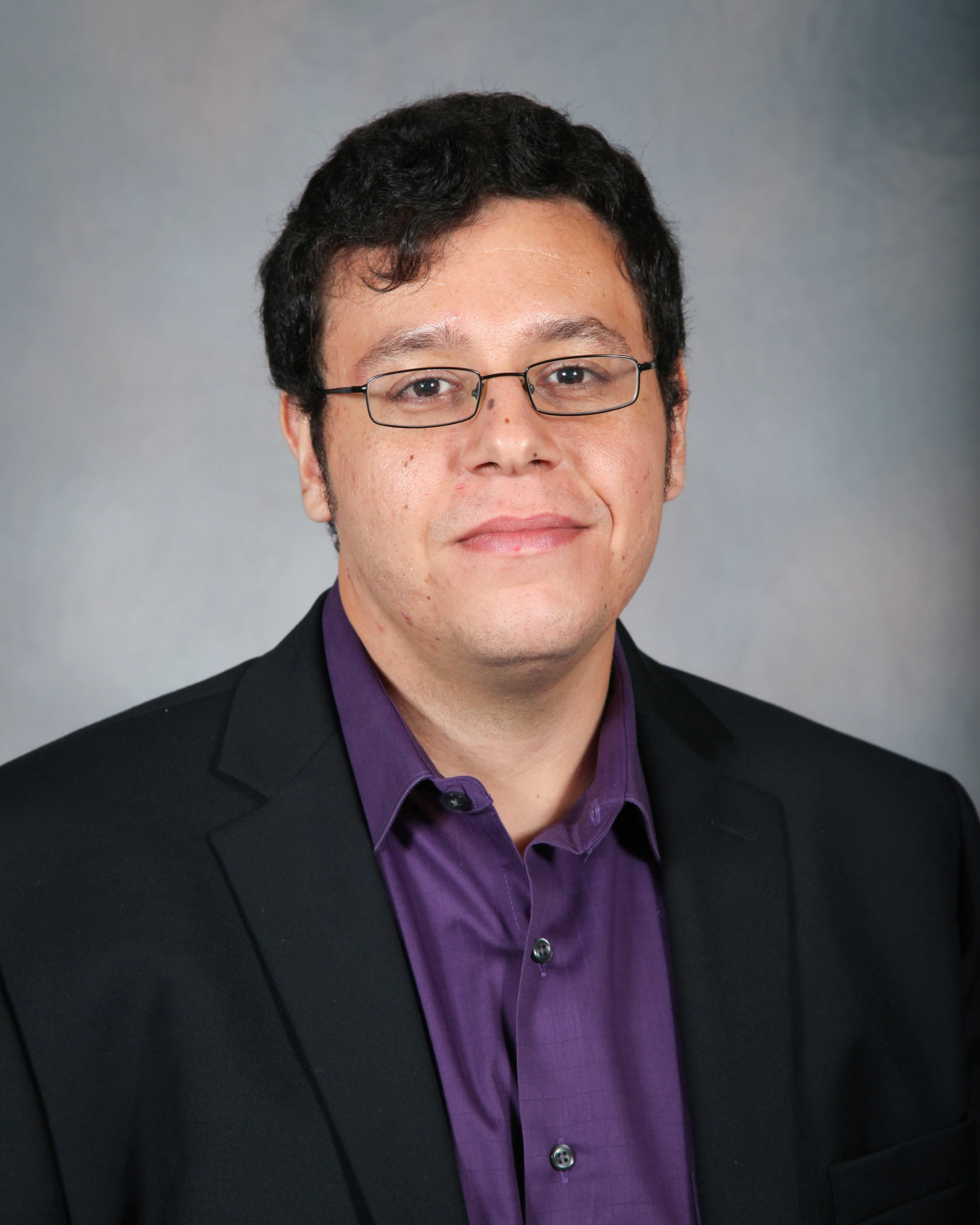
Karim Ahmed
· Associate Professor, Nuclear EngineeringTexas A&M University · Nuclear Engineering
Active 1965–2024
About
Karim Ahmed is an Associate Professor in the Department of Nuclear Engineering at Texas A&M University. His research focuses on modeling and simulations of irradiation effects in nuclear materials, multi-scale modeling of materials, the co-evolution of microstructure, and the physical properties of materials under extreme conditions. He holds a Ph.D. in Nuclear Engineering from Purdue University, obtained in 2015, a Master's degree in Materials Science from Florida State University earned in 2011, and a Bachelor's degree in Nuclear Engineering from Alexandria University in Egypt completed in 2008. His work involves phase field modeling for grain growth, particle-grain boundary interactions, and void growth in irradiated materials, contributing to the understanding of material behavior in nuclear environments.
Research topics
- Thermodynamics
- Materials science
- Mechanics
- Physics
- Crystallography
- Engineering
- Composite material
- Chemical physics
- Nuclear engineering
- Chemistry
Selected publications
Journal of Nuclear Materials · 2022 · 7 citations
Senior authorCorresponding- Nuclear engineering
- Materials science
- Mechanics
Surface and Size Effects on the Behaviors of Point Defects in Irradiated Crystalline Solids
Frontiers in Materials · 2021 · 10 citations
Senior authorCorresponding- Materials science
- Chemical physics
- Thermodynamics
We present an elaborate study of the surface and size effects on the transient and steady-state behaviors of point defects in irradiated solids. In this investigation, both pure Ni and binary Ni-Cr were utilized as model systems. We utilize the spatially-resolved rate-theory (SRRT) modeling approach, and directly account for the effects of dose rate, production bias, and defects recombination, reactions with volumetric sinks, and diffusion to surface sinks. Several simulations were conducted to investigate the effects of these parameters in both coupled and decoupled manners. In the presence of production bias, the effects of surface and size persist even as the surface to volume ratio decreases. This was associated with a surface-induced and size-regulated instability. This instability is only triggered above a critical size between 100 and 500 nm. The critical size decreases with increasing dose rate, increasing production bias, or lowering the temperature. Moreover, this instability results in a pattern that favors the separation of vacancies and interstitials. Once this pattern develops, anomalies in the dependence on size for the transient and steady-state concentrations of point defects and the surface/boundary sink strength are observed. These anomalies tend to render irradiation damage more severe. For pure Ni, it was shown that vacancy supersaturation increases with size, and the rate of increase also rises with size. For the binary Ni-Cr system, it was shown that the magnitude of enrichment/depletion of Ni/Cr at the boundary increases with size, and the width of the enrichment/depletion layer also increases with size. The results obtained here agree well with experimental observations in irradiated materials such as the formation of void denuded zones adjacent to grain boundaries and the size and temperature dependence of the radiation resistance of nanomaterials. The size-dependent behaviors reported here also shed new light on the radiation tolerance of nanomaterials, i.e., the irradiation-induced instabilities are suppressed in such materials. Lastly, the implications of the results obtained here on the development of efficient reduced order models or the utilization of ion irradiation as a surrogate to neutron irradiation are discussed.
Frequent coauthors
- 8 shared
Anter El‐Azab
Purdue University West Lafayette
- 7 shared
M. Anwar Mughal
National Engineering and Scientific Commission
- 6 shared
M. Gomaa Abdoelatef
Texas A&M University
- 5 shared
Fergany Badry
Texas A&M University
- 5 shared
Furqan Tahir
King Abdullah University of Science and Technology
- 5 shared
M. Suleymanov
Baku State University
- 5 shared
M. B. Bari
D.Y. Patil University
- 4 shared
Sean M. McDeavitt
Texas A&M University
Labs
Education
- 2015
Ph.D., Nuclear Engineering
Purdue University
- 2011
MS, Materials Science
Florida State University
Similar researchers at Texas A&M University
- Resume-aware match score
- Save to shortlist
- AI-drafted outreach
See your match with Karim Ahmed
PhdFit ranks faculty by your research interests, methods, and publications — grounded in their actual work, not templates.
- Free to start
- No credit card
- 30-second signup