
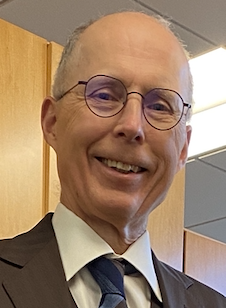
John Gladysz
· Distinguished Professor, Dow Chair in Chemical InventionTexas A&M University · Chemistry
Active 1973–2026
Academic metrics are sourced from OpenAlex and public funding records; values may differ from Google Scholar.
About
John Gladysz is a Distinguished Professor and Dow Chair in Chemical Invention at Texas A&M University College of Arts and Sciences, Department of Chemistry. His research has traditionally centered around organometallic chemistry, with branches into catalysis, organic synthesis, enantioselective reactions, stereochemistry, mechanism, and materials chemistry. His work involves developing highly enantioselective catalysts, metal-containing organocatalysts, and recoverable catalysts that can be recycled via fluorous phases. Additionally, he synthesizes organometallic building blocks for molecular devices, including molecular wires, polygons, multistranded wires, and molecular gyroscopes and compasses. His educational background includes a B.S. from the University of Michigan and a Ph.D. from Stanford University. He has received numerous awards and honors, including the Alfred P. Sloan Foundation Fellowship, the Arthur C. Cope Scholar Award, and the Royal Society of Chemistry Award in Organometallic Chemistry. He has also served as the Editor-in-Chief of Organometallics.
Research topics
- Chemistry
- Organic chemistry
- Medicinal chemistry
- Stereochemistry
- Combinatorial chemistry
- Physics
- Computational biology
- Nanotechnology
Selected publications
Chemical Reviews · 2021 · 47 citations
Senior authorCorrespondingResearch directed toward the goal of molecular gyroscopes since the coverage of a previous review (2002) is described. Such species are a subclass of molecular rotors, which are comprised of rotators and stators. Major categories include (1) systems in which a rotator is embedded in a cage-like stator reminiscent of mechanical toy gyroscopes and (2) molecules that have been engineered to crystallize with parallel rotators and voids or other features that enable the rotator to rotate in the solid…
Launching Werner Complexes into the Modern Era of Catalytic Enantioselective Organic Synthesis
Accounts of Chemical Research · 2020 · 47 citations
Senior authorCorresponding) have been evaluated. Alternatively, a dimethylamino group can be tethered to the backbone of one en ligand, providing bifunctional catalysts that obviate any need for an external base. Interestingly, the counteranions modulate the enantioselectivities somewhat. However, catalysts with chiral anions do not significantly outperform benchmark catalysts with achiral anions. Cagelike chiral hexaaminecobalt(III) complexes known as sepulchrates and sarcophagines, which feature secondary NH donor atom…
ACS Catalysis · 2020 · 28 citations
Senior authorCorrespondingThe enantiopure and diastereopure salts Λ- or Δ-[Co((S,S)-dpen)3]3+ 2Cl–BArf– (Λ- or Δ-(S,S)-13+ 2Cl–BArf–; dpen/BArf = 1,2-diphenylethylenediamine/B(3,5-C6H3(CF3)2)4) and Λ-(S,S)-13+ 3Cl– are treated with salts of the enantiopure chiral monoanions (A–) or dianions (A2–) 3-bromocamphor-8-sulfonate (camphSO3–), 1,1′-binaphthyl-2,2′-diyl phosphate (and three 3,3′-disubstituted derivatives), a related biphenanthryl species, tartrate, and Sb2(tart′)22– (tart′ = [−O2C–CHO––CHO––CO2–]). The lipophilic…
ACS Central Science · 2023-11-16 · 25 citations
articleOpen accessSenior authorCorrespondingExtended conjugated polyynes provide models for the elusive sp carbon polymer carbyne, but progress has been hampered by numerous synthetic challenges. Stabilities appear to be enhanced by bulky, electropositive transition-metal endgroups. Reactions of trans-(C6F5)(p-tol3P)2Pt(C≡C)nSiEt3 (n = 4–6, PtCxSi (x = 2n)) with n-Bu4N+F–/Me3SiCl followed by excess tetrayne H(C≡C)4SiEt3 (HC8Si) and then CuCl/TMEDA and O2 give the heterocoupling products PtCx+8Si, PtCx+16Si, and sometimes higher homologues…
Organometallics · 2024-05-21 · 5 citations
articleOpen accessSenior authorCorrespondingPhotolyses of trans-Fe(CO)3(As((CH2)n)3As) (n = a, 10; b, 12; c, 14) in the presence of PMe3, or reactions of trans-[Fe(CO)2(NO)(As((CH2)n)3As)]+ BF4– and n-Bu4N+ Cl–, afford the air stable title complexes As((CH2)n)3As (8a–c) in 79–34% yields. With 8a, the in, in and out, out isomers are separable and each is crystallographically characterized. With 8b,c, the isomers rapidly interconvert by homeomorphic isomerization, but each crystallizes (contrathermodynamically) as an out, out isomer. Reacti…
Recent grants
Complexes in which sp Carbon Chains span two Metals
NSF · $458k · 2007–2011
WIRE-LIKE and GYROSCOPE-LIKE ORGANOMETALLIC COMPLEXES
NSF · $390k · 2012–2017
Chemistry of Transition Metal/Main Group Element Compounds
NSF · $495k · 1994–1998
Frequent coauthors
- 237 shared
Frank Hampel
Friedrich-Alexander-Universität Erlangen-Nürnberg
- 182 shared
Nattamai Bhuvanesh
Texas A&M University
- 125 shared
Joseph H. Reibenspies
- 102 shared
Atta M. Arif
- 85 shared
Nattamai Bhuvanesh
- 71 shared
Haijun Jiao
Leibniz Institute for Catalysis
- 69 shared
Sławomir Szafert
University of Wrocław
- 63 shared
Andreas Ehnbom
Education
- 1974
Ph.D., Organic Chemistry
Stanford University
- 1971
B.S. Chem, Chemistry
University of Michigan
Awards & honors
- Alfred P. Sloan Foundation Fellow 1980-1984
- Camille and Henry Dreyfus Teacher-Scholar 1980-1985
- Arthur C. Cope Scholar Award (American Chemical Society) 198…
- University of Utah Distinguished Research Award 1992
- American Chemical Society Award in Organometallic Chemistry…
Similar researchers at Texas A&M University
- Resume-aware match score
- Save to shortlist
- AI-drafted outreach
See your match with John Gladysz
PhdFit ranks faculty by your research interests, methods, and publications — grounded in their actual work, not templates.
- Free to start
- No credit card
- 30-second signup