
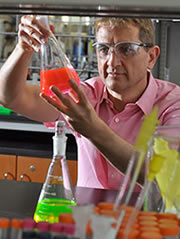
Kevin Burgess
· Professor, Rachal Chair in ChemistryVerifiedTexas A&M University · Chemistry
Active 1981–2026
About
Kevin Burgess is a Professor and Rachal Chair in Chemistry at Texas A&M University College of Arts and Sciences. His research focuses on the design and synthesis of small molecules to bind to protein surfaces, particularly in the context of two programs: the design of small molecules to perturb protein-protein interactions (PPIs) and the design of small molecules to target metastatic cancer cells. He employs novel strategies such as Exploring Key Orientations (EKO), which involves data mining to compare simulated conformers of chemotypes with features at protein-protein interfaces. His work includes screening chemotypes against PPIs of biomedical interest using biophysical and cellular assays, as well as designing small molecules to target cell surface receptors overexpressed in cancer cells, with a particular emphasis on the TrkC receptor in metastatic breast cancer and melanoma. Burgess's background includes a PhD from the University of Cambridge, UK, and a postdoctoral fellowship at the University of Wisconsin. He has received numerous awards and honors, including the Arthur C. Cope Scholars Award, Humboldt Research Award, and being a Fellow of the Royal Society of Chemistry.
Research topics
- Chemistry
- Organic chemistry
- Nuclear chemistry
- Chemical engineering
- Pathology
- Composite material
- Biology
- Biochemistry
- Internal medicine
- Biophysics
- Nuclear medicine
- Medicine
- Materials science
- Immunology
- Metallurgy
- Medicinal chemistry
- Cancer research
- Biotechnology
Selected publications
PROTACs for Collateral Degradation: Is It Time to Back Up the Bus?
ACS Medicinal Chemistry Letters · 2026-01-12
articleOpen accessSenior authorCorrespondingOff-target effects are usually undesirable in drug development, but for some PROTACs and other degraders, they may be advantageous. Specifically, this can be so when the activities of multiprotein complexes are more important than just the targeted protein of interest.
Experimental Neurology · 2026-03-26 · 1 citations
articleOpen accessWith 500,000 people paralyzed by traumatic spinal cord injuries (SCI) each year worldwide, there is a strong need for treatments that improve mobility and overall life quality after such injuries. There are currently no FDA-approved drugs that reliably improve locomotor function after injury. This is due to the complex nature of injury and our lack of ability to regenerate damaged areas of our central nervous system. Neurotrophin-3 (NT-3) is a neuroprotective, neuritogenic, pro-synaptogenic, and pro-myelinating neurotrophic factor. By binding to and activating the Tropomyosin receptor kinase (Trk) family of receptors, it supports regeneration and plasticity of neural circuits, improving cognitive and locomotor functions. NT-3 has a poor pharmacokinetic profile mitigating its clinical development, but mimicking NT-3 with small molecules with improved bioavailability is necessary for translational applications. Here, we determined 5c(i) (also known as NC101 and NRCR101), an NT-3 peptidomimetic, promotes neuron survival and neurite growth in adult cortical neurons. We demonstrated that 5c(i) promotes astrocytic wound healing in a scratch assay and induces pro-regenerative phenotypes in adult astrocytes. Using a preclinical SCI model of severe SCI, we demonstrate that delayed acute treatment with 5c(i) results in improved locomotor function and long-term memory without signs of adverse events, such as fatality or weight loss. Anatomical analysis of the spinal cords uncovered possible mechanisms for these neurological improvements; 5c(i) has pro-regenerative, pro-synaptogenic, pro-myelinating, and anti-inflammatory characteristics. Together these data suggest 5c(i) has therapeutic potential to improve neurological outcome after SCI. • 5c(i) (also known as NC101) is a new neurotrophin-3 (NT-3) peptidomimetic • In vitro, 5c(i) promotes neurons survival and/or neurites outgrowth in adult cortical neurons and enhances astrocytic wound healing and pro-regenerative phenotypes in adult astrocytes. • 5c(i) improves locomotor functions and mitigates memory dysfunction after spinal cord injury in mice. • Changes in serotoninergic axons, synaptic plasticity, myelination and/or demyelination, and inflammation may contribute to the effects of 5ci on recovery in vivo • 5c(i) has strong therapeutic potential to improve neurological outcomes after SCI
FOXO1 in cancer: context-dependent roles, microRNA regulation, and therapeutic opportunities
Discover Oncology · 2026-04-21
articleOpen accessForkhead box O1 (FOXO1) is a key transcription factor involved in regulating apoptosis, cell cycle arrest, oxidative stress responses, and metabolic homeostasis. Although FOXO1 traditionally functions as a tumour suppressor, emerging evidence reveals its context-dependent oncogenic role, particularly in cancer stem cells (CSCs) and therapy-resistant cancers. This review explores the complex regulatory network by which microRNAs (miRNAs) modulate FOXO1 expression and activity. Oncogenic miRNAs downregulate FOXO1 or promote its cytoplasmic sequestration via the PI3K/AKT pathway, enhancing tumour proliferation, epithelial-mesenchymal transition, and metastasis. In contrast, tumour-suppressive miRNAs upregulate or activate FOXO1, reinstating cell cycle arrest and apoptosis. Beyond its tumour-suppressive roles, FOXO1 also supports CSC maintenance and therapeutic resistance, highlighting the duality of its function. Notably, FOXO1 overexpression has been shown to improve the metabolic fitness and persistence of chimeric antigen receptor (CAR) T cells in solid tumours, suggesting potential for immunotherapy enhancement. Therapeutic approaches targeting the miRNA-FOXO1 axis, including miRNA mimics, inhibitors, phosphatase modulators, and kinase inhibitors, are promising but require precision to avoid undesirable effects in non-malignant tissues. Comprehensive understanding of FOXO1’s context-specific roles is essential for advancing targeted cancer therapies.
Selenium-Substituted BOIMPY for Enhanced Photodynamic Therapy
ACS Medicinal Chemistry Letters · 2025-06-20 · 2 citations
articleOpen accessSeleno-substituted bis-(boron difluoride)-8-imidazo-dipyrro-methene (BOIMPY) derivatives displayed improved photophysical features over twisted-BOIMPY, such as greater Stokes shifts, while compromising radiative relaxation and intersystem crossing, making them suitable for imaging-guided photodynamic therapy (PDT). One exhibited improved Type I and Type II PDT against cancer cells when activated by near-infrared light. Its potential as a targeted PDT agent for cancer treatment is demonstrated by its remarkable phototoxicity in the nanomolar range and minimal dark toxicity.
Selective Modulation of Trk Receptors by <i>Cyclo</i>-Organopeptides
ACS Chemical Neuroscience · 2025-07-09 · 2 citations
articleOpen accessSenior authorCorrespondingNeurotrophins (NTs, including NGF, BDNF, NT-4, and NT-3) are extracellular cytokines which modulate the survival and growth of cells expressing tropomyosin receptor kinases (Trks) A–C. Cells which express Trks include many neural tissues. For instance, corneal nerves secrete NTs to counteract epithelium disruption. Potential therapeutic applications of Trk agonism are numerous, but the use of NTs is limited by problems with production, in vivo stability, and side effects of the protein. Only humanized recombinant NGF has been clinically approved: Cenegermin for treatment of neurotrophic keratitis (NK) in the eye. Consequently, low molecular mass Trk agonists are of interest as surrogates for humanized NTs. One low molecular mass TrkA modulator from our lab, a cyclo-organopeptide D3, emerged as a clinical candidate for treatment of dry eye disease and reached phase 3 trials. However, it remains to be determined whether similar agonists or modulators of other Trks might exhibit similar effects. Moreover, D3 was moved into trials without much optimization. This work was undertaken to identify cyclo-organopeptides which would activate TrkA, B, and/or C and to compare their potencies to D3. The immediate goal was to select compounds for studies to probe relief from desiccating stress to the eye in a mouse model relative to D3. In fact, in vivo assays on select compounds developed in the work described here have already been published. Three new cyclo-organopeptides selected for Trk agonism or modulation and D3 were tested, and a superior lead for relief of desiccating stress in vivo was identified. Interestingly, that lead compound was designed to mimic NT-3, not NGF. This paper describes how those new cyclo-organopeptides were designed, prepared, and then selected via screens on Trk-transfected cells. It also outlines and explains obstacles which limit progress in this type of study.
Immunopharmacology and Immunotoxicology · 2025-10-16
articlePURPOSE: Cancer cells often overexpressed specific receptors to support their proliferation and promote immunosuppressive tumor microenvironment. Tropomyosin receptor kinase C (TrkC) is known to be overexpressed in cancer, and implicated in promoting tumor progression and metastasis. This study investigates synergistic efficacy and immunomodulatory effect of a peptidomimetic TrkC-targeted ligand (IYIY) conjugated with dinitrophenol (DNP) hapten (IYIY-DNP), in combination with cyclophosphamide (CTX), an alkylating chemotherapeutic with immune-modulating properties. MATERIALS AND METHODS: for immune cells phenotyping. RESULTS: while reducing TGF-β, were correlated with regulatory T cells (Tregs) inhibition as observed in IYIY-DNP+CTX. Immune cells phenotyping in tumor-draining lymph nodes (TDLNs), tumor tissues and spleen showed increased antitumor immune cells Th1, Th17 and cytotoxic T lymphocytes, correlating with the inhibition of tumor growth through IYIY-DNP+CTX administration. CONCLUSION: tumor growth by suppressing immunosuppressive factors and enhancing immune-stimulating responses, helping the immune system fight cancer more effectively.
Small-Molecule Trk Agonists: Where Do We Go from Here?
Journal of Medicinal Chemistry · 2025-07-18 · 6 citations
reviewOpen accessSenior authorCorrespondingAbout two decades ago, there were no validated, agonistic small-molecule modulators of Trk (tropomyosin receptor kinase). High-throughput screening of commercial libraries seemed an attractive way to identify starting structures when the research community became aware of their potential for treatment of neurodegeneration and traumatic injuries (e.g., stroke) because this strategy avoids high-level chemical expertise for molecular design and synthesis. Cost and effort constraints arising from library acquisition and assays imposed limitations on numbers of compounds tested, so filtering to reduce library sizes before screening was routine. One of the criteria was to prioritize existing pharmaceuticals because these had known toxicity profiles and side effects, at least in some delivery and dosing regimens, and many cases had proven blood brain barrier (BBB) permeabilities. This review gives our perspective on how these efforts transpired, lessons learned, and constraints which hold back development in this area at the present time.
Nature Communications · 2024-05-17 · 3 citations
articleOpen accessSenior authorHelix mimicry provides probes to perturb protein-protein interactions (PPIs). Helical conformations can be stabilized by joining side chains of non-terminal residues (stapling) or via capping fragments. Nature exclusively uses capping, but synthetic helical mimics are heavily biased towards stapling. This study comprises: (i) creation of a searchable database of unique helical N-caps (ASX motifs, a protein structural motif with two intramolecular hydrogen-bonds between aspartic acid/asparagine and following residues); (ii) testing trends observed in this database using linear peptides comprising only canonical L-amino acids; and, (iii) novel synthetic N-caps for helical interface mimicry. Here we show many natural ASX motifs comprise hydrophobic triangles, validate their effect in linear peptides, and further develop a biomimetic of them, Bicyclic ASX Motif Mimics (BAMMs). BAMMs are powerful helix inducing motifs. They are synthetically accessible, and potentially useful to a broad section of the community studying disruption of PPIs using secondary structure mimics.
Dual-Capped Helical Interface Mimics
Journal of the American Chemical Society · 2024-04-04 · 3 citations
articleOpen accessSenior authorCorrespondingDisruption of protein–protein interactions is medicinally important. Interface helices may be mimicked in helical probes featuring enhanced rigidities, binding to protein targets, stabilities in serum, and cell uptake. This form of mimicry is dominated by stapling between side chains of helical residues: there has been less progress on helical N-caps, and there were no generalizable C-caps. Conversely, in natural proteins, helicities are stabilized and terminated by C- and N-caps but not staples. Bicyclic caps previously introduced by us enable interface helical mimicry featuring rigid synthetic caps at both termini in this work. An unambiguously helical dual-capped system proved to be conformationally stable, binding cyclins A and E, and showed impressive cellular uptake. In addition, the dual-capped mimic was completely resistant to proteolysis in serum over an extended period when compared with “gold standard” hydrocarbon-stapled controls. Dual-capped peptidomimetics are a new, generalizable paradigm for helical interface probe design.
Selective, Intrinsically Fluorescent Trk Modulating Probes
ACS Chemical Neuroscience · 2024-10-02 · 1 citations
articleOpen accessSenior authorCorrespondingNeurotrophins (NTs) elicit the growth, survival, and differentiation of neurons and other neuroectoderm tissues via activation of Trk receptors. Hot spots for NT·Trk interactions involve three neurotrophin loops. Mimicry of these using “cyclo-organopeptides” comprising loop sequences cyclized onto endocyclic organic fragments accounts for a few of the low molecular mass Trk agonists or modulators reported so far; the majority are nonpeptidic small molecules accessed without molecular design and identified in random screens. It has proven difficult to verify activities induced by low molecular mass substances are due to Trk activation (rather than via other receptors), enhanced Trk expression, enhanced NT expression, or other pathways. Consequently, identification of selective probes for the various Trk receptors (e.g., A, B, and C) has been very challenging. Further, a key feature of probes for early stage assays is that they should be easily detectable, and none of the compounds reported to date are. In this work, we designed novel cyclo-organopeptide derivatives where the organic fragment is a BODIPY fluor and found ones that selectively, though not specifically, activate TrkA, B, or C. One of the assays used to reach this conclusion (binding to live Trk-expressing cells) relied on intrinsic fluorescence in the tested materials. Consequently, this work established low molecular mass Trk-selective probes exhibiting neuroprotective effects.
Recent grants
NIH · $1.0M · 1998
NIH · $615k · 2000
EKO Approach To Find Small Molecules That Perturb Protein Protein Interaction
NIH · $225k · 2014–2016
NIH · $739k · 1999
NSF · $300k · 2009–2012
Frequent coauthors
- 49 shared
Elaine Dec
Cleveland Clinic
- 49 shared
Kristen Brown
- 49 shared
Kurt C. Stange
- 49 shared
Lori D. Homa
University of Michigan–Ann Arbor
- 49 shared
Christopher Ticknor
- 49 shared
Apurba Biswas
- 49 shared
Heide Aungst
- 49 shared
Richard F. Weinberger
Case Western Reserve University
Education
- 1983
Ph. D.
University of Cambridge
- 1980
M. Sci.
University of East Anglia
- 1979
B. Sci
University of Bath
Awards & honors
- Gradipore Chair of Chemistry 2022 - Present
- Fulbright Specialist Award (2024)
- Arthur C. Cope Scholars Award (2023)
- Fulbright Foreign Scholarship (2021)
- Humboldt Research Award (2016)
- Resume-aware match score
- Save to shortlist
- AI-drafted outreach
See your match with Kevin Burgess
PhdFit ranks faculty by your research interests, methods, and publications — grounded in their actual work, not templates.
- Free to start
- No credit card
- 30-second signup