About
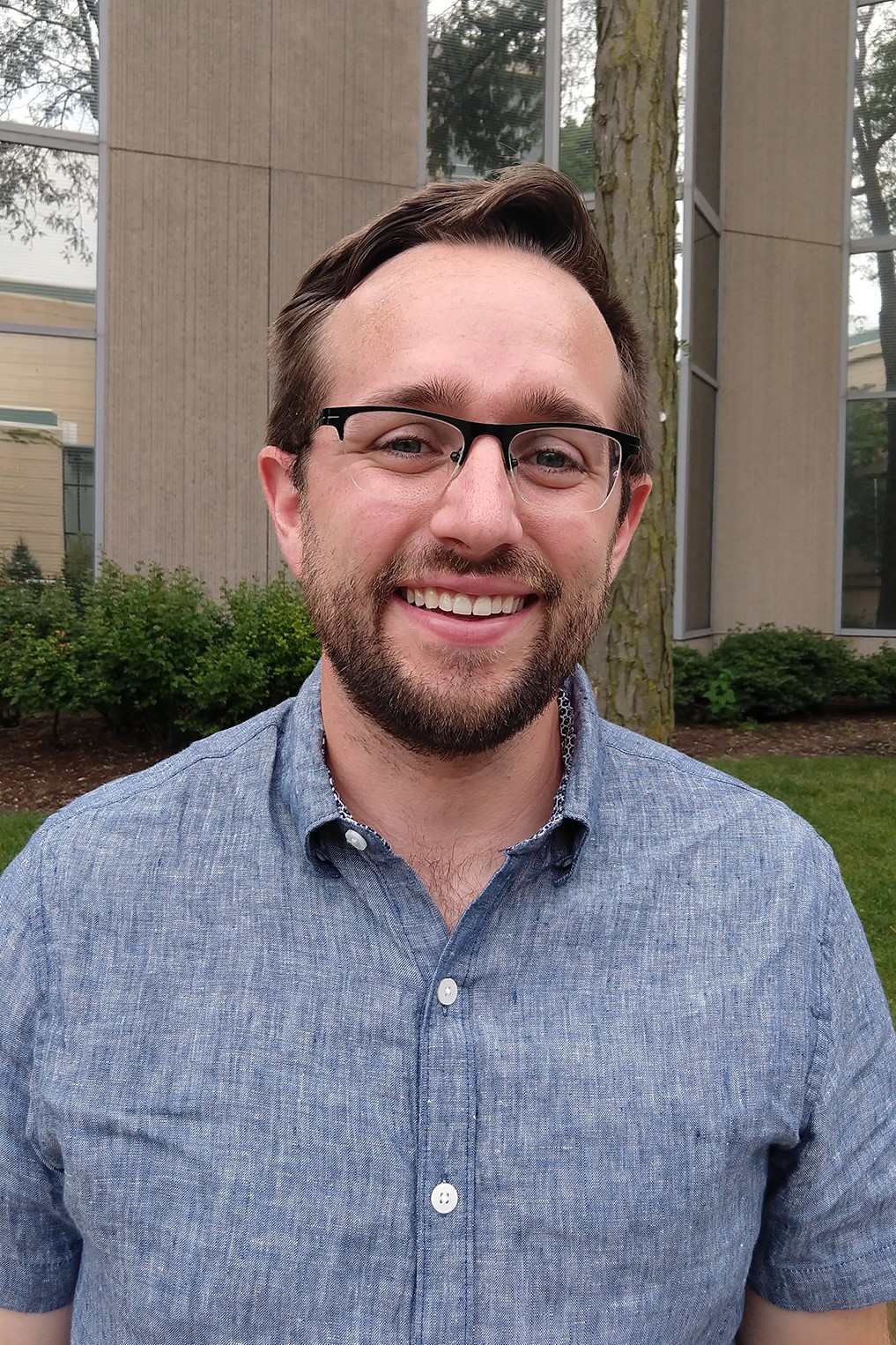
I am an Assistant Professor in the Brian Lamb School of Communication at Purdue University. I’m also part of the Community Data Science Collective, a group of computational social scientists working to understand online communities. Most of my current research is focused around studying the processes that influence which communities gain attention and membership—why people start new communities, what pathways people take as they join and participate in different communities, etc. More broadly, I am interested in the conditions that promote cooperation, the social construction of understanding and knowledge, and how automated systems (algorithms, bots, etc.) influence the way social cognition happens. Much of my work uses computational and statistical tools to analyze large datasets.
Research topics
- Political Science
- Computer Science
- Sociology
- Psychology
- World Wide Web
- Social psychology
- Public relations
- Business
- Engineering
- Microeconomics
- Knowledge management
- Law
- Internet privacy
Selected publications
Socius Sociological Research for a Dynamic World · 2023 · 9 citations
- Political Science
- Sociology
- Political Science
Violent political extremists often point to online communities as motivating their behavior. However, researchers studying online exposure to extremism through structural mechanisms such as algorithms have not found strong evidence of their influence. At the same time, models of offline radicalization processes emphasize the importance of personal motivations, such as desire for significance and community, but do not fully account for online contexts. The authors integrate these approaches, which are both interested in worsening political extremism, asking, (1) What are the pathways to extreme content and communities online? and (2) What are the perceptions of extremism in online communities? Through interviews with politically active Redditors, the authors identify three motivations for initial engagement with fringe political communities: political unsorting of the self, political exceptionalism, and virtuous participation. The authors argue these motivations are potentially important seeds of political extremism and discuss the implications for supporting healthy political discourse online.
Communication networks do not predict success in attempts at peer production
Journal of Computer-Mediated Communication · 2023 · 7 citations
1st authorCorresponding- Computer Science
- Computer Science
- Knowledge management
Abstract Although peer production has created valuable information goods like Wikipedia, the GNU/Linux operating system, and Reddit, the majority of attempts at peer production achieve very little. In work groups and teams, coordination and social integration—manifested via dense, integrative communication networks—predict success. We hypothesize that the conditions in which new peer production communities operate make communication problems common and make coordination and integration more difficult, and that variation in the structure of project communication networks will predict project success. In this article, we measure communication networks for 999 early-stage peer production wikis. We assess whether communities displaying network markers of coordination and social integration are more productive and long-lasting. Contrary to our expectations, we find a very weak relationship between communication structure and collaborative performance. We propose that technology may serve as a partial substitute for communication in coordinating work and integrating newcomers in peer production.
AoIR Selected Papers of Internet Research · 2023
- Political Science
- Sociology
- Social psychology
Recent research shows that “algorithmic radicalization” and “echo chambers”—the idea that recommendation algorithms on social media have a strong independent effect on radicalization and silo people into ideologically homogeneous communities—are not as prevalent nor influential as once feared. Yet, online political discourse is as toxic as ever while political misinformation continues to plague social media platforms. This begs the question: If algorithms aren’t encouraging radicalization, then what is producing it? Drawing from church-sect theory, this study interviews politically active Reddit users to better understand _how_ they arrived at their current media use, online engagement, and political beliefs. Results show that participants have a deep mistrust of mainstream media, leading them to seek alternative sources of political content. Reddit participation is also driven by a desire for “earnest” political discussions with like-minded individuals and cross-partisans, in part to “reject” partisan polarization. Despite engaging on more extreme subreddits, participants said their beliefs were unchanged, but that other Redditors had moved to more extreme beliefs over time. And, participants perceived their Reddit participation as necessary to _prevent_ radicalization and partisan polarization. Collectively, these results provide preliminary insight into the media and social/psychological pathways that could lead to online radicalization, providing an alternative explanation to algorithmic radicalization. This study also underscores the importance of interrogating the ecological pathways to radicalization for researchers and policy-makers; future interventions should account for attribution bias and the individual-level factors related to radicalization.
Why do People Participate in Small Online Communities?
Proceedings of the ACM on Human-Computer Interaction · 2021 · 54 citations
Senior authorCorresponding- Sociology
- Political Science
- Computer Science
Many benefits of online communities---such as obtaining new information, opportunities, and social connections---increase with size. Thus, a "successful'' online community often evokes an image of hundreds of thousands of users, and practitioners and researchers alike have sought to devise methods to achieve growth and thereby, success. On the other hand, small online communities exist in droves and many persist in their smallness over time. Turning to the highly popular discussion website Reddit, which is made up of hundreds of thousands of communities, we conducted a qualitative interview study examining how and why people participate in these persistently small communities, in order to understand why these communities exist when popular approaches would assume them to be failures. Drawing from twenty interviews, this paper makes several contributions: we describe how small communities provide unique informational and interactional spaces for participants, who are drawn by the hyperspecific aspects of the community; we find that small communities do not promote strong dyadic interpersonal relationships but rather promote group-based identity; and we highlight how participation in small communities is part of a broader, ongoing strategy to curate participants' online experience. We argue that online communities can be seen as nested niches: parts of an embedded, complex, symbiotic socio-informational ecosystem. We suggest ways that social computing research could benefit from more deliberate considerations of interdependence between diverse scales of online community sizes.
Frequent coauthors
- 5 shared
Aaron Shaw
Northwestern University
- 5 shared
Benjamin Mako Hill
- 3 shared
Sorin Adam Matei
Purdue University West Lafayette
- 2 shared
Elisa Bertino
Purdue University System
- 2 shared
Sohyeon Hwang
Northwestern University
- 1 shared
Sanjay Kairam
Red Hat (United States)
- 1 shared
Nathan TeBlunthuis
University of Michigan–Ann Arbor
- 1 shared
Jeffrey W. Treem
Education
- 2019
PhD, Media, Technology, and Society, Communication Studies
Northwestern University
- 2014
MS, Media, Technology, and Society, Communication
Purdue University
- 2006
BA, English, English
Brigham Young University
Awards & honors
- $100,000 Google Academic Research Award
Similar researchers at Purdue University
- Resume-aware match score
- Save to shortlist
- AI-drafted outreach
See your match with Jeremy Foote
PhdFit ranks faculty by your research interests, methods, and publications — grounded in their actual work, not templates.
- Free to start
- No credit card
- 30-second signup