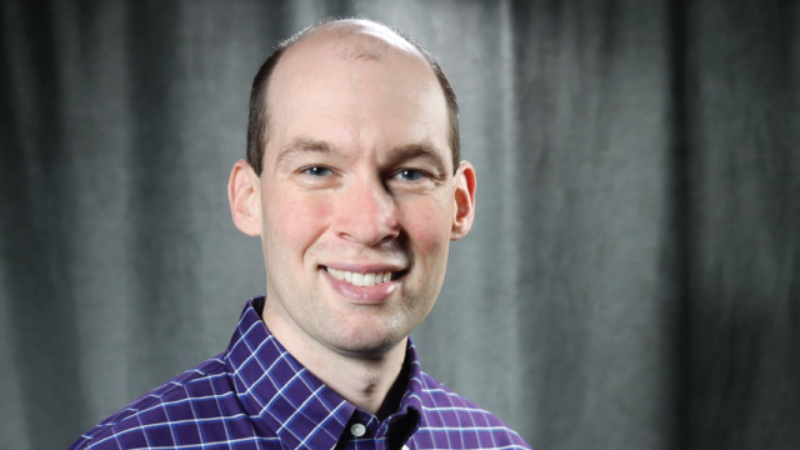
Jacob Adler
· Assistant Professor of PracticePurdue University · Biological Sciences
Active 2011–2023
About
Jacob Adler is a faculty member at Purdue University with a background in biochemistry, having earned his B.S. in Biochemistry in 2004. He has been teaching biology-related courses at all levels for over 10 years, focusing on developing Course-based Undergraduate Research Experiences (CUREs) that involve students in authentic research processes early in their college careers. His work emphasizes answering questions that are unknown and relevant, leading to valuable student research publications and educational methodology publications. Adler's research interests include pedagogical developments aimed at promoting student learning, such as using alternative grading strategies. His Biology Education Research explores the long-term impacts of these educational strategies, student and instructor perceptions, and measuring students' sense of belonging and intrinsic motivation in science.
Research topics
- Computer Science
- Biology
- Medicine
- Genetics
- Cancer research
- Multimedia
- Internal medicine
- World Wide Web
- Data science
- Medical education
- Cell biology
- Chemistry
- Biochemistry
Selected publications
Fatty Acid Induction of Lipid Droplets in Cancer Cells
CourseSource · 2023 · 2 citations
1st authorCorresponding- Cell biology
- Chemistry
- Biochemistry
There is a growing need for the development and communication of cell culture-based laboratory activities specifically designed for undergraduate students. This multi-week laboratory activity allows students to take part in the planning, experimentation, data analysis, and communication of the results of their cell culture-based research project. The laboratory activity specifically uses fatty acid induction of lipid droplets in cancer HeLa cells followed by a novel live-cell staining protocol developed specifically to allow undergraduate students the opportunity to complete a cell culture-based fluorescence microscopy project. This laboratory activity incorporates multiple levels of assessment and allows students to explore the responses of HeLa cancer cells to their environment. <em>Primary Image:</em> Fatty Acids Induce Lipid Droplet Formation in Cancer Cells. Image of live-stained lipid droplets (green) in HeLa cells after incubation with oleic acid following the protocol described in this article. The HeLa cells were also live-co-stained for cell membranes (red) and nuclei (blue).
Effect of HER2 Expression on NUPL2 Protein in Cervical Cancer Cells
2021
Senior authorCorresponding- Computer Science
- Medicine
- Biology
Journal of Microbiology and Biology Education · 2021 · 2 citations
- Computer Science
- Computer Science
- World Wide Web
Course-based undergraduate research experiences (CUREs) provide a way for students to gain research experience in a classroom setting. Few examples of cell culture CUREs or online CUREs exist in the literature. The Cell Biology Education Consortium (CBEC) provides a network and resources for instructors working to incorporate cell-culture based research into the classroom. In this article, we provide examples from six instructors from the CBEC network on how they structure their cell-culture CUREs and how they transitioned the labs to online in the spring semester of 2020. We intend for these examples to provide instructors with ideas for strategies to set up cell culture CUREs, how to change that design mid-term, and for creating online CUREs in the future.
Frequent coauthors
- 11 shared
Clark D. Wells
- 10 shared
Lauren R. Bringman
Indiana University
- 7 shared
Brigitte Heller
Princeton University
- 6 shared
William P. Ranahan
- 4 shared
Misook Oh
- 4 shared
Mark G. Goebl
Indiana University School of Medicine
- 4 shared
Andy Hudmon
Purdue University West Lafayette
- 4 shared
Hyun‐Suk Lim
Yonsei University
Labs
Similar researchers at Purdue University
- Resume-aware match score
- Save to shortlist
- AI-drafted outreach
See your match with Jacob Adler
PhdFit ranks faculty by your research interests, methods, and publications — grounded in their actual work, not templates.
- Free to start
- No credit card
- 30-second signup