
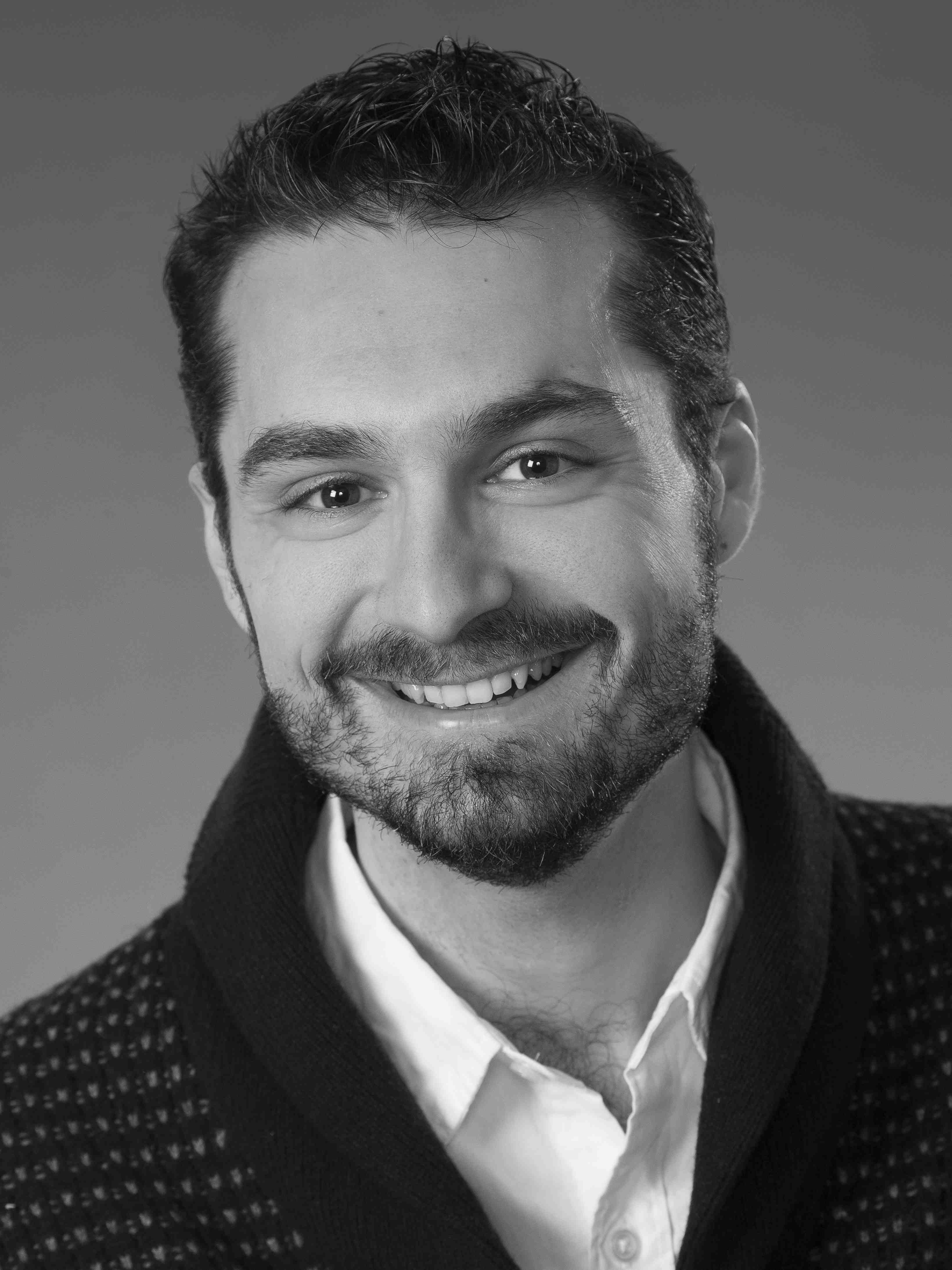
Ilias Diakonikolas
· Sheldon B. Lubar ProfessorUniversity of Wisconsin-Madison · Computer Sciences
Active 2007–2025
Academic metrics are sourced from OpenAlex and public funding records; values may differ from Google Scholar.
About
Ilias Diakonikolas is the Sheldon B. Lubar professor in the Computer Science department at UW Madison. He is a member of the theory of computing group, machine learning@uw-madison, and the Institute for Foundations of Data Science. His affiliations also include the department of Statistics, the Wisconsin Institute for Discovery, and the Data Science Institute. Prior to his current position, he held the Andrew and Erna Viterbi Early Career Chair in Computer Science at USC, and was a faculty member at the University of Edinburgh. He also spent two years at UC Berkeley as the Simons Postdoctoral Fellow in Theoretical Computer Science. He obtained his Ph.D. in Computer Science from Columbia University under the advisement of Mihalis Yannakakis, and completed his undergraduate studies in Greece at the National Technical University of Athens. His research interests encompass algorithms and machine learning, with a focus on understanding the tradeoffs between statistical efficiency, computational efficiency, and robustness in fundamental problems in statistics and machine learning. His work includes areas such as high-dimensional robust statistics, information-computation tradeoffs, foundations of deep learning, nonparametric estimation, distribution testing, and data-driven algorithm design. His contributions have been recognized with numerous awards including the ACM Grace Murray Hopper Award, a Guggenheim Fellowship, a Sloan Fellowship, an NSF CAREER Award, a Marie Curie…
Research topics
- Artificial Intelligence
- Computer Science
- Combinatorics
- Mathematics
- Algorithm
- Statistics
- Discrete mathematics
Selected publications
Robustly learning mixtures of<i>k</i>arbitrary Gaussians
2022 · 21 citations
We give a polynomial-time algorithm for the problem of robustly estimating a mixture of arbitrary Gaussians in R , for any fixed , in the presence of a constant fraction of arbitrary corruptions. This resolves the main open problem in several previous works on algorithmic robust statistics, which addressed the special cases of robustly estimating (a) a single Gaussian, (b) a mixture of TVdistance separated Gaussians, and (c) a uniform mixture of two Gaussians. Our main tools are an efficient par…
Robustly Learning any Clusterable Mixture of Gaussians
2020 · 15 citations
1st authorCorrespondingWe study the efficient learnability of high-dimensional Gaussian mixtures in the outlier-robust setting, where a small constant fraction of the data is adversarially corrupted. We resolve the polynomial learnability of this problem when the components are pairwise separated in total variation distance. Specifically, we provide an algorithm that, for any constant number of components $k$, runs in polynomial time and learns the components of an $ε$-corrupted $k$-mixture within information theoreti…
SoS Certifiability of Subgaussian Distributions and Its Algorithmic Applications
2025-06-15 · 2 citations
article1st authorCorrespondingEntangled Mean Estimation in High Dimensions
2025-06-15 · 1 citations
article1st authorCorresponding2025-06-15 · 1 citations
article1st authorCorresponding
Recent grants
Frequent coauthors
- 216 shared
Daniel M. Kane
- 107 shared
Alistair Stewart
- 81 shared
Rocco A. Servedio
- 57 shared
Jerry Li
Pfizer (United States)
- 53 shared
Ankur Moitra
IIT@MIT
- 51 shared
Gautam Kamath
University of Waterloo
- 39 shared
Nikos Zarifis
- 35 shared
Anindya De
University of Pennsylvania
Education
B.S.
National Technical University of Athens
Ph.D., Computer Science
Columbia University
Awards & honors
- ACM Grace Murray Hopper Award
- Guggenheim Fellowship
- Sloan Fellowship
- NSF CAREER Award
- Marie Curie Fellowship
Similar researchers at University of Wisconsin-Madison
- Resume-aware match score
- Save to shortlist
- AI-drafted outreach
See your match with Ilias Diakonikolas
PhdFit ranks faculty by your research interests, methods, and publications — grounded in their actual work, not templates.
- Free to start
- No credit card
- 30-second signup