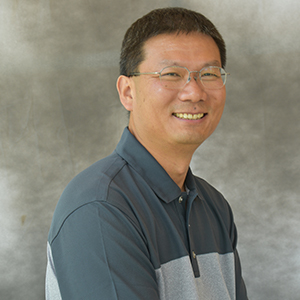
Guang-Hong Chen
· ProfessorUniversity of Wisconsin-Madison · Radiology
Active 2004–2016
About
Guang-Hong Chen, PhD, is a professor and the Director of the UW CT Lab within the Department of Radiology at the University of Wisconsin School of Medicine and Public Health. His educational background includes a graduate degree from the University of Utah obtained in 1999. Dr. Chen's professional focus is on imaging sciences, with a particular emphasis on computed tomography (CT). As a leader in his field, he contributes to advancing imaging technology and education, supporting research and clinical applications in radiology. His role involves overseeing imaging research programs and labs, and he is actively engaged in the academic and clinical community at UW-Madison.
Research topics
- Computer vision
- Computer science
- Artificial intelligence
- Mathematics
- Algorithm
Selected publications
Stroke · 2020
- Artificial Intelligence
- Medicine
- Radiology
Introduction: Time from diagnostic imaging to groin puncture highly correlates with outcome and often accounts for delays between hospital arrival and EVT. Our study comparing image quality and information content of MDCTP and CBCTP provides feasibility data for selected AIS patients to go straight to the angio-suite for comprehensive imaging and treatment. Methods: AIS patients eligible for EVT underwent MDCTP, then a CBCTP study on arrival in angio-suite. Of 939 admitted June 2017-April 2019, 226 (24%) received EVT. Of these 54 (35%) were enrolled to receive additional CBCTP imaging. Inability to obtain consent and co-morbidities were major causes for non-enrollment. Times from the start of MDCTP to angio-suite and from angio-suite arrival to first arterial image were recorded. Acquired CBCTP data were reconstructed and processed with an in-house toolbox. MDCTP and CBCTP data were matched for slice thickness and angulation and were processed using RAPID CTP (iSchemaView, Inc.). The rCBF, rCBV, MTT, tMAX maps were randomized to generate 3 unique evaluation sets. 3 neuroradiologists scored diagnostic image quality, artifacts, mismatch pattern detection and EVT indication using 5-point Likert scales. Stroke laterality was compared with the clinical standard for diagnostic accuracy. Results: Accuracies for stroke diagnosis are 97% [95%, 97%] with MDCTP and 92% [90%, 95%] with CBCTP. Cohen’s Kappa between observers is 0.90 for MDCTP-based diagnosis and 0.89 for CBCTP-based diagnosis. Scores of CBCTP to make the stroke diagnosis, detect mismatch pattern, and make treatment decision were non-inferior to corresponding scores for MDCTP (alpha=0.05) within 10% of the whole score range. Subjective scores of MDCTP for image quality and artifacts were slightly superior to those of CBCTP (1.8 vs. 2.3, p<0.01). Conclusions: In this study, a direct to angio-suite workflow provided non-inferior perfusion imaging for AIS patient triage while saving nearly one hour per patient.
Stroke · 2020
- Medicine
- Nuclear medicine
- Radiology
Cerebral perfusion evaluation using CT or MR perfusion is the gold standard modality to select large vessel occlusion (LVO) stroke patients presenting >6 hours from symptom onset. The availability of cone beam C-arm CT perfusion (CBCTP) in angiography suites could reduce time to endovascular revascularization. We aimed to evaluate the reliability of using CBCTP when compared to multidetector CT perfusion (MDCTP). In this prospective, single-arm, interventional study, 14 LVO anterior circulation thrombectomy patients underwent both a 128 slice MDCTP in the ED and a CBCTP <30 minutes apart prior to groin puncture. CBCTP was acquired using a prototype acquisition mode enabling 10 consecutive C-Arm rotations with nearly continuous data acquisition. A total of 60 cc of contrast layered with 60 cc of saline were injected covering arterial inflow, parenchymal phase and venous outflow. Image data was reconstructed into CBF, CBV, MTT and TTP maps. Three types of measurements were used to compare modalities. In measurement 1, 6 circular regions of interest (ROI) (400mm 2 ) were placed in the anterior arterial territory. In measurement 2, circular ROIs were placed in the ASPECTS regions (cortical 300mm 2 , subcortical 200mm 2 ). In measurement 3, a ROI was drawn around the entire affected area. All ROIs were placed in the basal ganglia and supraganglionic level of both brain sides. Rates (unaffected/affected area) between MDCTP and CBCTP were compared for all sequences. The intraclass correlation coefficient (ICC) was calculated using a single rater, consistency, two-way random-effects model. Measurement 1 found a moderate degree of agreement between MDCTP and CBCTP in CBF, CBV, MTT and TTP rates with ICCs of 0.58 (CI 0.42 - 0.69), 0.65 (CI 0.53 - 0.74), 0.77 (CI 0.68 - 0.83) and 0.52 (CI 0.35 - 0.65). In measurement 2, moderate agreement was found in CBF, CBV and MTT rates; with ICCs of 0.51 (CI 0.32 - 0.65), 0.57 (CI 0.4 - 0.69) and 0.62 (CI 0.47 - 0.73). The results of measurement 3 found an excellent (ICC=0.95, CI 0.88 - 0.98), good (ICC=0.83, CI 0.62 - 0.9) and moderate (ICC=0.7, CI 0.34 - 0.87), degree of agreement in the CBV, MTT and CBF rates, respectively. These results demonstrate promising accuracy of CBCTP in the evaluating ischemic tissue in patient presenting with LVO acute stroke.
Recent grants
Ultra-Low Radiation Dose Body CT Imaging
NIH · $1.4M · 2012–2017
NIH · $1.4M · 2011
NIH · $157k · 2005
Frequent coauthors
- 15 shared
Shuai Leng
Mayo Clinic
- 14 shared
Brian Nett
- 7 shared
Tingliang Zhuang
The University of Texas Southwestern Medical Center
- 6 shared
Joseph Zambelli
Corewell Health Blodgett Hospital
- 3 shared
Jiang Hsieh
- 2 shared
Scott B. Reeder
University of Wisconsin–Madison
- 2 shared
Charles A. Mistretta
Fondazione IRCCS Ca' Granda Ospedale Maggiore Policlinico
- 2 shared
Cyril Riddell
Education
- 1999
Ph.D.
University of Utah
Similar researchers at University of Wisconsin-Madison
- Resume-aware match score
- Save to shortlist
- AI-drafted outreach
See your match with Guang-Hong Chen
PhdFit ranks faculty by your research interests, methods, and publications — grounded in their actual work, not templates.
- Free to start
- No credit card
- 30-second signup